Is Sedated Cat Grooming Right for Your Cat?
TL;DR
- Sedated cat grooming uses a light, veterinarian-supervised sedation protocol to safely groom cats that are severely matted, highly anxious, or too fragile for standard restraint-based grooming.
- It involves a pre-sedation exam, continuous vital sign monitoring, and a supervised recovery period, all in one visit.
- It's the safer option for cats who cannot tolerate a traditional groomer.
If you've been putting off a grooming appointment because your cat turns into a different animal the moment the brush comes out, you're not alone. Plantation cat owners bring this exact concern to us every week, usually after a groomer has already turned them away or warned that the mats are too close to the skin to remove safely. Sedated cat grooming exists for this reason. It gives cats who can't be groomed while fully awake, whether from severe matting, anxiety, or age, a way to get the coat care they need without a stressful, sometimes dangerous struggle. This article walks through when sedation is appropriate, what the process actually looks like, and how to know if your cat is a good candidate.
Why Would a Cat Need to Be Sedated for Grooming?
Sedation is used when matting is too severe or painful to remove safely while a cat is awake, or when a cat's stress response makes standard grooming unsafe for the cat or the groomer. Some cats simply won't tolerate the handling that grooming requires, no matter how gentle the groomer is.
Severe Matting and Skin Risk
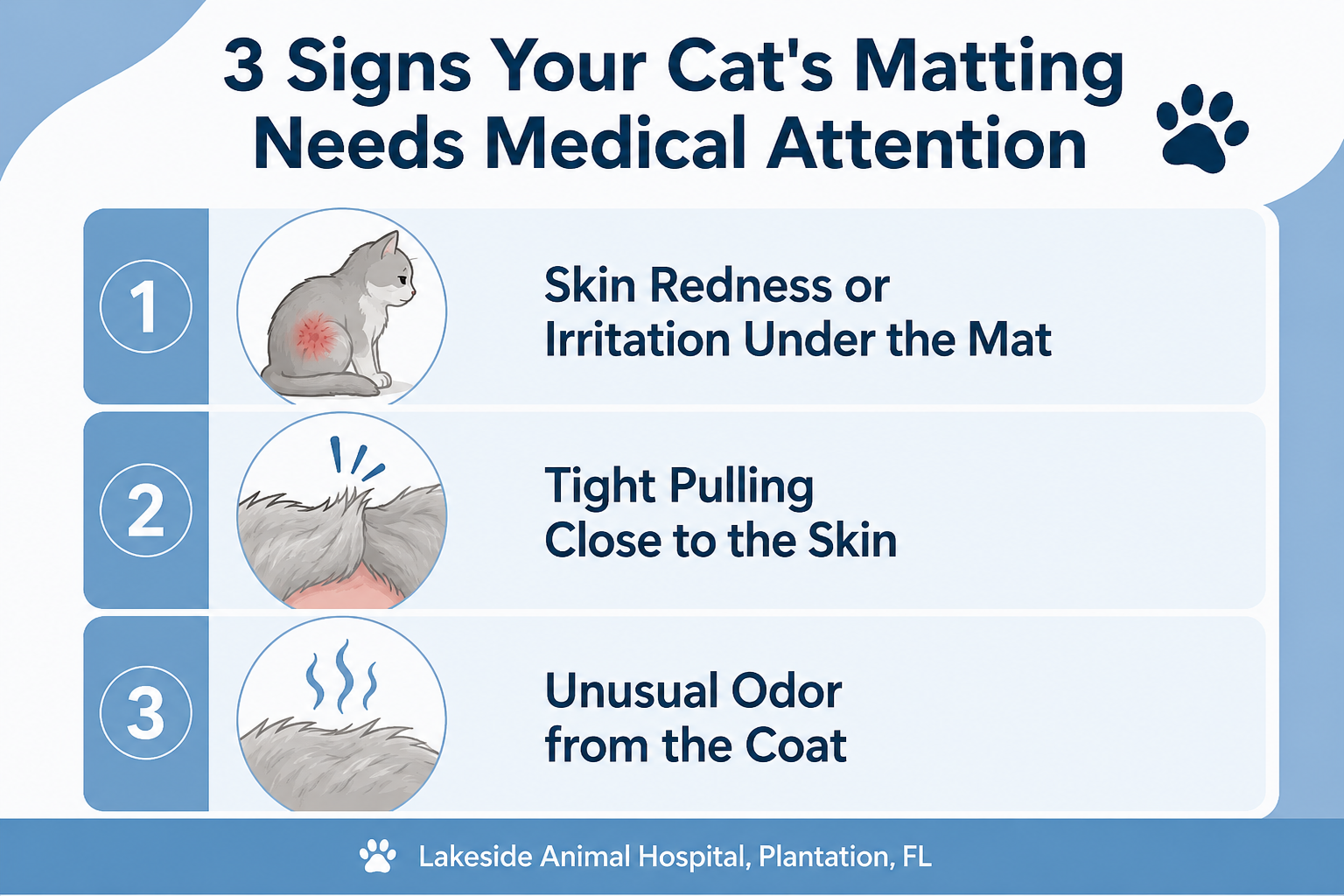
Mats that have tightened close to the skin pull with every movement your cat makes. Removing them with an awake cat often means restraint that can cause more pain and more resistance. Under light sedation, our team can work slowly and carefully without fighting a stressed animal, which lowers the risk of nicks, skin tears, and further irritation.
Anxiety and Stress-Related Aggression
Cats that hiss, bite, or become frantic during handling aren't being difficult on purpose. They're reacting to genuine fear. For these cats, a standard grooming appointment can raise cortisol levels enough to cause real physical stress. A supervised sedation protocol removes that fear response entirely, which is safer for the cat and for the staff handling them.
Is Sedated Grooming Safe?
Yes, when performed under veterinary supervision with a pre-sedation exam and continuous vital sign monitoring, sedated grooming carries low risk for most cats. This isn't the same as anesthesia for surgery. It's a light sedation protocol designed specifically for short, low-stress procedures like grooming and dematting.
Pre-Sedation Health Screening
Before any sedative is given, your cat gets a physical exam to check heart rate, respiration, and overall health. For senior cats or cats with existing conditions, bloodwork may be recommended first. This step is what separates a proper veterinary wellness exam from a groomer simply attempting to hold down a distressed cat. It's also part of the same medically supervised philosophy behind our medically supervised boarding program, where health monitoring happens alongside routine care rather than as an afterthought.
What's the Difference Between Sedated Grooming and a Regular Groomer?
A regular groomer works on an awake, restrained cat, while sedated grooming happens under veterinary oversight with monitoring equipment and a DVM available if needed. A traditional groomer, however skilled, isn't equipped to manage a cat's medical response to stress or handle a sedative if one becomes necessary.
At Lakeside Animal Hospital, sedated grooming happens in a clinical setting with a board-certified veterinary team nearby throughout the appointment. That means if anything unexpected comes up, from a skin irritation to a change in heart rate, it gets addressed immediately rather than discovered after the fact.
What Should You Expect on Grooming Day?
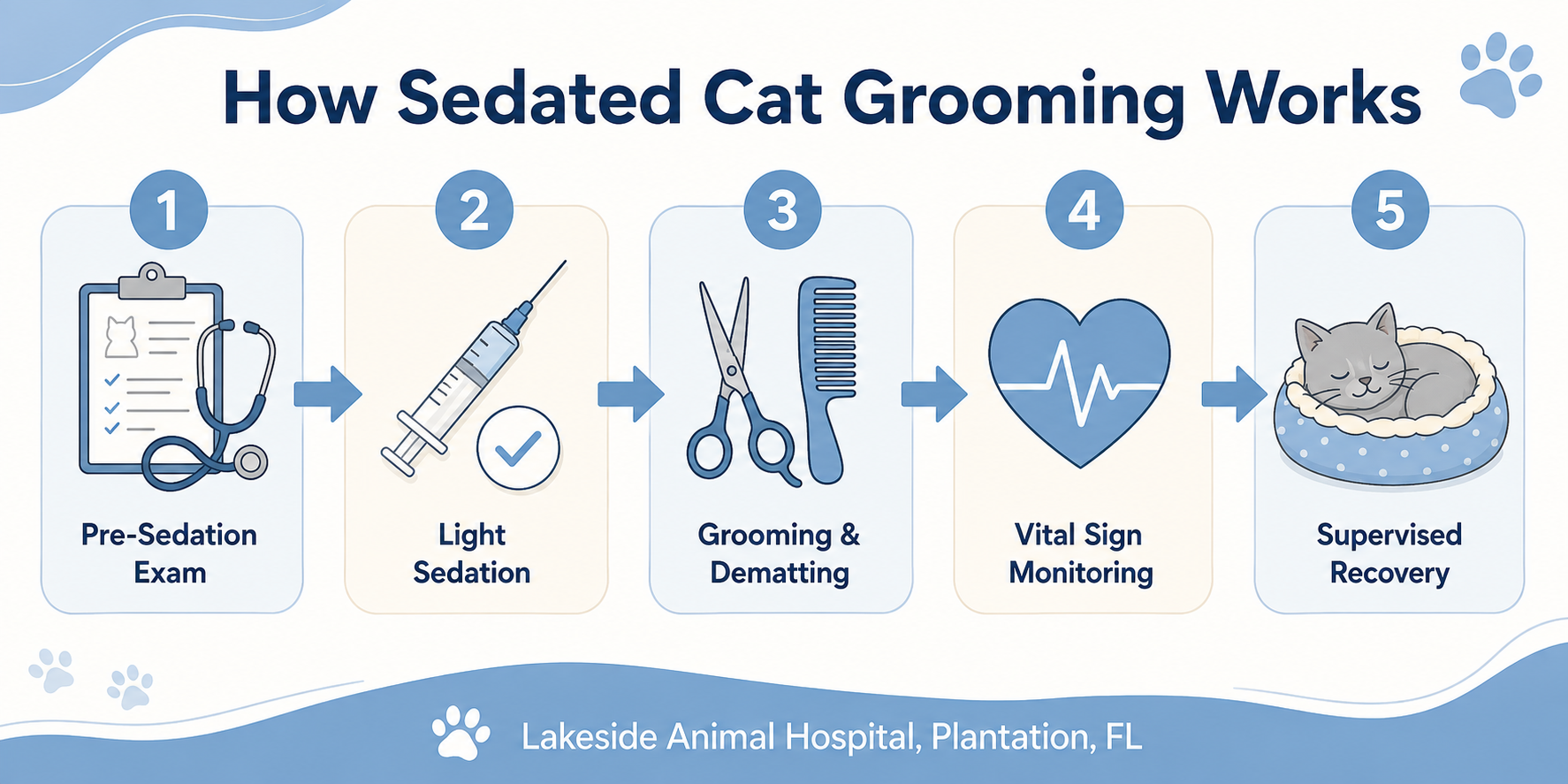
Your cat will have a brief exam, receive a light sedative, be groomed and monitored by veterinary staff, and recover in a quiet space before going home the same day. The full visit typically takes a few hours from start to finish.
Here's a general flow of what that looks like:
- Check-in and a short pre-sedation exam
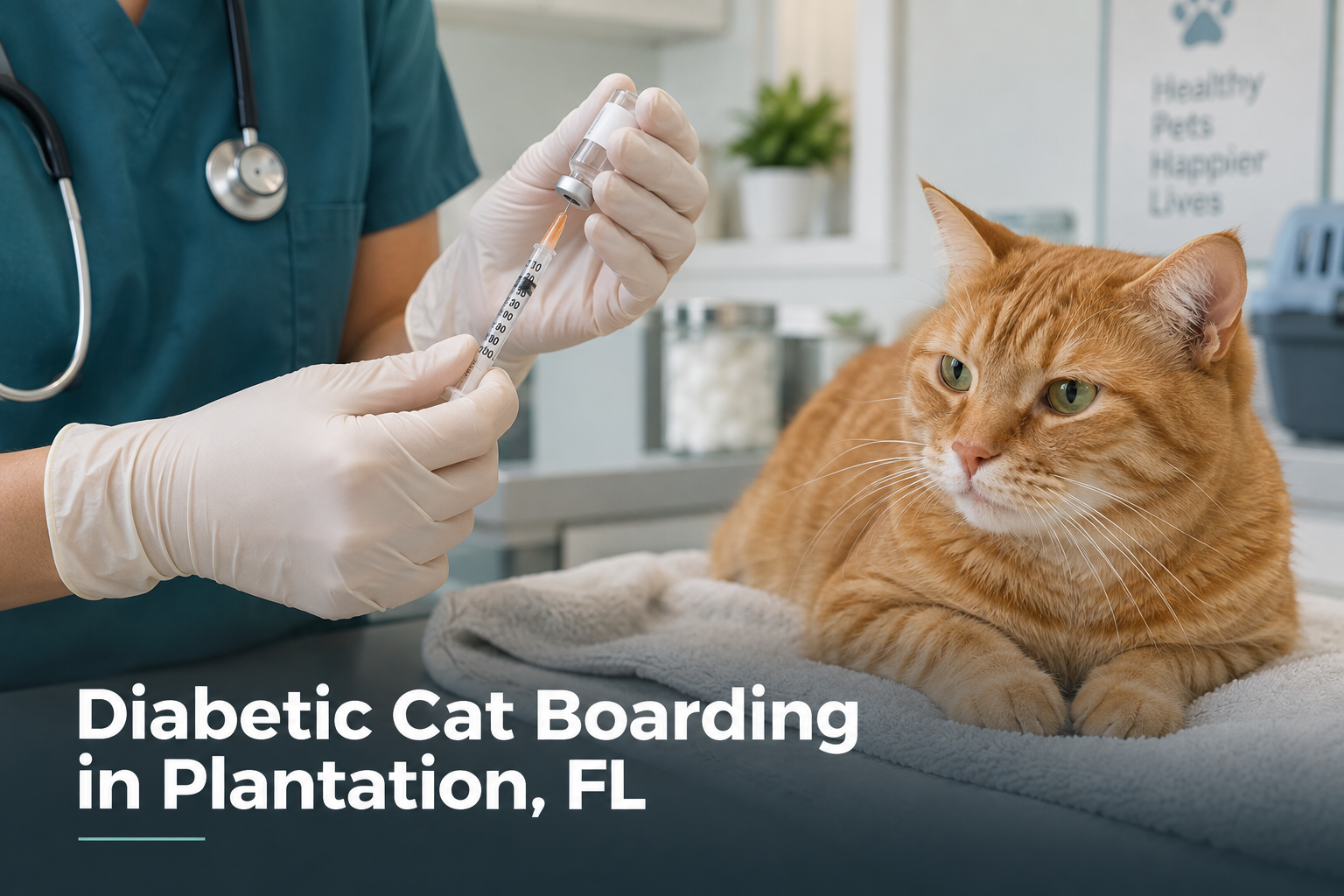
- A light sedative administered by trained veterinary staff
- Grooming and dematting while vital signs are monitored
- A quiet recovery period until your cat is alert and stable
- Discharge with aftercare notes for you to follow at home
Most cats are sleepy for the rest of the day and back to their normal selves by the following morning.
How Do You Know If Your Cat Is a Good Candidate?
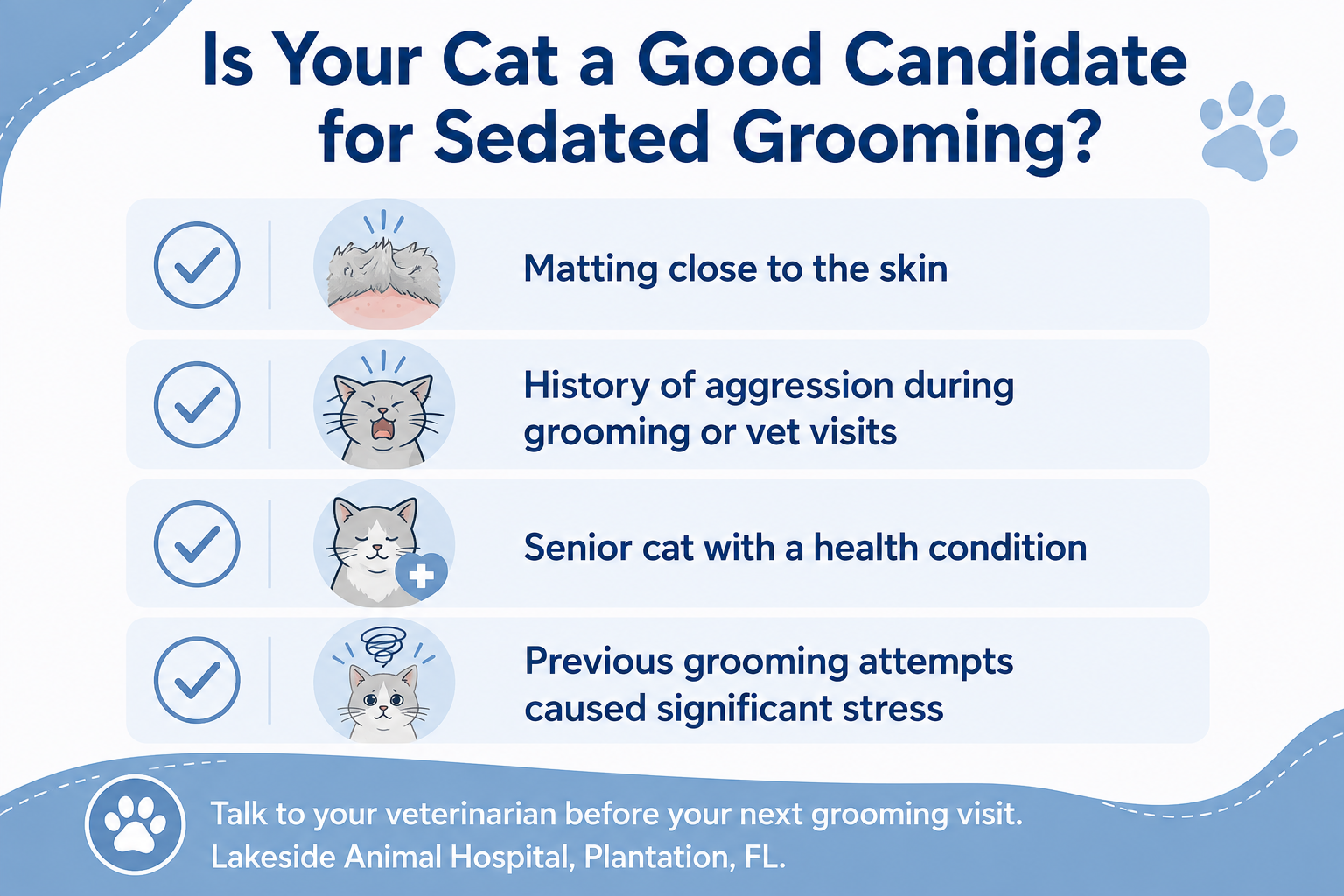
Cats with matting close to the skin, a history of grooming-related aggression, or advanced age are generally strong candidates worth discussing with a vet. If your cat has never tolerated nail trims, brushing, or bathing without a fight, sedated grooming is worth bringing up before the coat reaches a crisis point.
Senior cats deserve particular attention here. Age alone doesn't rule sedation out, but it does mean the pre-sedation screening matters more. We've written in more detail about sedated grooming safety for senior cats if your cat falls into that category.
Frequently Asked Questions About Sedated Cat Grooming
Is sedated grooming safe for senior cats?
In most cases, yes. A pre-sedation exam and bloodwork screening help confirm a senior cat can safely tolerate light sedation before grooming begins, and monitoring continues throughout the appointment.
How long does a sedated grooming appointment take?
Most appointments take a few hours total, including the pre-sedation exam, grooming itself, and a supervised recovery period before your cat is ready to go home.
Will my cat be groggy after sedated grooming?
Mild grogginess for the rest of the day is common and expected. Most cats are back to normal behavior by the next morning.
Dr. Frione's Perspective
"Owners often feel guilty bringing this up, like they've let their cat's coat get 'too bad.' I never see it that way. Some cats simply can't be groomed safely while awake, and sedation lets us fix the problem without a fight, for the cat or for us." — Dr. Jennifer Frione, DVM, Ross University School of Veterinary Medicine
Ready to Talk About Sedated Grooming for Your Cat?
Matting close to the skin doesn't resolve on its own, and left alone it can lead to painful skin irritation or infection. If your cat has reached that point, or if past grooming attempts have ended in stress for everyone involved, a consultation is the right next step.
Our team offers sedated cat grooming services under full veterinary supervision, with a personalized treatment plan built around your cat's health history and temperament. We see cats from Plantation, Sunrise, and Lauderhill for exactly this kind of care, and Dr. Frione's team is available for a pre-sedation exam before you commit to a full appointment.
Your pet is family, and matting this severe deserves more than a rushed appointment with an awake, frightened cat. In Plantation, sedated cat grooming gives your cat a safer path back to a comfortable coat, with a veterinary team watching over every step.