What Happens During a Cat Kidney Diet Consultation?
TL;DR: A kidney diet consultation reviews your cat’s bloodwork and current diet, then builds a kidney-supportive food plan with a step-by-step schedule for switching your cat onto it without food refusal.
A cat kidney diet vet consultation is often the first step Plantation cat owners take after a kidney disease diagnosis, and it shapes daily life more than almost any other part of care. Food is one of the few things you control at home, and the right renal diet can help slow progression in many cats. At Lakeside Animal Hospital, this visit is a conversation. You leave knowing what to feed, why it helps, and how to get your cat to eat it.
What Gets Reviewed During a Cat Kidney Diet Consultation in Plantation?
The consultation reviews your cat’s kidney values, current diet, and any other health factors that influence which renal diet formulation is the best fit. Together, those pieces shape a personalized treatment plan instead of a generic food recommendation.
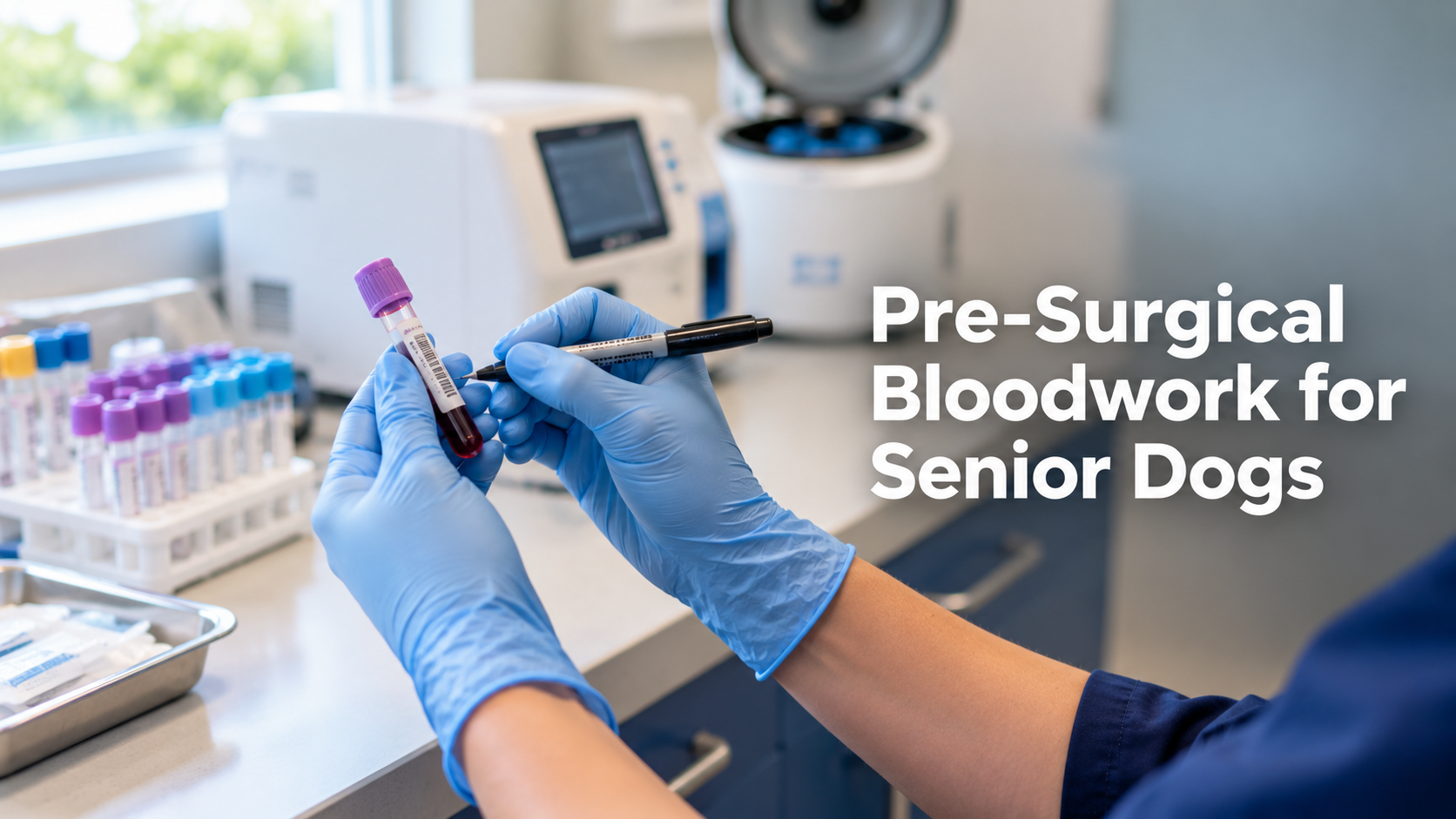
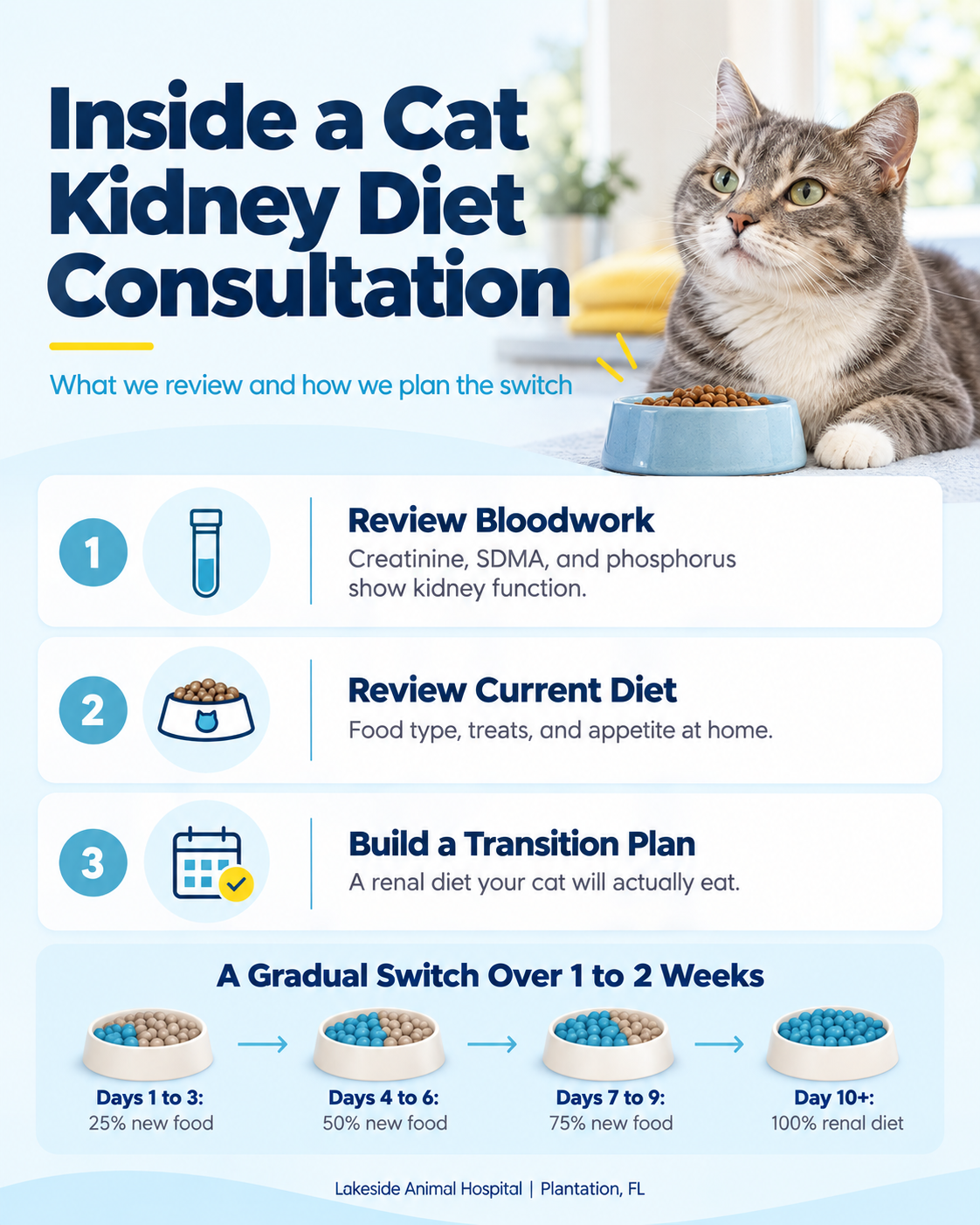
Bloodwork comes first. Creatinine, SDMA, and blood phosphorus show roughly how much kidney function your cat has and where they fall in IRIS staging, the system veterinarians use to classify kidney disease. A urinalysis and blood pressure reading round out the picture.
Next is what your cat eats now: the brand, wet or dry, treats, and how much actually disappears from the bowl. Other conditions matter too. A cat with hyperthyroidism, diabetes, or muscle loss may need a different approach than a cat with kidney disease alone. If your cat was recently diagnosed, our guide to the diagnosis and management of kidney disease covers the medical side in more depth.
How Is the Right Prescription Kidney Diet Chosen?
The right prescription kidney diet controls phosphorus, provides moderate high-quality protein, and is something your cat will reliably eat. A perfect formula your cat refuses does nothing for their kidneys.
Phosphorus restriction is the cornerstone of renal nutrition, because excess phosphorus adds strain to damaged kidneys. Protein levels are adjusted with care. Older cats still need enough quality protein to hold onto muscle, so the goal is moderation, not elimination.
Moisture matters as well. Cats with kidney disease lose water easily, and wet food is one of the simplest ways to support hydration. Matching formats, flavors, and textures to your cat’s palate is a big part of our nutritional counseling services.
Why Is a Gradual Diet Transition Important?
Cats can be selective eaters, and switching too quickly can lead to food refusal, so a gradual transition plan improves the odds of long-term acceptance. Most renal diet transitions take one to two weeks.
A common schedule starts with about 25 percent new food mixed into the old, then moves to half and half, then 75 percent, then the full renal diet. Some cats move faster. Others need extra days at each step, and that is normal.
Timing counts too. Cats can develop a lasting dislike of any food they eat while nauseous, so a new diet usually waits until your cat feels well. Warming wet food slightly can help, since aroma drives a cat’s appetite. If your cat stops eating for more than a day, call us right away.
“Diet consultations aren’t a one-size-fits-all conversation. I tailor the plan to what your cat will actually eat,” says Dr. Jennifer Frione, DVM, whose clinical interests include nutrition and preventative care.
Quick Questions
Will my cat need a prescription food for kidney disease?
In most cases, yes. Prescription kidney diets limit phosphorus and balance protein in ways over-the-counter senior foods typically do not. For cats in very early stages, your veterinarian may recommend a different starting point based on bloodwork, then adjust the plan as recheck results come in.
How long does it usually take a cat to accept a new kidney diet?
Most cats accept a renal diet within one to two weeks when the switch is gradual. Changing food all at once tends to backfire. If your cat resists, several formulas, textures, and flavors are worth trying before setting renal nutrition aside.
Can I feed my cat a homemade kidney diet?
Yes, but only with a recipe formulated by a board-certified veterinary nutritionist. Homemade diets built from online recipes are often unbalanced, especially in phosphorus and calcium. If cooking at home matters to you, bring it up during your visit and we can talk through the safest options.
Book Your Cat’s Kidney Diet Consultation
A cat kidney diet vet consultation gives you a clear feeding plan and a team that checks in as your cat adjusts. Plantation families, along with cat owners in Sunrise and Lauderhill, trust Dr. Frione’s ten years of experience and her focus on nutrition. Your pet is family, and we treat them as if they are ours.