
How Do Vets Diagnose Cognitive Dysfunction in Senior Dogs?
TL;DR: Vets diagnose cognitive dysfunction primarily by ruling out other medical causes through a physical exam and bloodwork, then evaluating the behavioral history you provide about changes at home. There is no single test that confirms it on its own.
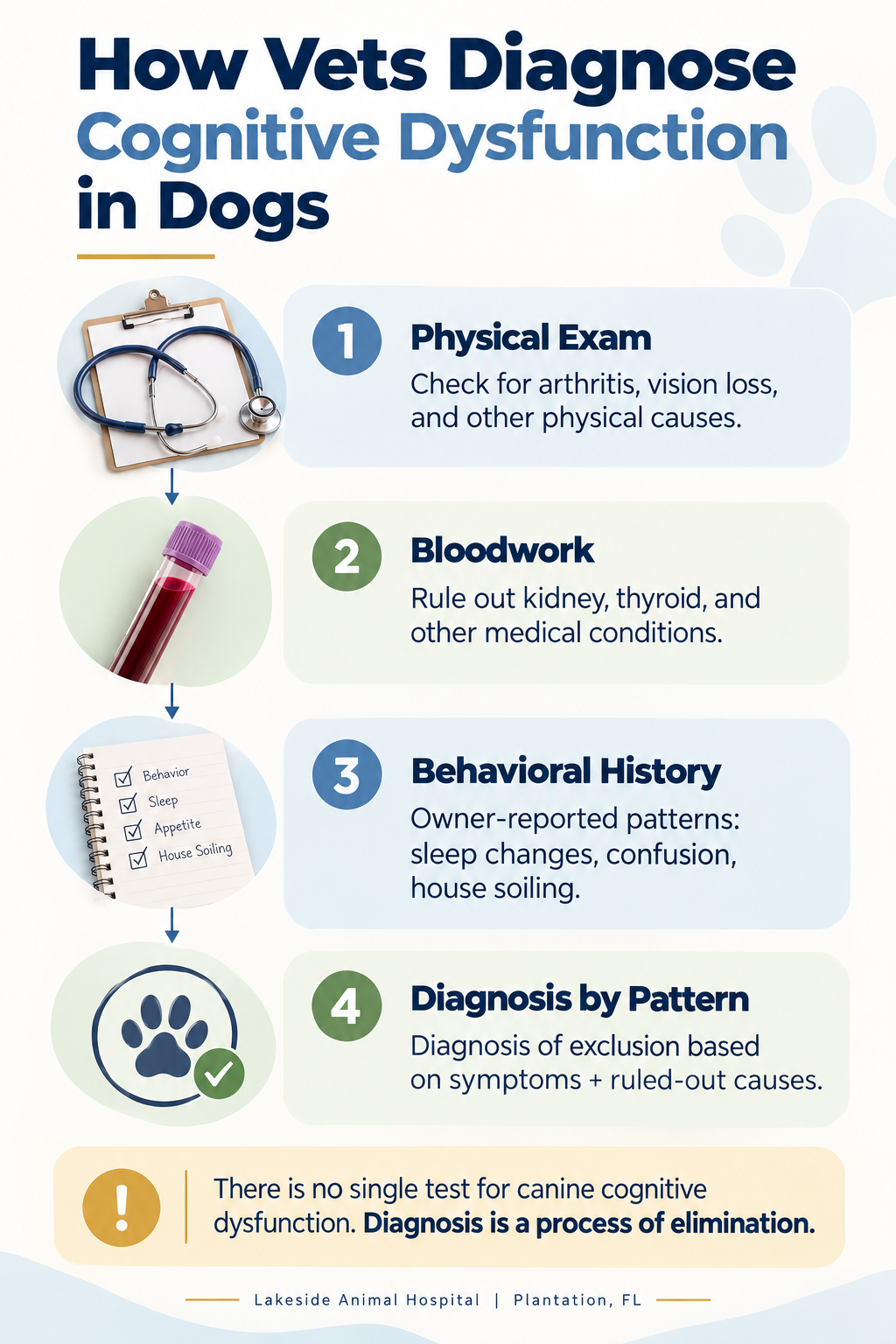
If your senior dog has started pacing at night, forgetting familiar routines, or having accidents in the house, you're probably wondering what a diagnosis for cognitive dysfunction actually looks like. Plantation families bring this question to us often, and the honest answer is that diagnosing cognitive dysfunction syndrome (CCD) isn't as simple as running one test. It's a process of elimination built on your dog's exam, bloodwork, and the specific pattern of symptoms you've noticed at home.
What Does the Diagnostic Process Involve?
The process combines a physical exam and bloodwork to rule out other conditions, along with a thorough behavioral history you provide about changes at home. Many of the symptoms associated with CCD, things like disorientation, house soiling, or changes in sleep, can also point to kidney disease, thyroid imbalance, arthritis pain, or vision loss. That's why bloodwork and a hands-on exam come first.
Once those medical causes are ruled out, we look closely at the behavioral picture. We're paying attention to whether the symptoms fit a recognizable pattern rather than a one-off event. A dog who has an isolated accident after a stressful day is different from a dog who has started forgetting where the door is. Our senior pet care services include this kind of layered evaluation for aging dogs in Plantation, Sunrise, and Lauderhill.
Why Is Owner Input So Important?
Because cognitive dysfunction is diagnosed largely by symptom pattern rather than a single test, your day-to-day observations are one of the most valuable diagnostic tools available. We only see your dog for a short appointment. You see them every day.
Specific, dated examples carry far more weight than general impressions. "He seems off lately" is harder to work with than "he's had three nighttime pacing episodes this week and stood staring at the wall twice." The more concrete detail you bring in, the faster we can separate a true cognitive change from something else entirely.
Dr. Jennifer Frione, DVM, puts it plainly: "The bloodwork rules things out, but it's really your observations at home that tell me the most."
Quick Questions
Is there a single test that confirms cognitive dysfunction?
No single test confirms it. Diagnosis relies on ruling out other causes through bloodwork and exam findings, combined with a consistent pattern of behavioral symptoms your vet reviews alongside you.
What should I track before my dog's appointment?
Track sleep patterns, house soiling incidents, confusion episodes, and any changes in interaction with family. Specific, dated examples help your vet identify a real pattern rather than a single unusual day.
What's the Right Next Step?
If some of these signs sound familiar, the next step is understanding the full picture, not just the diagnosis but what treatment and daily management can realistically look like for your dog. Our team has spent years helping Plantation families navigate senior pet health with a personalized treatment plan built around each individual dog.
Read our complete guide to signs and treatment options for cognitive dysfunction for a closer look at what comes after diagnosis, or reach out to schedule an exam so we can start building a clear picture of what's going on with your dog.