What Pre-Anesthetic Bloodwork Values Matter Most for a Senior Dog?
TL;DR: Kidney values, liver enzymes, and a complete blood count are the most important markers checked before senior dog surgery. Together they show how well your dog's body can process anesthesia and recover afterward.
Pre-anesthetic bloodwork before senior dog surgery tells your veterinary team whether anesthesia is safe and how to tailor it to your dog. Plantation families with an older dog facing a mass removal, a dental extraction, or another soft tissue procedure will find that these results shape almost every decision. They guide which drugs are chosen, how they're dosed, and how much support your dog gets during recovery. Here is what the numbers mean, which ones matter most, and why age changes the picture.
Which Pre-Anesthetic Bloodwork Values Matter Most Before Surgery?
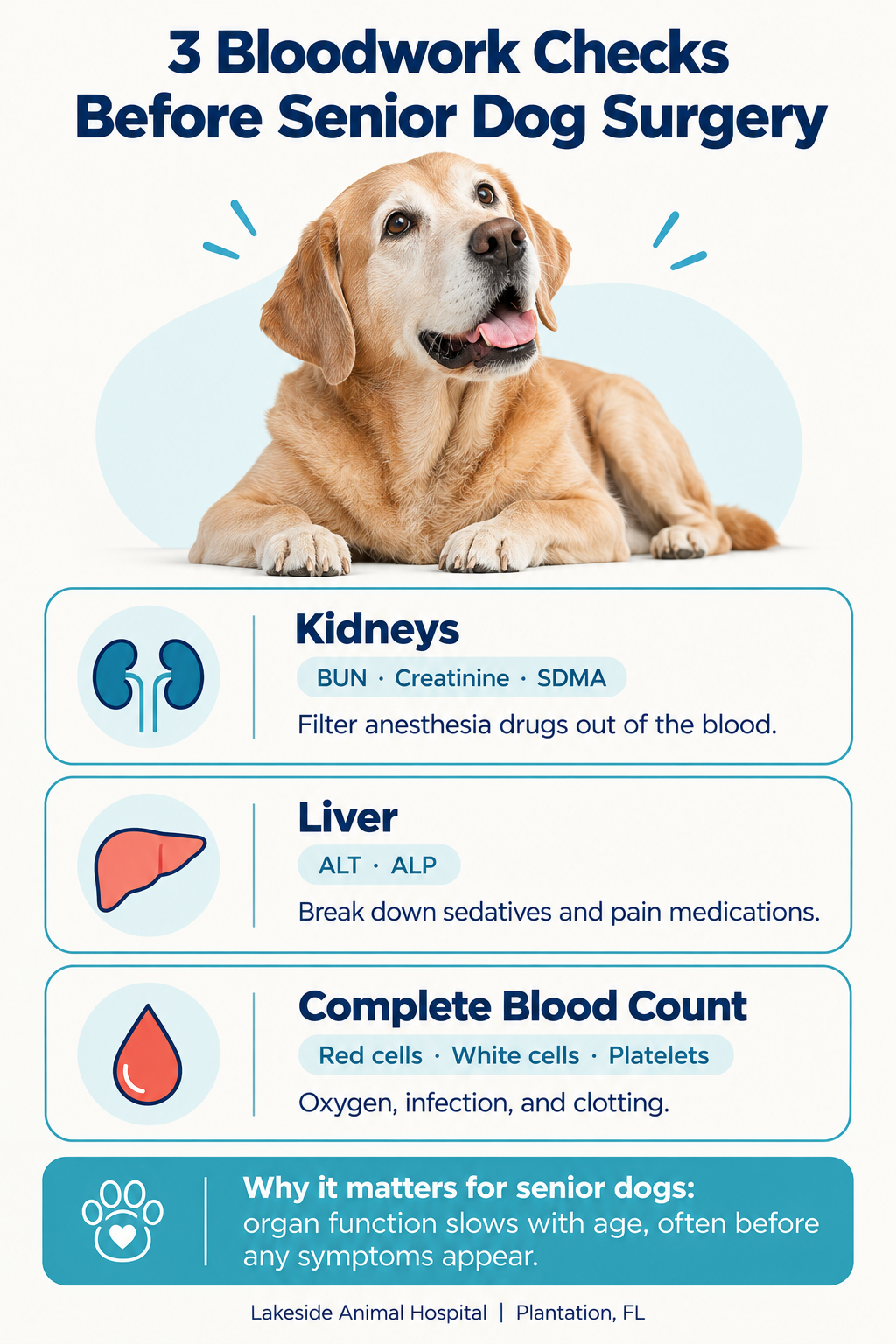
Kidney values (BUN, creatinine, and often SDMA) and liver enzymes (ALT and ALP) are top priorities, because the kidneys and liver process and clear anesthesia drugs from the body. A complete blood count rounds out the picture.
The kidneys filter waste and anesthetic byproducts out of the bloodstream. BUN (blood urea nitrogen) and creatinine rise when that filtering slows down. SDMA is a newer marker that can flag kidney decline earlier than creatinine alone. The liver breaks down many sedatives and pain medications, so elevated ALT or ALP suggests your dog may clear those drugs more slowly.
The complete blood count, or CBC, looks at three types of cells:
- Red blood cells carry oxygen, which matters when breathing slows under anesthesia.
- White blood cells can reveal a hidden infection or inflammation.
- Platelets help blood clot, which matters for any procedure that involves an incision.
Your vet will usually check glucose, total protein, albumin, and electrolytes like potassium as well. Low albumin, for example, can change how certain drugs behave once they're in the bloodstream.
Why Does This Matter More for Senior Dogs Specifically?
Organ function naturally declines with age. That makes senior dogs more likely to have subtle kidney, liver, or blood changes that won't show up on a physical exam but could affect anesthesia safety.
Most dogs are considered senior around age 7, and large breeds often reach that stage sooner. A dog can lose a meaningful share of kidney function before a single symptom appears. Your dog might still eat well, chase lizards across the yard, and greet you at the door while early changes are already underway.
Anesthesia lowers blood pressure, and aging kidneys are more sensitive to that drop. Knowing about a borderline value ahead of time lets your vet add IV fluids, choose gentler drugs, or adjust doses before the first injection. As Dr. Jennifer Frione, DVM, puts it: "Bloodwork is where I catch the things a physical exam alone would miss. It's non-negotiable for me before any anesthesia."
That standard applies to every patient who comes through our surgical services, from routine procedures to more involved soft tissue cases.
What Else Might Your Vet Check for an Older Dog?
For senior dogs, a urinalysis and a thyroid level (T4) are common add-ons. Dogs with a heart murmur may also need chest X-rays or an ECG before anesthesia.
Urine concentration helps your vet decide whether a borderline kidney value reflects a true problem or a temporary hydration dip. A low thyroid level can slow metabolism and change how drugs are processed. Clotting tests make sense before procedures with a higher bleeding risk.
Lakeside has an on-site laboratory, so many results come back the same day. That keeps your dog's personalized treatment plan moving without waiting on an outside lab.
Quick Questions
Can surgery still happen if bloodwork shows a mild abnormality?
Often, yes. A mild abnormality usually means the anesthesia protocol is adjusted, not that surgery is canceled. Your vet might add IV fluids, switch certain medications, or recheck a value before the procedure. Many senior dogs with minor changes still have safe, successful surgeries when the plan is built around their results.
How recent does pre-surgical bloodwork need to be?
Most practices want bloodwork done within about 1 to 2 weeks of surgery so the results reflect your dog's current health. Senior dogs often get a shorter window, since their values can shift faster. If your dog has recent results on file, your vet will tell you whether a fresh panel is needed.
Does my dog need to fast before the blood draw?
Often, yes. A recent meal can temporarily shift some values and make the sample harder to read, so many vets ask for a short fast first. Surgery day comes with its own fasting instructions. Follow the exact timing your veterinary team gives you, especially if your dog is diabetic.
Learn About Our Surgical Safety Process
At Lakeside Animal Hospital, every surgical patient goes through a rigorous pre-surgical protocol, and senior dogs get extra attention to organ function before anesthesia. Your pet is family, and we treat them as if they are ours. To see how we prepare, monitor, and recover each patient, explore our full pre-surgical safety process. If you'd like to talk through your dog's bloodwork before surgery, call to schedule a consultation. We proudly care for families in Plantation, Sunrise, Lauderhill, and Plantation Gardens.