When Does a Dog Need Medical Grooming Instead of a Regular Groomer?
TL;DR
- A dog needs medical grooming when mats sit tight against the skin, trap moisture, or have caused redness, odor, or irritation underneath.
- Medical dematting is done under veterinary supervision. It starts with a skin assessment, and light sedation is used only when your dog’s comfort and safety call for it.
- Brushing several times a week and a professional groom every 4 to 6 weeks keeps most coats from reaching that point.
Most mats start small. A tangle behind the ears, a knot in the armpit, a rough patch on the back legs after a few rainy weeks. South Florida humidity tightens those tangles quickly, and by the time many Plantation dog owners notice, the coat has formed a dense layer pressed against the skin. At that point, a salon trim stops being the right tool, and medical dog grooming and dematting becomes the safer path.
At Lakeside Animal Hospital, we see this every week, and we never treat it as a failure on the owner’s part. Your pet is family, and we treat them as if they are ours. This guide explains how to tell when matting has become a medical problem, why a standard groomer may turn it away, what happens during an appointment, and how to keep it from coming back.
How Do You Know Your Dog’s Matting Needs Medical Grooming?
Matting becomes a medical concern when it pulls tight against the skin, traps moisture, or has caused redness, odor, or irritation underneath. If you can’t slide a comb between the mat and the skin, the problem has moved past the at-home stage.
Signs of Skin Damage from Matting
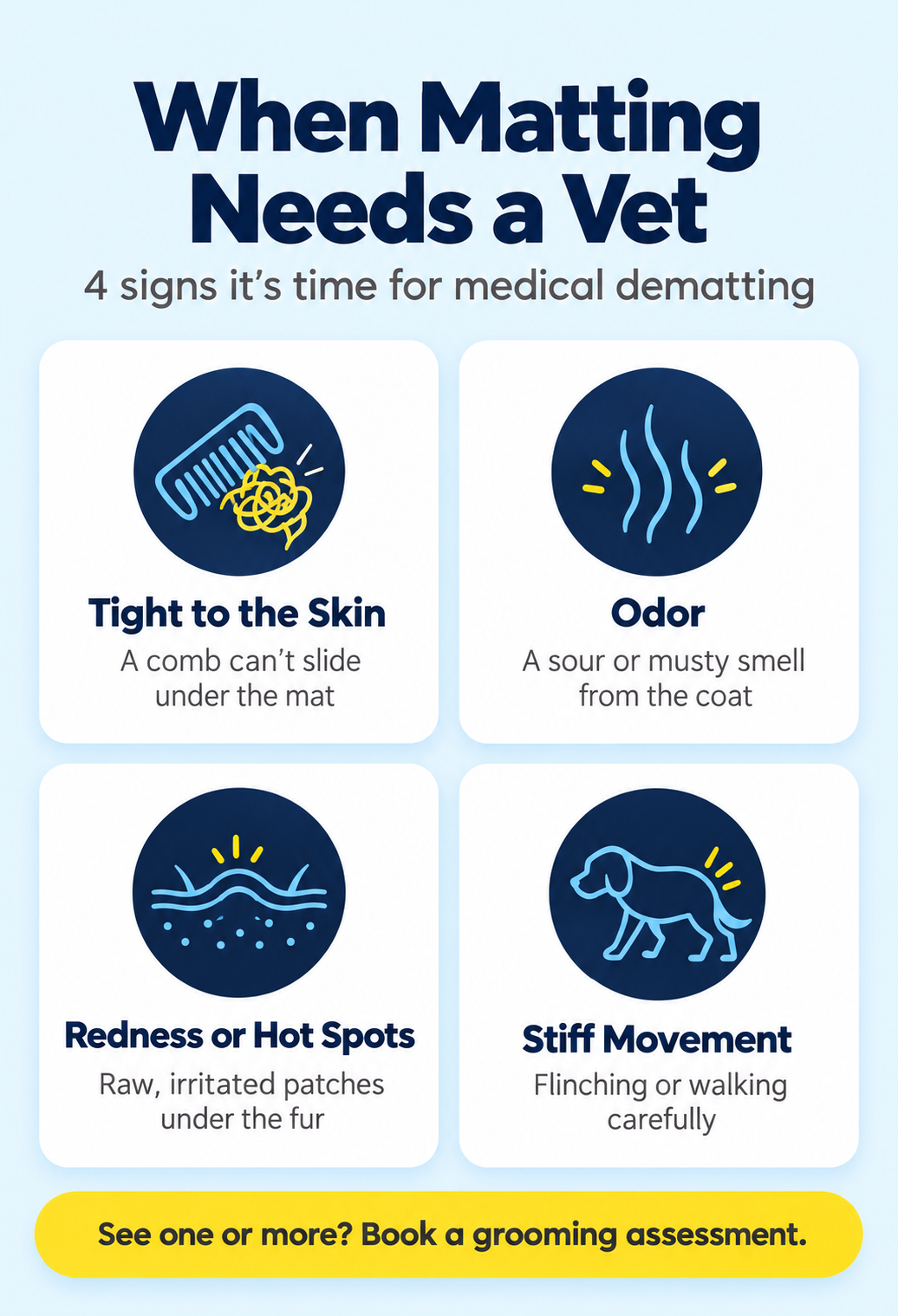
Severe mats can form pelting, a dense sheet of fur that moves as one piece. Air can’t reach the skin beneath it, so moisture and bacteria build up. Watch for these signs:
- A sour or musty smell coming from the coat
- Red, warm, or weeping skin when you part the fur
- Hot spots, which are raw, inflamed patches your dog keeps licking
- Stiff walking, or flinching when touched near the legs, tail, or ears
Any one of these means your dog needs a veterinary grooming assessment, not just a haircut.
Why Can’t a Regular Groomer Handle Severe Matting?
Removing mats that sit flush against the skin is painful and can nick or tear the skin itself, so it calls for a controlled setting with veterinary support. Many responsible groomers decline heavily matted dogs for exactly this reason.
Dog skin is thinner than most owners expect. A tight mat lifts it into folds that are easy to cut by accident, and a frightened dog twisting on the table raises that risk. A salon also can’t treat the infection, sores, or parasites sometimes hiding under the coat.
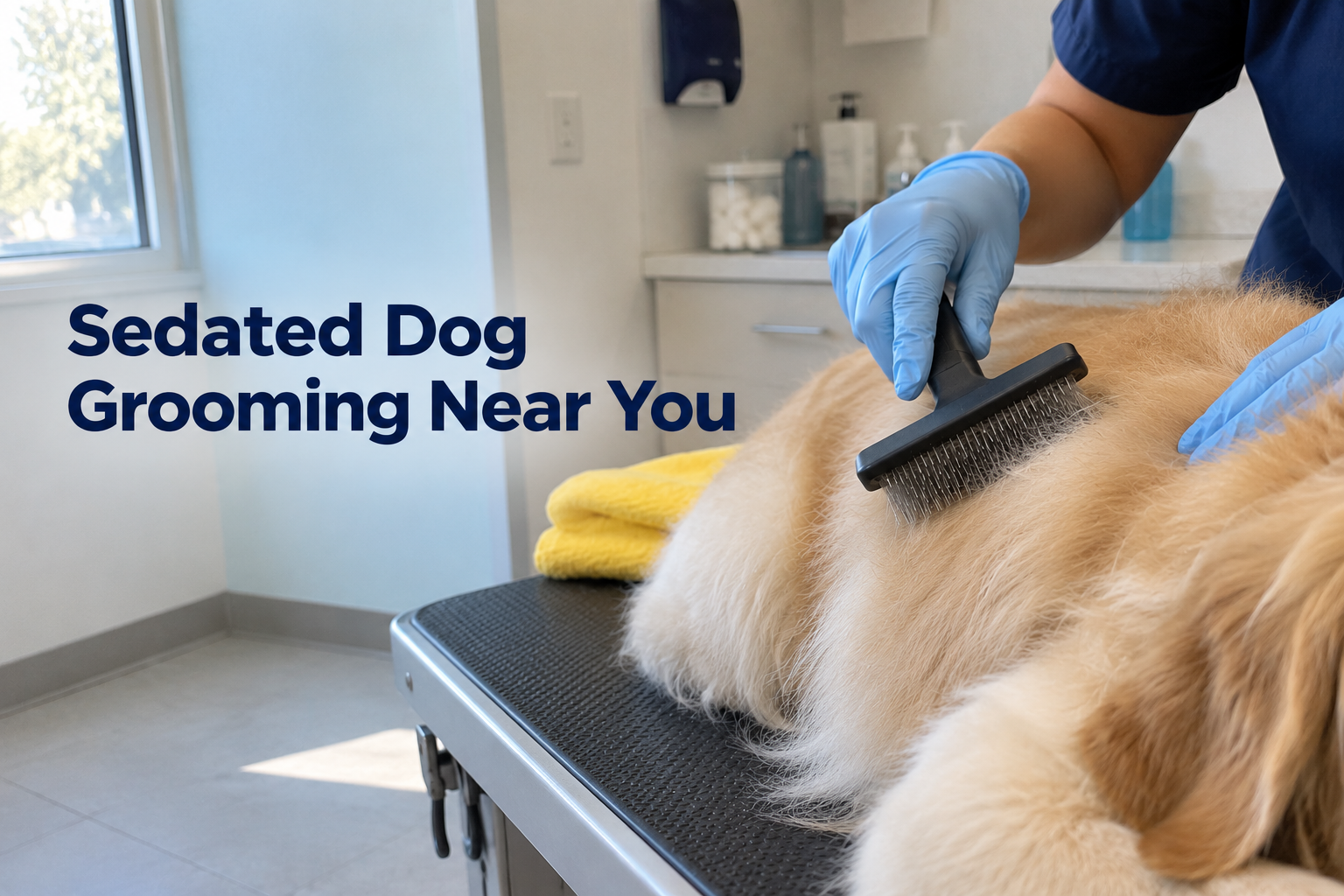
If your dog is anxious or the matting is extensive, it helps to know what to look for in sedated dog grooming before you book anywhere. Veterinary supervision, pain management, and monitoring should all be part of the plan.
What Happens During a Medical Dematting Appointment in Plantation?
Your dog receives a skin assessment first, and depending on severity, dematting is performed with or without light sedation to keep the process safe and low-stress. The goal is a comfortable dog and healthy skin, not a show cut.
Most visits follow five steps:
- A hands-on exam of the coat and skin
- A sedation decision based on pain level, temperament, and health history
- Careful clipping beneath the mats, working slowly around sensitive areas
- A post-groom skin check for sores, infection, or parasites
- An aftercare plan, which may include medicated bathing or a recheck visit
When sedation is the right call, our team monitors your dog from start to finish. Cat owners in our care may already know how sedated grooming works for cats, and the same safety-first approach applies to dogs.
How Can You Prevent Severe Matting in the Future?
Regular brushing at home and scheduled grooming appointments every 4 to 6 weeks are the most effective ways to keep matting from reaching a medical stage. Consistency matters more than any single brush.
Focus on friction zones: behind the ears, under the collar, the armpits, and the back of the hind legs. Doodles, poodles, shih tzus, and other long or curly coats need the most attention. During Plantation’s humid summers, dry your dog fully after swims and baths, since damp fur tangles fastest. After a medical dematting, we build a personalized treatment plan for coat care that fits your dog’s breed and your schedule.
Frequently Asked Questions About Medical Dog Dematting
Is matted fur painful for dogs?
Yes. Mats that pull tight against the skin cause constant tugging with every step, and severe matting can restrict movement or trap moisture that leads to skin infections. “In my experience, owners are often surprised by how much more freely their dog moves once the mats are gone,” says Dr. Jennifer Frione, DVM.
Will my dog need to be sedated for dematting?
Not always. Mild to moderate matting can often be handled without sedation. “I recommend sedation when the mats are tight against the skin or the dog is clearly uncomfortable being handled,” says Dr. Frione. “It keeps the skin safe and spares the dog a stressful hour on the table.”
How often should I brush my dog to prevent matting?
For most medium and long-haired breeds, brushing several times a week prevents mats from forming. Pay extra attention to friction areas like behind the ears, under the legs, and around the collar. Pair home brushing with a professional groom every 4 to 6 weeks for the best results.
Dr. Frione’s Perspective on Matted Dogs
“By the time a dog comes to us for medical dematting, the coat has usually been a problem for a while. I never want owners to feel judged about it. I just want to get the dog comfortable again and talk through a plan so it doesn’t happen a second time.”
Dr. Jennifer Frione, DVM, Ross University School of Veterinary Medicine, 10 years in veterinary practice
Ready to Get Your Dog Comfortable Again?
Severe matting can worsen quickly and lead to skin infection if left untreated, so the sooner your dog is seen, the simpler the fix tends to be. If you’re worried about sedation or about being judged for the state of the coat, please don’t be. Every visit starts with a conversation and an exam, and nothing happens without your input.
Our medical grooming and dematting services are veterinary-supervised and built around a personalized treatment plan for each dog. We welcome Plantation families, along with neighbors in Sunrise and Lauderhill. Call our Plantation hospital to Schedule a Grooming Assessment .
Your dog’s coat says a lot about their comfort. When matting moves past what a brush can fix, medical dog grooming and dematting in Plantation gives your dog a safe, gentle reset, guided by a veterinary team that knows South Florida coats well. Your pet, your family, and our full attention.