How Does Boarding Work for a Diabetic Cat Who Needs Insulin?
TL;DR
- Diabetic cats can board safely at a veterinary hospital where trained staff administer insulin on schedule, monitor for signs of blood sugar changes, and maintain the consistent feeding routine diabetic cats need.
- This type of care requires more than a standard kennel stay. It requires a facility built around medical supervision.
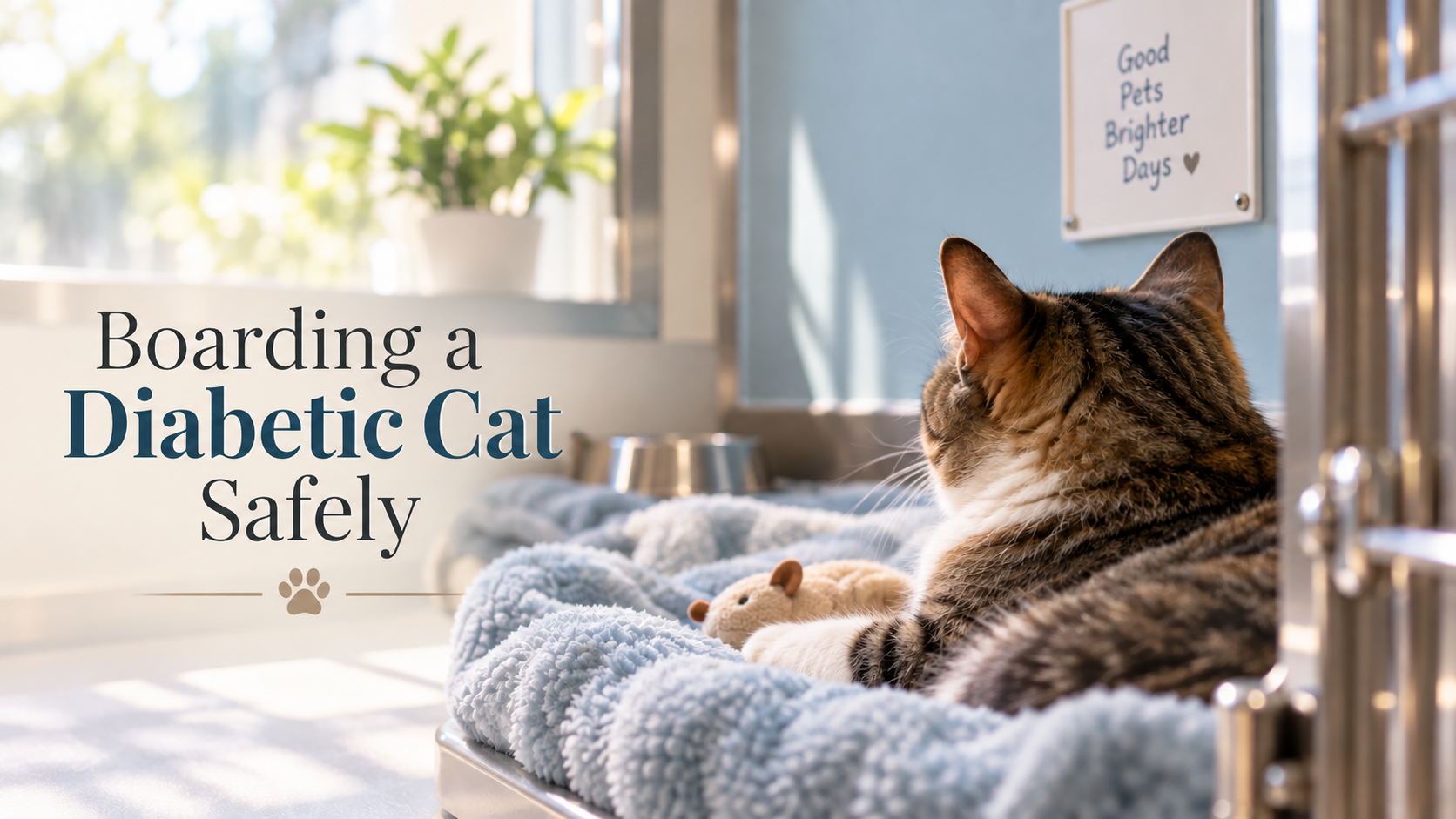
Traveling with a diabetic cat isn't as simple as dropping off food and a leash. Insulin has to be given at the right time, in the right dose, every single day, and a missed injection can turn into a real emergency fast. For Plantation families managing a cat with insulin-dependent diabetes, the question isn't whether to board at all. It's where to board somewhere qualified to handle it. Diabetic cat boarding with insulin injections in Plantation works best at a facility connected to a veterinary hospital, where technicians are trained to administer medication and a veterinarian is close by if something changes. This guide walks through exactly how that process works, what to prepare before drop-off, and what separates true medical boarding from a standard kennel stay.
Why Can't a Diabetic Cat Board at a Standard Kennel?
Standard kennels typically aren't staffed or trained to administer insulin injections or recognize early signs of a blood sugar emergency, which puts a diabetic cat at real risk. Most boarding kennels are set up for healthy pets who need feeding, walking, and a clean space to stay. Medication administration, especially injectable medication tied to a strict schedule, falls outside what most kennel staff are trained or licensed to do.
A diabetic cat's insulin dose is calculated for that individual animal. Giving it a little late, a little early, or skipping it entirely can throw off blood sugar control for days. Kennel attendants without veterinary training may not know what a hypoglycemic cat looks like until symptoms are already severe.
The Risk of Missed or Inconsistent Dosing
Cats regulate blood sugar differently than dogs, and diabetic cats in particular can swing toward dangerously low glucose if a dose is mistimed or a meal is skipped. Inconsistent dosing over a multi-day boarding stay isn't just inconvenient. It can undo months of careful diabetes management and, in serious cases, become a medical emergency requiring urgent treatment.
How Is Insulin Managed During a Medical Boarding Stay?
Veterinary staff follow your cat's exact insulin schedule and dosage, administered by trained technicians and documented at each dose. At Lakeside Animal Hospital, this means your cat's boarding stay is built around the same medical routine they'd have at home, not adjusted to fit a kennel's general schedule.
Each dose is given by a veterinary technician, not a general kennel attendant, and logged so there's a clear record of exactly when and how much insulin was administered. If your cat's regular schedule calls for injections every twelve hours alongside meals, that timing is what staff follow. Because the boarding facility operates within the hospital, a veterinarian is available if your cat's glucose levels need to be checked or adjusted mid-stay.
This is also where a facility offering how medical pet boarding works differs from typical pet boarding. Medical boarding is designed around chronic condition management, not just supervised playtime and feeding.
What Information Should You Provide Before Boarding?
Bring your cat's current insulin, exact dosage and timing, feeding schedule, and any recent bloodwork or glucose curve results. The more precise the information staff have going in, the more consistent your cat's care will be throughout the stay.
Before drop-off, it helps to write out (or bring a copy of) your cat's daily routine: when they eat, how much, what brand of insulin, the exact unit dosage, and the syringe type used. If your cat has had a recent glucose curve done, bringing those results gives the veterinary team a clear baseline. Any changes in appetite, water intake, or behavior over the past few weeks are worth mentioning too, since those details can matter if anything needs monitoring during the stay.
An intake exam is typically part of this process. It gives the veterinary team a chance to confirm your cat is stable enough for boarding and to ask any follow-up questions about their diabetic cat care while traveling plan before you leave.
What Signs Does Staff Watch for During the Stay?
Staff monitor for signs of hypoglycemia such as lethargy, weakness, or disorientation, along with normal eating and drinking patterns. These are the early indicators that something may be off with a diabetic cat's blood sugar, and catching them early is what prevents a minor issue from becoming a serious one.
Technicians also track whether your cat is eating on schedule, since appetite and insulin dosing are closely linked for diabetic cats. A cat who skips a meal may need their next insulin dose adjusted, and that's a judgment call best made by someone trained to recognize it. Litter box habits, energy level, and general demeanor are also part of what staff watch for during a multi-day stay, giving a fuller picture of how your cat is doing beyond just the injection schedule itself.
How Do You Choose the Right Boarding Option for a Diabetic Cat?
Look for a facility that operates within or alongside a veterinary hospital, not a standalone kennel, so a vet is available if your cat's condition changes. This single factor matters more than amenities, location, or price when your cat has a chronic condition like diabetes.
Ask directly who administers medication, whether that person is a licensed veterinary technician, and what happens if your cat shows signs of a blood sugar change overnight. A facility confident in its process will answer these questions clearly and specifically, not with general reassurance.
If you're weighing whether your cat truly needs this level of supervision, it's worth reading through whether a standard kennel is safe for a diabetic cat, which breaks down the specific risks in more detail. For a broader comparison of care levels, the difference between medical and standard boarding is also useful context for Plantation, Sunrise, and Lauderhill families weighing their options.
Frequently Asked Questions About Diabetic Cat Boarding
Can any veterinary boarding facility administer insulin?
Not necessarily. Ask specifically whether trained veterinary staff, not just kennel attendants, will be administering injections and monitoring your cat's condition throughout the stay. This distinction matters more than most pet owners realize.
What happens if my diabetic cat's blood sugar drops while boarding?
At a medically supervised facility, staff are trained to recognize early signs of hypoglycemia and have immediate access to a veterinarian for intervention if needed. That access is the core difference between medical boarding and a standard kennel.
Should I bring my cat's regular food when boarding?
Yes. Maintaining your cat's regular diet and feeding schedule is important for insulin stability, so bringing their usual food is strongly recommended. Even a brief diet change can affect how their body responds to insulin.
How far in advance should I book insulin-dependent boarding?
Space for medically supervised boarding is limited compared to standard kennels, and an intake exam is usually required beforehand. Booking a few weeks ahead of travel gives time to complete that exam and confirm your cat's care plan.
Will my cat see the same veterinary team throughout the stay?
In most cases, yes. A hospital-based boarding setup means the same technicians and veterinarians familiar with your cat's chart are the ones managing their care day to day, rather than rotating staff unfamiliar with their history.
Dr. Frione's Perspective
"Diabetic cats need consistency more than almost anything else, and that's exactly what a standard kennel can't guarantee. When a family boards their diabetic cat with us, I know the insulin schedule will be followed exactly, because that's what protects the cat." — Dr. Jennifer Frione, DVM, Ross University School of Veterinary Medicine
Ready to Book Your Cat's Boarding Consultation?
If you've been putting off travel plans because you're not sure who can safely manage your diabetic cat's insulin, that hesitation is understandable, and it's exactly what a proper intake consultation is meant to resolve. Space for insulin-managed boarding for diabetic cats is limited, since each stay requires an intake exam and a dedicated care plan built around your cat's specific schedule.
Lakeside Animal Hospital provides this level of care for families throughout Plantation, Sunrise, and Lauderhill, with board-certified veterinary oversight and trained technicians handling every dose. Your pet is family, and that's the standard we hold ourselves to for every boarding stay, diabetic or otherwise.
Schedule Your Cat's Boarding Consultation by phone or through online booking to reserve a spot and start your cat's personalized treatment plan before your next trip.
Diabetic cat boarding with insulin injections in Plantation doesn't have to be a source of stress before a trip. With the right facility, trained hands, and a documented schedule, your cat's care continues exactly as it would at home. Plantation families trust Lakeside Animal Hospital to protect that consistency, one dose at a time.