What Is Medical Pet Boarding, and Does Your Pet Need It?
TL;DR
- Medical pet boarding places your pet inside a veterinary hospital, not a standalone kennel, so a licensed veterinary team monitors their condition, manages medications, and can respond immediately if something changes.
- It's built for pets with diabetes, seizure disorders, recent surgeries, or other conditions that need more than food, water, and a walk.

If you're a Plantation pet owner planning a trip and your dog or cat has diabetes, a heart condition, or is recovering from surgery, a standard kennel probably isn't the right call. Medical pet boarding Plantation FL families rely on gives your pet a place to stay that's staffed by veterinary professionals, not just kennel attendants trained to feed and walk. That distinction matters more than most people realize until they're standing in a lobby asking whether anyone on-site can give an insulin shot at 6 p.m.
This article walks through what medical boarding actually includes, which pets need it, how a stay unfolds day to day, and how it's different from the boarding facility down the street. By the end, you'll know whether it's the right fit for your pet, and what to bring if it is.
What Makes Boarding "Medical" Instead of Standard?
Medical boarding means your pet stays within a veterinary hospital setting under the supervision of licensed veterinary staff, not inside a standalone kennel facility. The word "medical" isn't marketing language here. It describes where your pet physically stays and who's responsible for them.
On-Site Veterinary Oversight
A standard kennel might have a manager who calls a vet if something looks wrong. Medical boarding is different because the veterinary team is already on-site, already familiar with bloodwork, chronic conditions, and medication history, and able to examine your pet directly rather than describing symptoms over the phone. For a pet with an unpredictable condition, that gap in response time is exactly what medical boarding is designed to close.
Medication and Treatment Administration
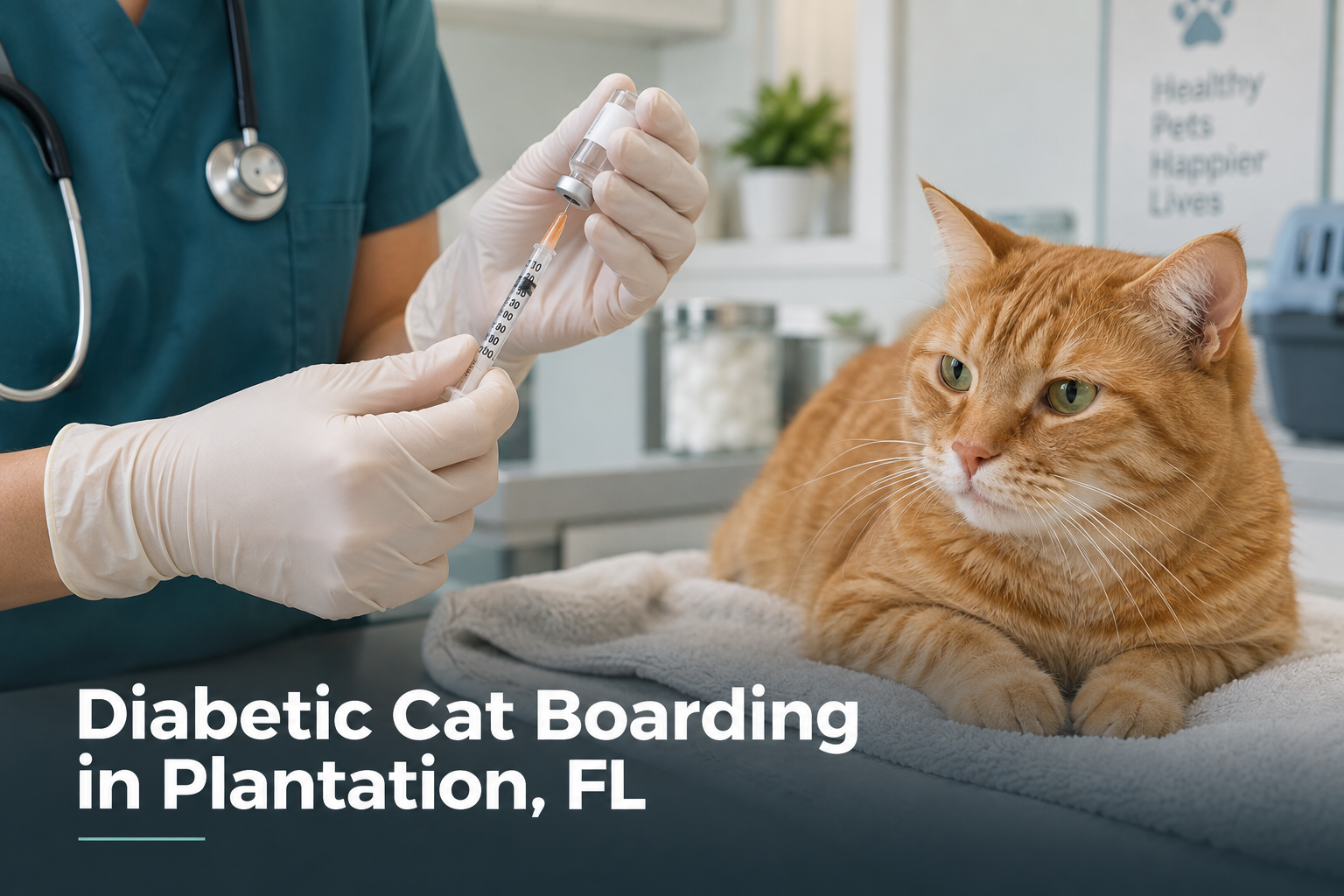
Insulin, seizure medication, and post-op pain management all require precise timing and correct dosing. Veterinary staff administer these treatments as part of a documented schedule, the same way they would for a hospitalized patient, rather than leaving dosing to a kennel worker following handwritten instructions taped to a kennel door.
Which Pets Benefit Most from Medical Boarding?
Pets with diabetes, seizure disorders, recent surgeries, or chronic illness benefit most from medical boarding because their condition requires monitoring a standard kennel isn't equipped to provide. If your pet's daily routine already involves medication timing, blood sugar checks, or wound care, that routine doesn't pause just because you're traveling.
Chronic Condition Management
Diabetic pets need insulin on a strict schedule and close attention to appetite and activity, since both affect blood sugar. Pets with kidney disease often need fluid therapy or a specific diet monitored closely. Senior pets managing arthritis or heart conditions frequently need medication adjustments based on how they're doing that particular day, something only trained veterinary staff can evaluate in real time.
Post-Surgical Recovery Boarding
A pet recovering from surgery needs incision checks, activity restriction, and pain management on a schedule, not guesswork. Medical boarding gives that recovery period the same oversight it would get at home, minus the risk of a missed detail during a busy travel week.

What Happens During a Medical Boarding Stay?a
A typical stay includes an intake exam, a documented medication and monitoring schedule, and daily check-ins from veterinary staff. Before your pet is settled in, our team reviews their current medications, recent bloodwork if available, and any changes in behavior or appetite you've noticed at home.
From there, your pet follows a schedule built around their specific needs. That might mean insulin twice a day, vital sign checks for a senior patient, or wound monitoring for a pet a few days post-surgery. Because the
full medical record is already on file for existing patients, staff aren't starting from scratch. They know your pet's baseline, which makes it easier to catch something that's genuinely off versus normal boarding stress.
How Is Medical Boarding Different from Standard Kennel Boarding?
The core difference is access. Standard kennels have trained staff who can feed, walk, and supervise pets safely, but medical boarding has a veterinary team on-site who can respond immediately to a health change. If your pet is healthy and simply needs a safe place to stay while you're out of town, standard boarding is a fine and often more affordable option. If your pet needs anything beyond that baseline, the gap between the two becomes the whole point.
We put together a closer breakdown of
how medical boarding compares to daycare, since the two get confused often, and the differences matter more than people expect for pets with any ongoing health need.
How Do You Prepare Your Pet for a Medical Boarding Stay?
Bring current medications in original packaging, a written schedule, and any recent bloodwork or records so the team has full context from day one. It sounds basic, but these details are what let staff pick up exactly where your pet's regular routine left off.
A few things worth packing:
- Medications in their original labeled containers, with exact dosing instructions written out
- Recent bloodwork, imaging, or specialist notes if your pet sees an outside provider
- A brief written summary of any behavior changes over the past week or two
- A comfort item, like a blanket or toy, to ease the adjustment
Families across Plantation, Sunrise, Lauderhill, and Plantation Gardens often ask whether they need a fresh exam before boarding if their pet was already seen recently. For pets with a stable, well-documented condition, that's usually not necessary. For anything that's changed recently, a quick check-in beforehand helps the boarding team plan accordingly.
Frequently Asked Questions About Medical Pet Boarding
What conditions qualify a pet for medical boarding?
Pets with diabetes, epilepsy, kidney disease, recent surgery, or other conditions requiring monitoring or medication typically qualify. If your pet needs more than basic feeding and a clean space, medical boarding is worth discussing with your vet.
Is medical boarding more expensive than regular boarding?
Medical boarding typically costs more than standard kennel boarding because it includes veterinary oversight, monitoring, and medication administration, services a standard kennel isn't staffed to provide.
Can I board my pet even if they aren't currently a patient at Lakeside?
New patients are welcome, but an initial exam is usually required first so our team understands your pet's full medical history before a boarding stay.
How often is my pet checked on during a medical boarding stay?
Pets in medical boarding are checked multiple times daily by veterinary staff, with additional monitoring built around their specific condition and medication schedule.
Dr. Frione's Perspective
"I always tell Plantation families the same thing. If your pet needs anything beyond food, water, and a walk, standard boarding isn't the right fit. I've seen what happens when a diabetic pet's insulin schedule gets missed by even a few hours, and it's not something I'm willing to risk with someone's family member." — Dr. Jennifer Frione, DVM

Schedule Your Pet's Boarding Consultation
Traveling with a pet who has a health condition takes more planning than a standard trip, and medical boarding spots fill up during busy travel seasons. If you know your dates, the best time to reach out is now, not the week before you leave.
At Lakeside Animal Hospital, medical pet boarding at Lakeside Animal Hospital is overseen by board-certified veterinary staff with 10 years of hands-on experience managing exactly these kinds of cases. We work with families throughout Plantation, Sunrise, Lauderhill, and Plantation Gardens who want their pet's routine care to continue uninterrupted, even while they're away.
Call our office to schedule a boarding consultation. We'll review your pet's current medications and condition together and build a stay that fits their actual needs, not a one-size-fits-all kennel schedule.
Medical pet boarding gives Plantation pet owners a way to travel without pausing the care their pet depends on every day. Whether it's insulin, seizure medication, or post-surgical monitoring,