Does Laser Therapy Speed Up Incision Healing After Spay Surgery?
TL;DR: Laser therapy can support faster, more comfortable incision healing after spay surgery by reducing inflammation and encouraging tissue repair around the surgical site. It works best as one part of a full recovery plan that still includes rest, a cone, and daily incision checks.
For many Plantation families, a spay is the first real surgery their dog will ever have. Wanting those first two weeks to go smoothly is natural. That’s why more owners ask about laser therapy for incision healing after spay surgery, and whether it makes a real difference. It can help. Here’s how it works, when it starts, and where its limits are.
How Does Laser Therapy Support Incision Healing After Spay Surgery?
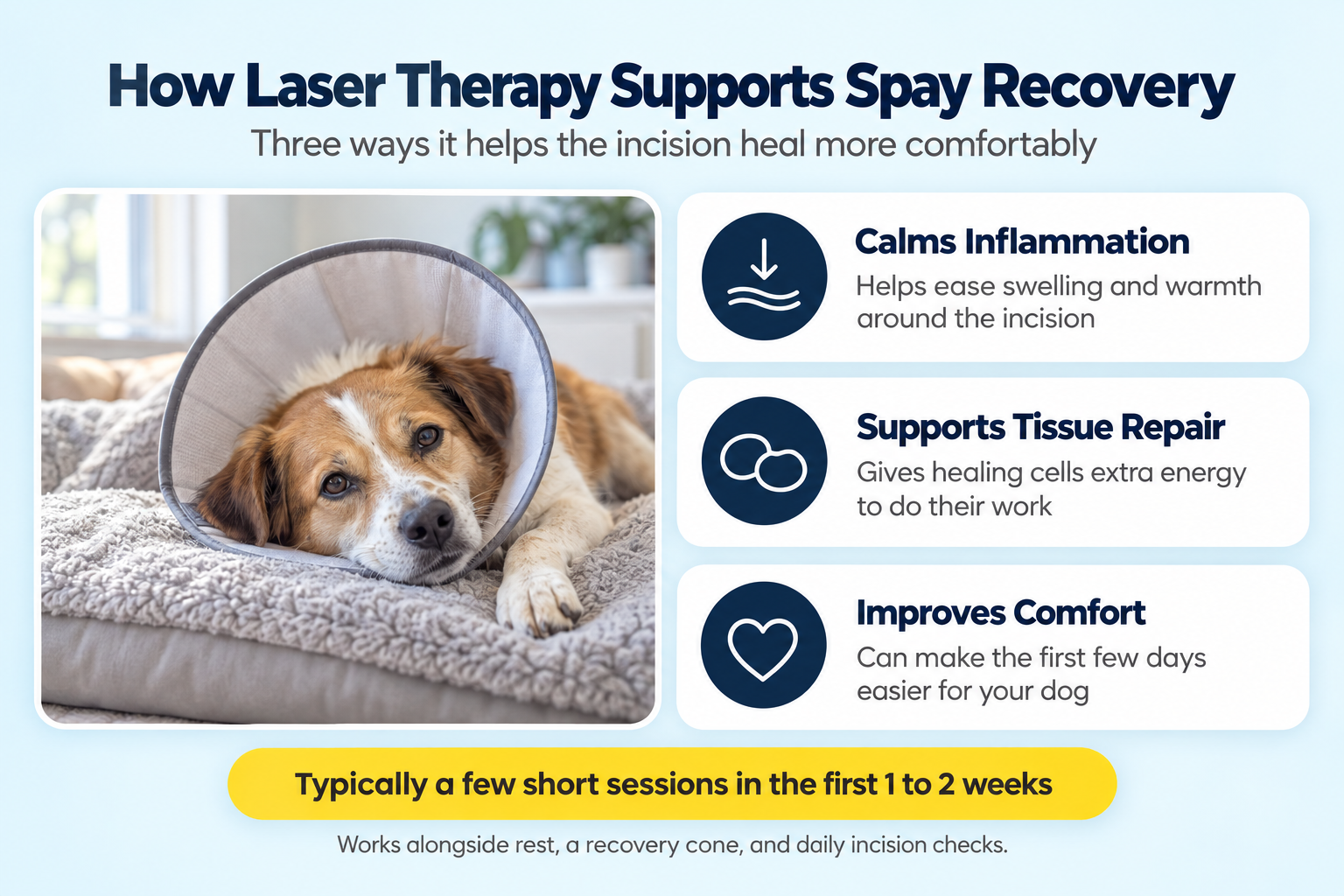
Laser therapy reduces inflammation at the incision site and stimulates cellular activity that supports the body’s natural tissue repair process. Put simply, it helps the area settle down so healing can get on with its work.
A spay leaves an incision along the midline of the belly. The medical term is ovariohysterectomy, which means removal of the ovaries and uterus. Every incision passes through an inflammatory phase first, with swelling, warmth, and tenderness. That phase is normal, but when it runs high, your dog feels it.
Therapeutic lasers send specific wavelengths of light into the tissue. Cells absorb that energy, which can improve local circulation, ease swelling, and give repair cells more fuel. Veterinarians call this photobiomodulation. Your dog just feels a gentle warmth.
Research in dogs is still growing, and results vary from patient to patient. The benefit owners tend to notice first is post-op comfort. As Dr. Jennifer Frione, DVM, puts it, “I use laser therapy after spays specifically because it can take some of the discomfort out of those first few days.”
When Should Laser Therapy Start After Spay Surgery?
Many vets begin laser sessions within the first few days after surgery, once the incision is stable enough for treatment. Starting early targets the inflammatory phase, when that support counts the most.
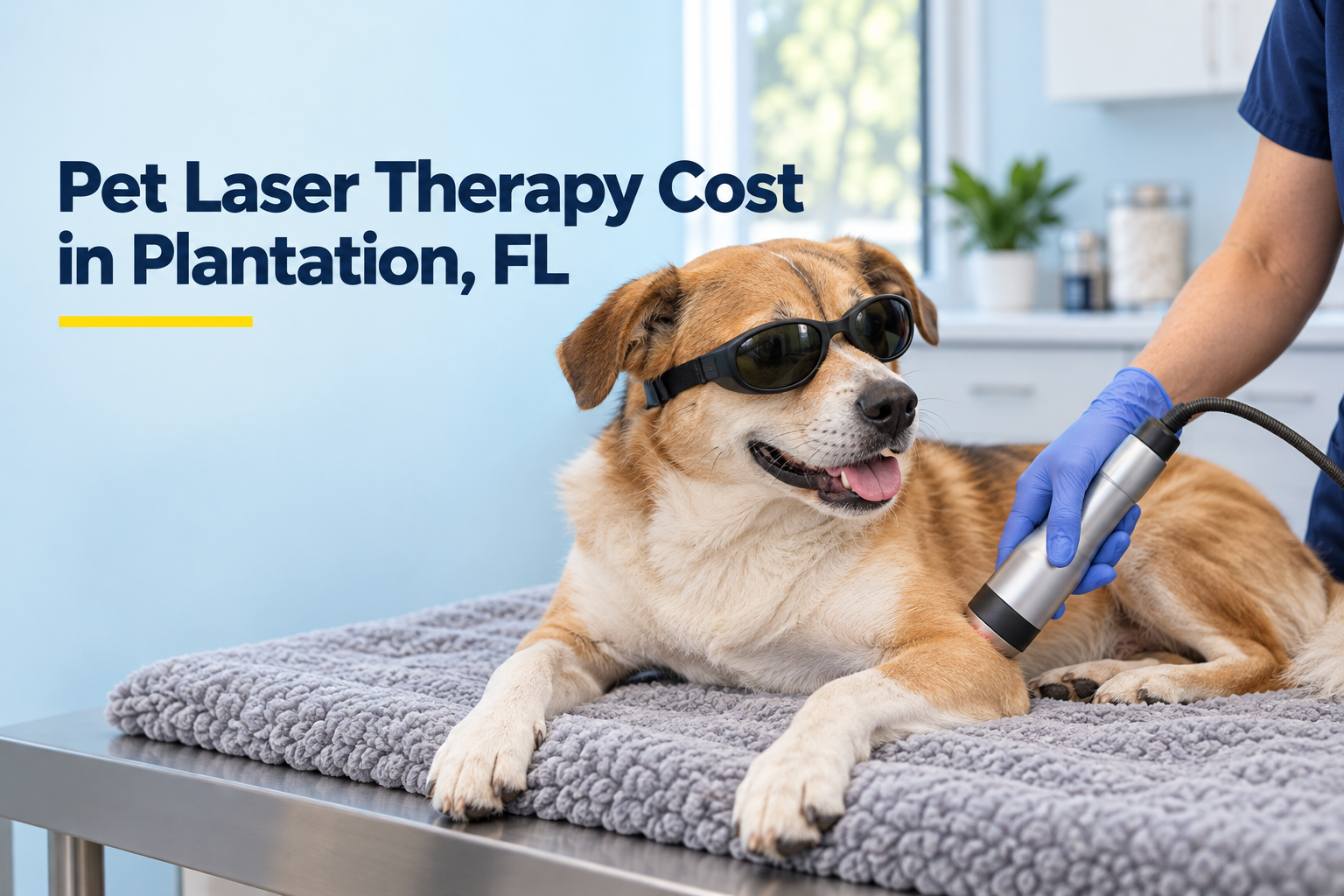
A typical post-spay plan is short. It’s usually a few sessions across the first one to two weeks, each lasting only a few minutes. Your dog stays awake, usually resting on a padded table, and everyone in the room wears protective eyewear, your dog included. Most dogs settle in quickly once they realize nothing about it hurts.
The right schedule depends on your dog’s size, age, and how the incision looks at each check. So every dog gets a personalized treatment plan rather than a template. For session counts and pricing, our guide explains how laser therapy supports recovery and what it costs.
Does Laser Therapy Replace Normal Spay Recovery Care?
No. Laser therapy supports healing, but it doesn’t replace the basics that protect the incision. Your dog still needs a cone or recovery suit, limited activity, and daily incision checks.
Licking and too much activity cause a large share of spay incision problems. A laser session can support tissue repair. It can’t stop a dog from leaping onto the couch on day three.
South Florida humidity adds one more factor. Keep the incision clean and dry, and skip baths and pool time until your vet clears it. Call if you see redness, discharge, swelling, or any gap in the skin.
At Lakeside, your pet is family, and we treat them as if they were our own. Every spay comes with clear recovery instructions and follow-up, whether or not laser therapy is part of the plan. You can see how the procedure itself is handled through our surgical services.
Quick Questions
Is laser therapy safe to use directly on a fresh incision?
Yes. When trained veterinary staff perform it, laser therapy is considered safe near a healing incision, and it’s often used specifically to support that healing. The team adjusts settings for your dog’s coat and skin, keeps the handpiece moving, and protects everyone’s eyes. It’s non-invasive and never reopens or disturbs the incision.
How many sessions are typically needed after a spay?
Usually just a few. Post-spay laser therapy is typically a short series in the first one to two weeks. It focuses on the early healing phase rather than an extended course. Your veterinarian sets the number based on your dog’s size, age, and how the incision looks at each visit.
Can cats get laser therapy after a spay too?
Yes. The same principles apply to cats, whose spay incisions go through the same inflammatory and repair phases. Many cats stay calm during sessions because the treatment is quiet, brief, and hands-off. Your veterinarian adjusts the settings for your cat’s size and coat.
Ready to Plan Your Dog’s Spay Recovery?
Laser therapy for spay incision healing is one part of the structured post-surgical recovery support at Lakeside Animal Hospital. That support is guided by Dr. Frione’s 10 years in practice and her special interest in soft tissue surgery and rehabilitation. Families from Plantation, Sunrise, and Lauderhill count on it to bring their pets home comfortable and on track.
Before you schedule, get the full picture on session counts, pricing, and the other ways laser therapy helps dogs and cats.