How Much Does Cat Tooth Extraction Cost in Plantation, FL?
TL;DR
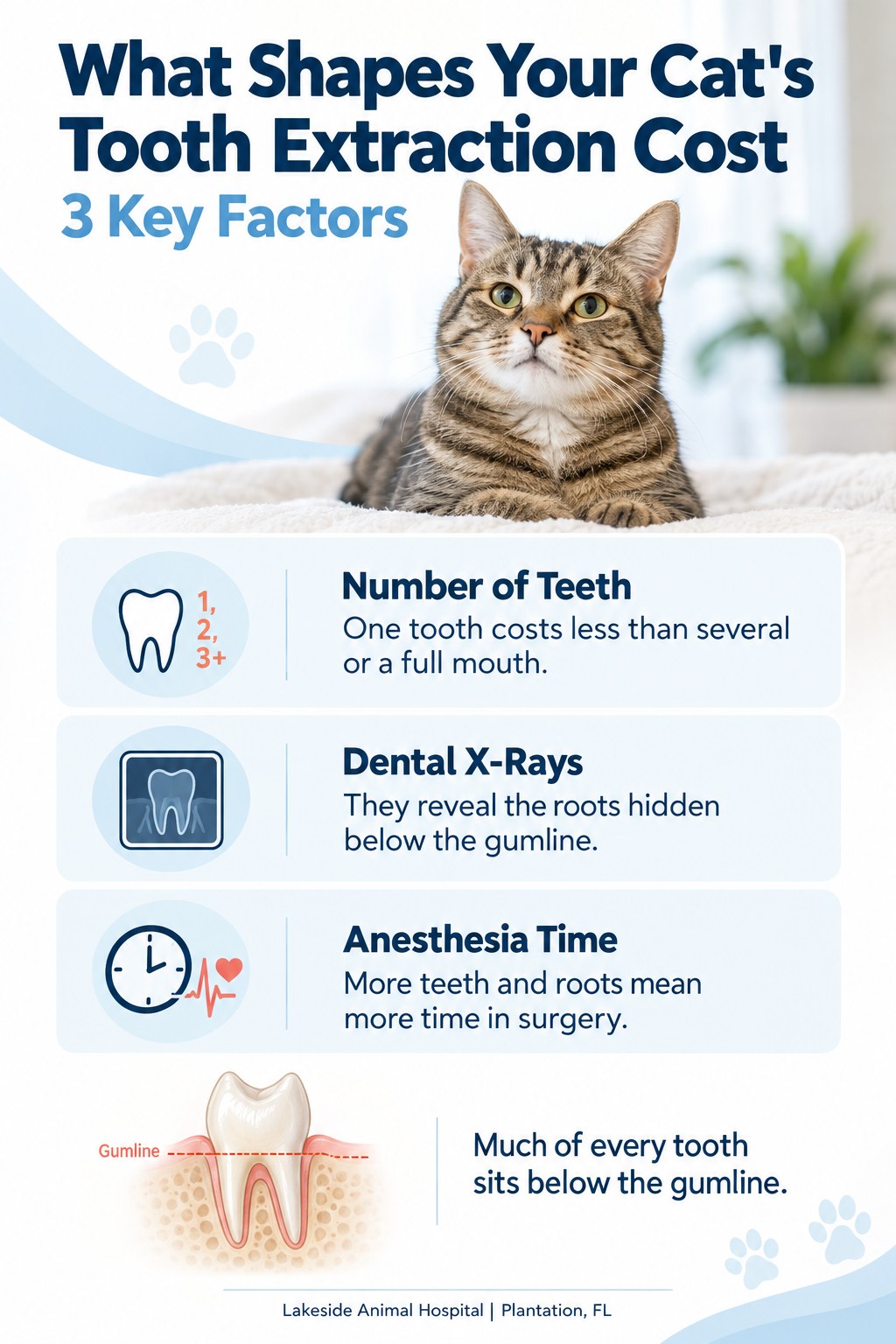
- Cat tooth extraction cost in Plantation, FL depends on three main factors: how many teeth need to come out, whether dental X-rays are needed, and total anesthesia time.
- A single extraction costs less than multiple or full mouth extractions, and the final estimate is usually confirmed after an oral exam and dental radiographs.
- At Lakeside Animal Hospital, every cat receives an itemized estimate and a personalized treatment plan before any procedure begins.
If your veterinarian has mentioned that your cat needs a tooth pulled, your first question is probably about cost. That's a fair question, and a smart one. Cat tooth extraction cost in Plantation, FL can vary quite a bit from one cat to the next, because no two mouths are the same.
Cats are experts at hiding pain. Many Plantation families only learn about a dental problem during a routine wellness exam, when the veterinarian spots red gums, a broken tooth, or a small lesion near the gumline. By then, the cat has often lived with discomfort for months without showing it.
Here's the good news. Once you understand what drives the price of a feline tooth extraction, the estimate stops feeling like a mystery. You can see where each line item comes from and why it's there.
This guide covers the factors that shape pricing, the most common reasons cats need extractions, what the procedure includes, what recovery looks like at home, and how to lower the odds of another extraction later. Your pet is family, and we treat them as if they are ours. That includes being clear about cost.
What Factors Affect Cat Tooth Extraction Cost in Plantation, FL?
The main cost drivers are how many teeth need extraction, whether dental X-rays are required, and the total anesthesia and procedure time. Your cat's age, overall health, and the type of tooth involved also shape the final number.
Every estimate at Lakeside Animal Hospital starts with an oral exam. Some problems are visible the moment we lift a lip. Many are not, which is why the full picture usually comes into focus once your cat is under anesthesia and we can take dental radiographs.
The tooth itself matters. A small front incisor has one short root. A canine has a single root that runs surprisingly deep into the jaw. Premolars and molars often have two or three roots, and each one must be removed completely. More roots mean more surgical time, and surgical time is one of the biggest pieces of feline tooth extraction pricing.
Health history plays a part too. A senior cat, or a cat with kidney or thyroid concerns, may need extra bloodwork, IV fluids, or closer monitoring. Those steps add to the estimate, and they are there to keep your cat safe. If you'd like to see how these pieces add up line by line, we've put together a detailed cost breakdown for feline tooth extraction.
Single Tooth vs. Multiple Extractions
A single tooth extraction is the most contained version of this procedure, so it typically carries the lowest cost. Each additional tooth adds surgical time, suture material, and minutes under anesthesia.
At the far end sits a full mouth extraction, most often recommended for cats with severe stomatitis. It is the most involved cat dental surgery we perform, and the cost reflects that. When several teeth need attention, treating them in one anesthetic session is usually safer and more cost-effective than bringing your cat back for separate procedures.
The Role of Dental X-Rays
Dental X-rays show what's happening below the gumline, where much of every tooth actually sits. They appear as their own line item, and they protect everything else on the estimate.
Without radiographs, a tooth that looks healthy can hide a resorptive lesion wearing away the root. A tooth that looks damaged may have roots that have already dissolved, which changes how it should be removed. X-rays also confirm afterward that no root fragments were left behind. Retained fragments can cause pain and infection, and a second procedure to remove them costs far more than the original films.
Why Might a Cat Need a Tooth Extracted?
Common reasons include resorptive lesions, advanced periodontal disease, fractured teeth, and stomatitis treatment. All four are painful, and cats are very good at hiding that pain from the people who love them.
Tooth resorption is one of the most common dental problems in adult cats. The body begins breaking down the hard structure of the tooth, often starting at or below the gumline. Once the sensitive inner layer (the dentin) is exposed, it hurts. These lesions can't be filled the way a human cavity can, so extraction is the standard treatment.
Periodontal disease is an infection of the tissues that hold a tooth in place: the gums, the periodontal ligament, and the surrounding bone. It starts as plaque and gingivitis. Left untreated, it breaks down the support around the root until the tooth loosens.
Fractured teeth are common as well, especially the long canines. When a break exposes the pulp (the living nerve and blood supply inside the tooth), bacteria move in and the tooth becomes a source of ongoing pain.
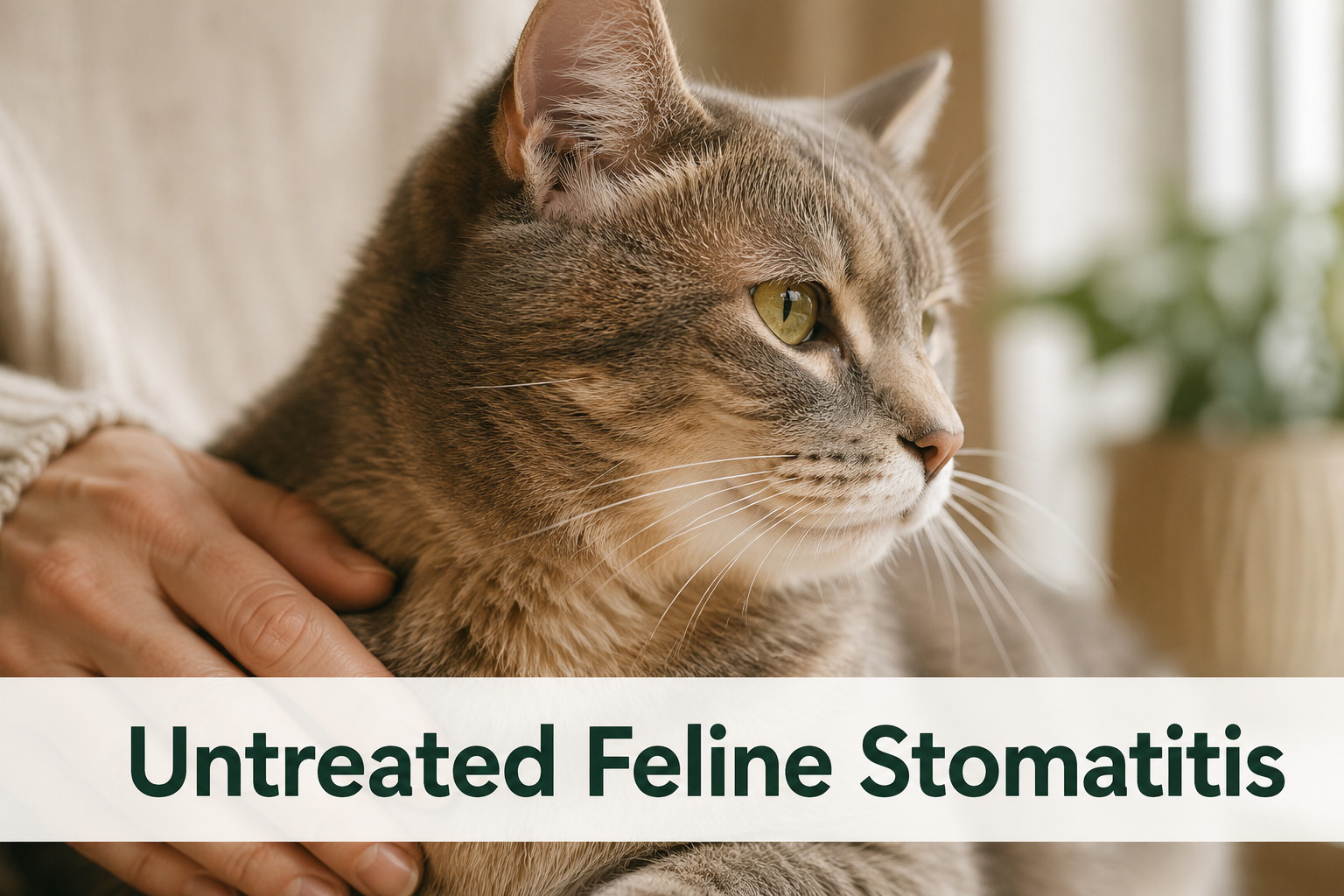
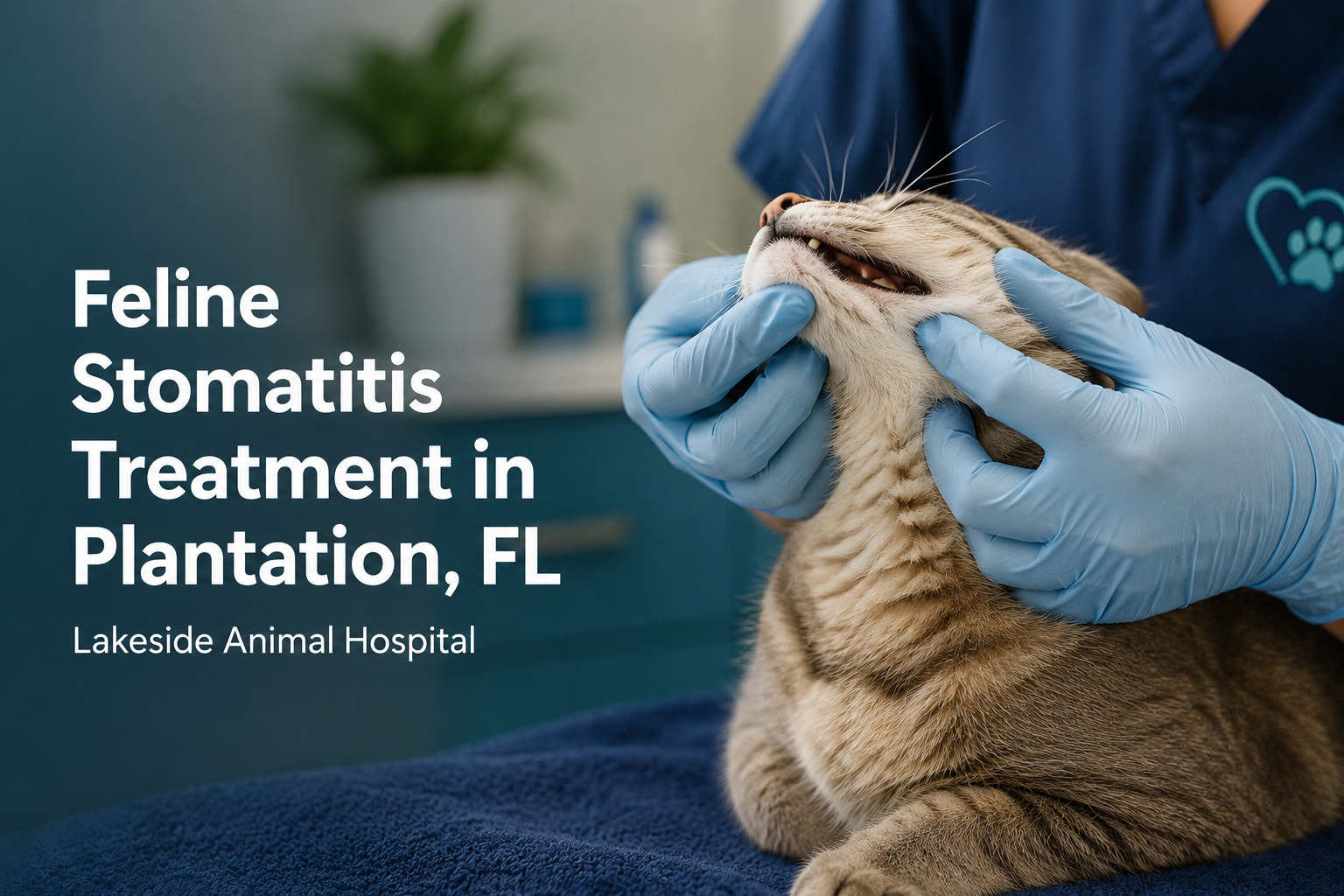
Stomatitis is severe inflammation of the tissues lining the mouth, thought to be an extreme immune reaction to plaque. Removing most or all of the teeth is often the most reliable path to relief. Our guide explains how stomatitis is treated with extractions in more detail.
At home, watch for drooling, dropping food, chewing on one side, bad breath, pawing at the face, or a sudden preference for soft food. Any of these deserves a visit.
What's Included in a Cat Tooth Extraction Procedure?
A typical procedure includes pre-anesthetic bloodwork, dental X-rays, the extraction itself, and pain management before your cat goes home. At Lakeside, dedicated anesthesia monitoring and a cleaning of the remaining teeth happen during the same visit.
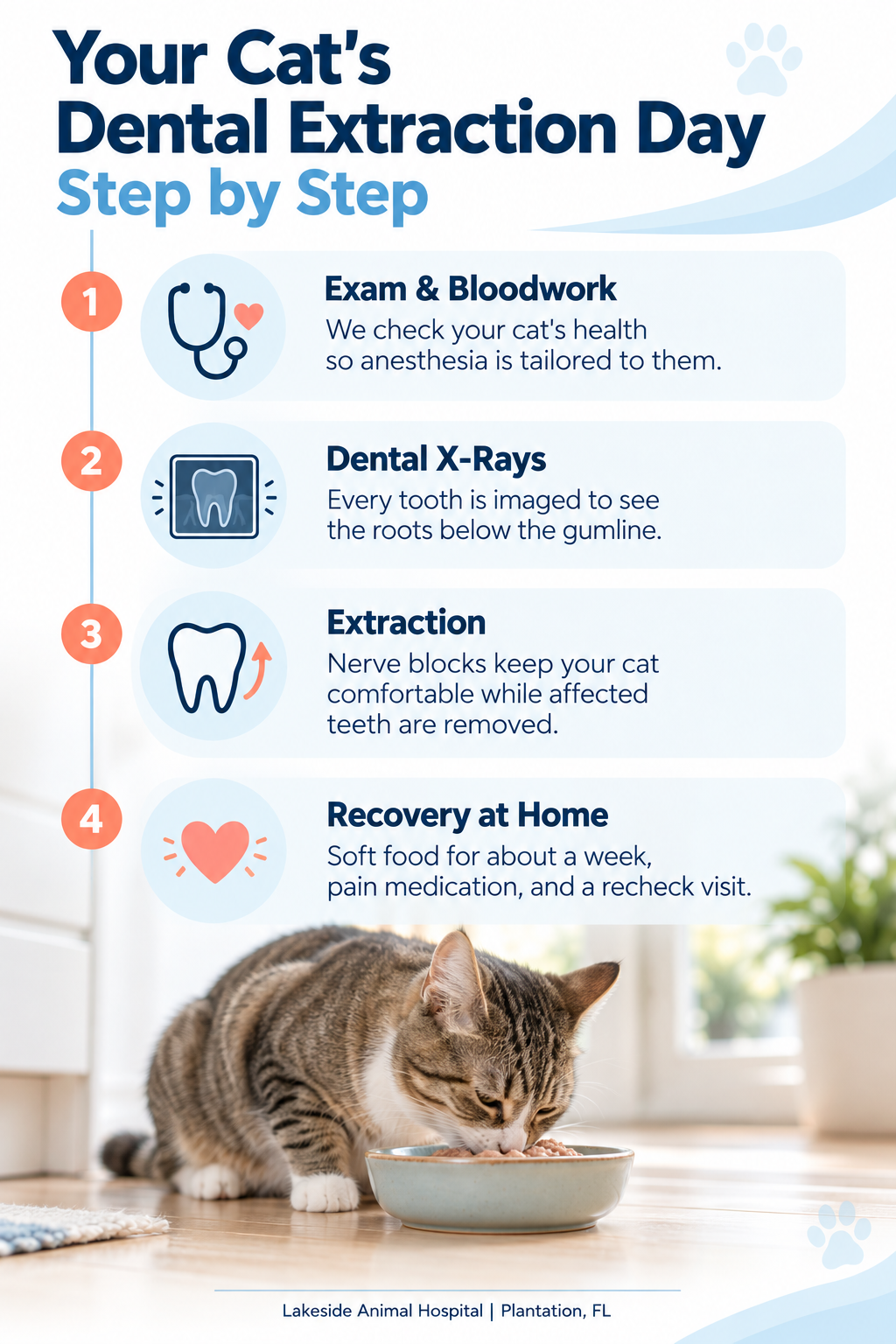
Here is how the day usually goes for Plantation families who bring their cats in:
- Pre-anesthetic bloodwork from our on-site laboratory checks organ function, so anesthesia can be tailored to your cat.
- An IV catheter supports fluids, and a trained team member tracks heart rate, oxygen, blood pressure, and temperature throughout.
- Every tooth is examined, charted, and X-rayed while your cat is asleep and comfortable.
- Local nerve blocks numb the area. Multi-rooted teeth are carefully divided so each root comes out cleanly, and the gums are closed with dissolvable stitches.
- Follow-up X-rays confirm every root is gone, and the remaining teeth are cleaned and polished.
- Your cat goes home with pain medication and clear written instructions.
Laser therapy is also available after surgery to help calm inflammation and support comfortable healing. Seeing each step laid out explains the estimate. Every item is there because it makes the procedure safer or recovery smoother.
What Does Recovery Look Like After a Cat Tooth Extraction?
Most cats eat soft food for several days and show noticeable improvement in comfort and appetite once healing begins. Many owners tell us their cat seems more playful within a couple of weeks, simply because the pain is gone.
The first evening is usually quiet. Your cat may be groggy from anesthesia, so a warm, calm room away from other pets helps. Offer a small meal that night, and don't worry if appetite is light at first.
For about a week, stick to a recovery diet of soft canned food. Warming it slightly makes it more appealing. Skip hard treats, dry kibble, and chew toys until your veterinarian gives the all-clear.
Give pain medication exactly as prescribed, even if your cat seems fine. Never give human pain relievers. Acetaminophen, the active ingredient in Tylenol, is toxic to cats even in small amounts.
Most cats return for a quick recheck 10 to 14 days after surgery. Call sooner if your cat won't eat after 24 hours, if you notice swelling or ongoing bleeding, or if they keep pawing at their mouth. Cats adapt remarkably well to missing teeth, and many go back to their usual food once healing is complete.
How Can You Prevent Future Dental Problems in Your Cat?
Regular dental checkups, at-home tooth brushing, and dental-specific diets can all help reduce the likelihood of future extractions. Catching problems early keeps treatment simpler, shorter, and less costly.
Brushing is the most effective thing you can do at home. Use a toothpaste made for pets, since human toothpaste isn't meant to be swallowed and can upset a cat's stomach. Start slowly. Let your cat lick a little paste off your finger for a few days, then move to gently rubbing the outer surfaces of the teeth. Daily brushing is ideal, but a few sessions a week still help.
Dental diets and treats can support that effort. Look for products with the Veterinary Oral Health Council (VOHC) seal, which means they've been tested for plaque or tartar control. Our nutritional counseling team can help you choose one that fits your cat's age and health.
Routine exams tie it together. Most adult cats benefit from a dental check at every annual wellness visit, and senior cats often do best with exams twice a year. Professional cleanings with X-rays let us spot resorptive lesions and early periodontal disease before they become multiple extractions.
Not every dental problem can be prevented. Tooth resorption can develop even in well-cared-for cats. Early detection is what keeps those cases small.
Frequently Asked Questions About Cat Tooth Extraction Cost
Does pet insurance cover cat tooth extractions?
Coverage depends on your provider and policy. Some accident and illness plans cover extractions caused by disease or injury, but pre-existing dental conditions are often excluded, and certain plans require records of annual dental exams. Call your insurer with the treatment plan we provide. Our team is glad to share the itemized estimate and records your insurer may request.
How long does a cat need to eat soft food after extraction?
Most cats need soft food for about a week after extraction. Cats with several teeth removed may need a little longer. As Dr. Frione puts it, "I'd rather keep a cat on soft food a few extra days than rush it. The gums heal quickly when we give them the chance." Your recheck visit confirms when it's safe to switch back.
Are dental X-rays always necessary before extraction?
In most cases, yes. X-rays reveal what's happening below the gumline, which is how resorptive lesions, hidden root damage, and bone loss are identified. "In my experience, the most important findings in a cat's mouth are often the ones I can't see without radiographs," says Dr. Frione. "I won't plan an extraction without seeing the roots first."
Can cats eat normally after having teeth removed?
Yes. Most cats eat comfortably once they heal, including cats who have had every tooth removed. Cats swallow much of their food whole or in small pieces anyway. Many owners notice their cat eats better after extraction because the source of pain is finally gone. Some cats return to kibble, while others prefer softer food long term.
Dr. Jennifer Frione's Perspective
"I always walk owners through exactly why I recommend X-rays before extractions. What's under the gumline often tells a very different story than what I can see on the surface. That step is about doing the procedure safely and thoroughly, and I want every family to understand the reason behind each line on their estimate before we begin."
- Dr. Jennifer Frione, DVM
Get a Clear Cat Tooth Extraction Cost Estimate in Plantation, FL
The best next step is a dental exam and cost consultation, where you'll receive an itemized estimate and a personalized treatment plan built around your cat. You'll know what's recommended, why, and what it costs before anything is scheduled.
Cost and anesthesia are the two biggest worries for most families, and both deserve straight answers. Dental disease tends to progress, and waiting often means more teeth involved, longer anesthesia, and a larger bill. A conversation now usually keeps the plan smaller.
Our hospital combines board-certified oversight, laser-assisted treatment options, and a transparent, diagnostic-first approach. Dr. Frione brings 10 years of experience, with particular interest in preventative care and soft tissue surgery. In-house bloodwork and imaging mean fewer delays between diagnosis and treatment.
Learn more about our cat dental extraction services, then Schedule a Dental Exam by calling our Plantation office. We welcome cats and their families from Plantation, Sunrise, Lauderhill, and Plantation Gardens.
Your cat can't tell you when a tooth hurts, but the signs are there for anyone who knows where to look. When it comes to cat tooth extraction cost in Plantation, FL, the right answer starts with an honest exam, clear X-rays, and a team that treats your pet like family. At Lakeside Animal Hospital, that's how every dental visit begins. Your pet, your family, and our full attention.