Is Cold Laser Therapy Effective for a Dog With Hip Dysplasia, and When Is It the Right Choice?
TL;DR: Cold laser therapy is an effective part of hip dysplasia management in dogs, particularly for reducing joint inflammation and relieving pain around the affected hip. It does not reverse the structural changes of dysplasia, but it can meaningfully improve mobility and comfort, especially for dogs who aren't surgical candidates.
If you have a large breed dog in Plantation showing stiffness after naps or hesitation on stairs, cold laser therapy for dog hip dysplasia is one of the first conservative options worth understanding. Hip dysplasia is common in Labradors, German Shepherds, and other large breeds throughout Broward County, and owners are often deciding between surgery, medication, and gentler options. Here's what the evidence actually supports.
Does Cold Laser Therapy Help Dogs With Hip Dysplasia?
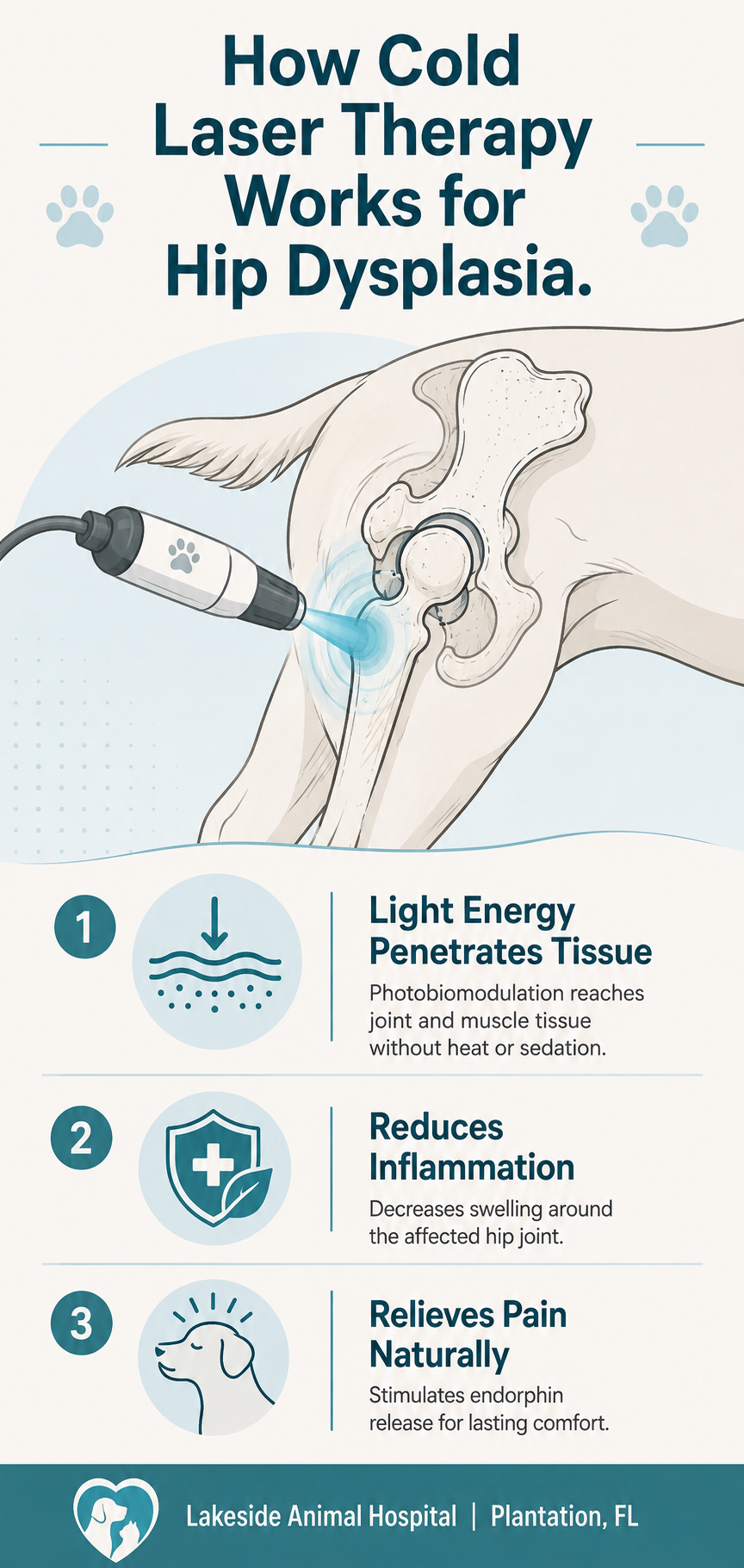
Yes. Therapeutic laser therapy reduces inflammation in the hip joint, relieves pain by stimulating the body's natural endorphin release, and supports the muscle and soft tissue surrounding the dysplastic joint. Clinical research has shown measurable improvement in pain scores and mobility in dogs treated with consistent laser protocols.
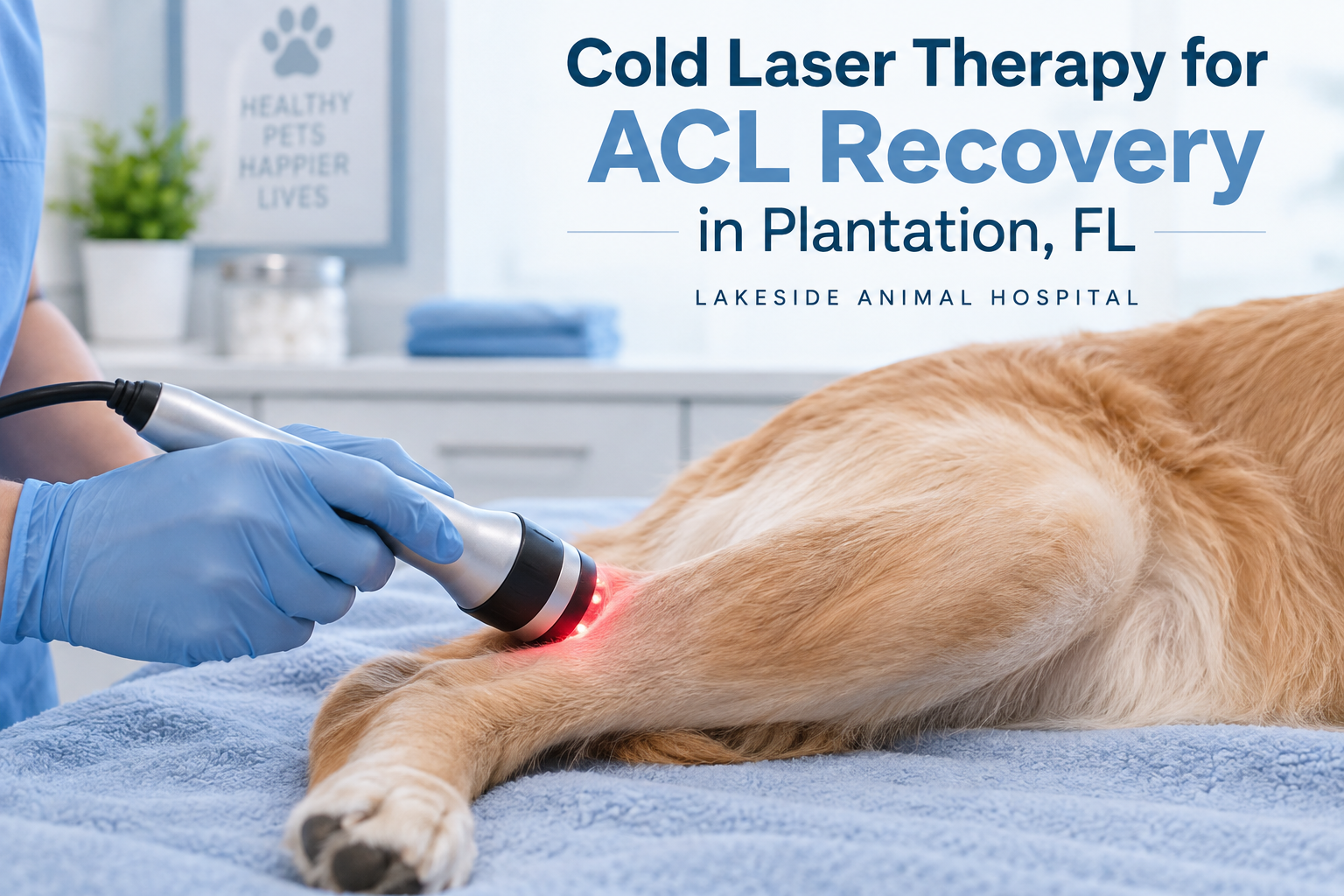
The therapy works through photobiomodulation. Light energy penetrates the tissue and encourages cellular repair without heat, sedation, or downtime. For a dog with hip dysplasia, that translates into less stiffness getting up in the morning and more willingness to move through the day.
What Can Laser Therapy Do for Hip Dysplasia, and What Can't It Do?
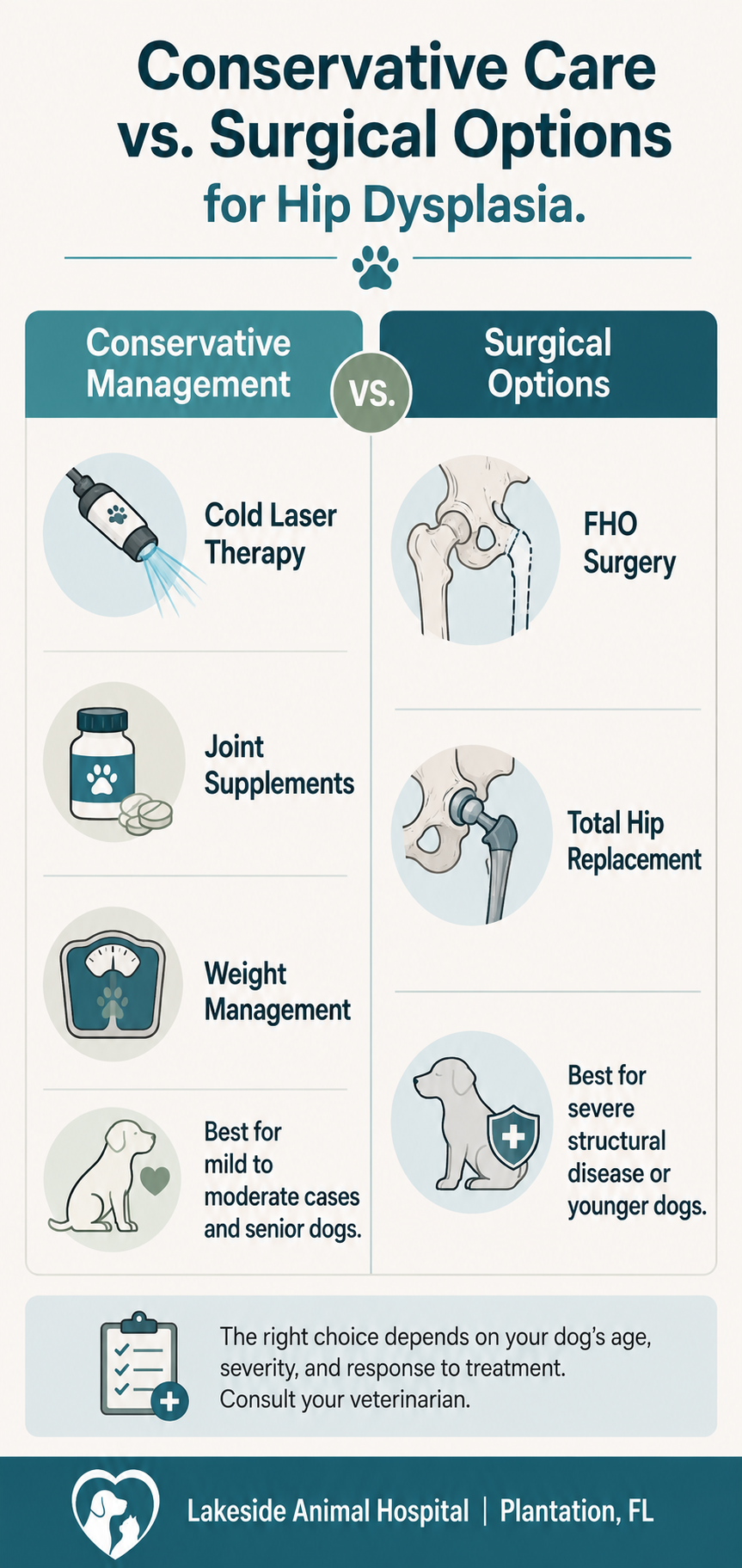
Laser therapy manages pain and inflammation and supports the tissue around the joint. It does not repair the abnormal joint structure that defines hip dysplasia in the first place. For mild to moderate cases, laser therapy combined with weight management and joint supplements can provide a good quality of life through conservative care alone.
For dogs with more advanced structural disease, laser therapy still has a role, but it typically works best as one part of a larger plan rather than a solution on its own. That plan may include a surgical consultation depending on age and severity.
When Is Laser Therapy the Right Choice Versus Surgery?
The right path depends on your dog's age, the severity of the joint changes, how they respond to conservative treatment, and your goals as an owner. Laser therapy tends to be the stronger fit for senior dogs where surgery carries added risk, and for dogs whose pain is well controlled without surgical intervention.
For a deeper look at how sessions are structured and what results to expect, our complete guide to laser therapy for dogs in Plantation walks through the full protocol from first visit to maintenance care.
Quick Questions
- How many laser sessions does a dog with hip dysplasia need? Most dogs start with two to three sessions weekly for the first three to four weeks, then move to a maintenance schedule based on their response. Many settle into monthly or bimonthly visits once that baseline is established. Consistency matters more than frequency long term.
- Should I choose laser therapy or surgery for my dog's hip dysplasia? This depends on age, severity of the structural disease, and how well your dog responds to conservative care. Many dogs, especially older ones or those with milder dysplasia, do very well without surgery. A veterinary exam is the right starting point for this decision.
- Is laser therapy painful or does it require sedation? No. Sessions are painless and dogs typically relax during treatment. There is no sedation, no incision, and no recovery time involved.
"Hip dysplasia is one of the conditions where I see laser therapy make a genuinely meaningful difference, not just on paper, but in how the dog moves and what they're willing to do again after a few weeks of consistent treatment," says Dr. Jennifer Frione, DVM, of Lakeside Animal Hospital.
Ready to Talk Through Your Dog's Treatment Options?
Dr. Frione's background in rehabilitation and pain management means Plantation families get a treatment plan built around their dog specifically, not a one-size approach. Lakeside Animal Hospital offers full diagnostic imaging on-site to confirm the extent of the dysplasia before recommending a path forward.
If your dog is showing signs of hip discomfort, laser therapy consultations at Lakeside Animal Hospital in Plantation are a good next step, whether you're weighing conservative care or preparing for a surgical opinion. Families throughout Plantation, Sunrise, and Lauderhill trust Lakeside for personalized treatment plans built around each pet's actual needs.