What Is Laser Therapy for Dogs, and When Does a Veterinarian Actually Recommend It?
TL;DR
- Laser therapy for dogs, also called photobiomodulation or cold laser therapy, uses specific wavelengths of light to reduce inflammation, relieve pain, and speed tissue healing at the cellular level.
- It is non-invasive and non-pharmaceutical, commonly used for arthritis, post-surgical recovery, soft tissue injuries, chronic wounds, and certain skin conditions.
- It doesn't replace surgery or medication in every case, but for the right patient it's one of the most effective tools available for managing chronic pain without side effects.

If you've noticed your dog hesitating at the stairs, slower to get up after a nap, or just not quite themselves after a recent surgery, you're probably looking into every option before reaching for another prescription. Laser therapy for dogs has become one of the more requested treatments at pet clinics across Plantation, Sunrise, and Lauderhill, and for good reason. It offers a way to manage pain and speed healing without adding another pill to the daily routine. At Lakeside Animal Hospital, Dr. Jennifer Frione uses laser therapy as part of a personalized treatment plan for dogs dealing with everything from early arthritis to post-operative recovery. This guide covers what the treatment actually does, which conditions respond best, what to expect during a session, and how to know if it's the right fit for your dog.
What Is Laser Therapy for Dogs and How Does It Work?
Therapeutic laser therapy uses concentrated light energy at specific wavelengths to penetrate tissue and stimulate the body's own repair processes. At the treatment site, it increases circulation, reduces inflammation, and triggers the release of endorphins, the body's natural pain relieving compounds. This process is called photobiomodulation, and it has a solid body of veterinary research behind its clinical use.
Class IV vs. Class III Laser: What the Difference Means for Treatment Depth
Class IV lasers deliver higher power and penetrate deeper into tissue, which makes them better suited for larger dogs or conditions affecting deeper structures like joints and discs. Class III lasers work at a lower intensity and are often used for more surface level applications, such as skin conditions or small wound sites. The choice depends entirely on what's being treated and how large the patient is.
What a Laser Therapy Session Looks Like at Lakeside
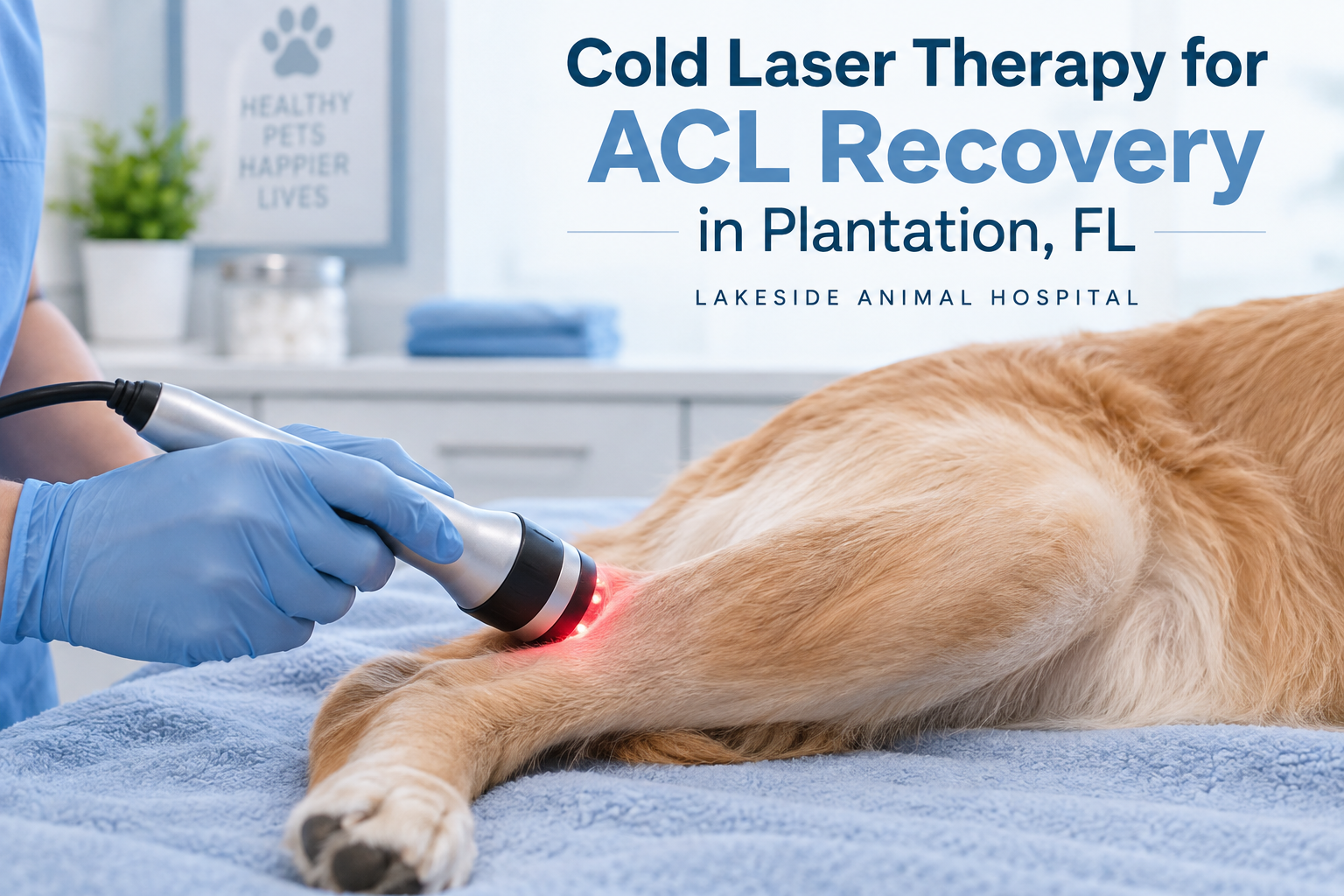
A typical session takes between five and fifteen minutes, depending on the size of the treatment area. The dog lies comfortably on a treatment table while the handheld device is moved over the affected area in a slow, methodical pattern. Most dogs find it relaxing rather than stressful. Protective eyewear is worn by the patient and the technician throughout.
What Conditions in Dogs Respond Best to Laser Therapy?
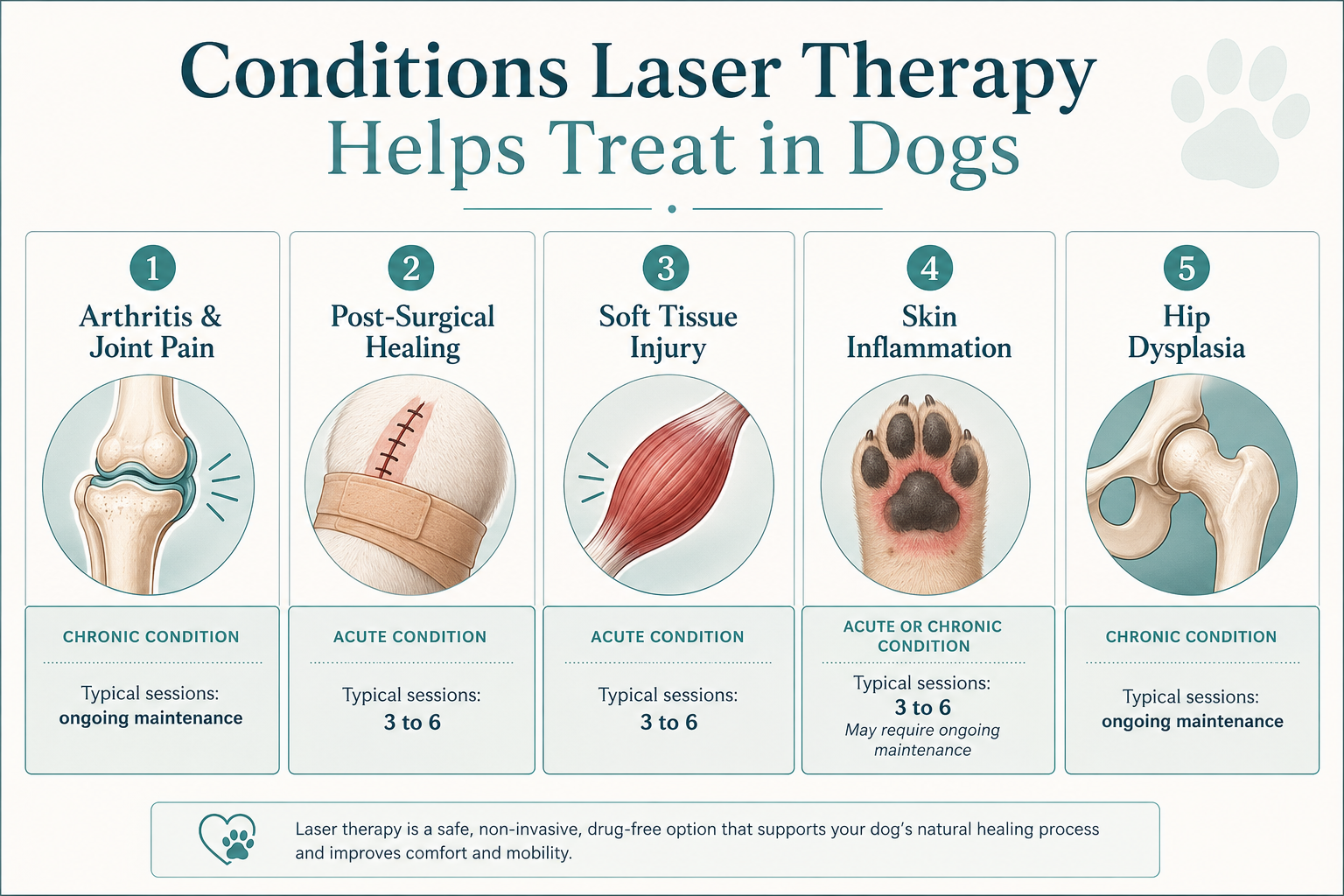
The conditions with the strongest evidence base for laser therapy response in dogs are osteoarthritis, post-surgical incision healing, soft tissue injuries, intervertebral disc disease, and chronic wounds. Hip dysplasia, elbow dysplasia, and general joint degeneration are among the most common reasons Dr. Frione recommends this treatment to dog owners in Plantation.
Arthritis and Joint Disease: How Laser Therapy Fits Into the Treatment Plan
For dogs with arthritis, laser therapy is rarely a standalone solution. It's typically layered into a broader plan that might include joint supplements, weight management, and in some cases medication. The laser's role is to reduce the inflammatory response in the joint itself, which can ease pain and improve mobility over time. Owners searching whether laser therapy is effective for dogs with hip dysplasia often find that it becomes one of the more consistent parts of long-term joint management, particularly for dogs who aren't yet ready for or aren't good candidates for surgery.
Post-Surgical Recovery: When Laser Therapy Accelerates Healing
After surgery, laser therapy is frequently used to support incision healing and reduce post-operative swelling. Many Plantation area pet owners bringing a dog home after a spay, neuter, or orthopedic procedure ask about it specifically because it shortens the visible discomfort window without adding medication.
Skin and Wound Applications, Including Allergy-Related Inflammation
Chronic skin inflammation, hot spots, and slow-healing wounds also respond well to laser treatment. For dogs dealing with ongoing allergy flare-ups, laser sessions can calm the inflamed tissue and support faster resolution alongside a broader dermatology plan. This is part of why laser therapy for chronic skin inflammation in allergic dogs comes up so often in consultations with owners managing recurring skin issues in Broward County's warm, humid climate.
What Are the Side Effects of Laser Therapy for Dogs?
Therapeutic laser therapy has an extremely favorable safety profile. Side effects are rare and typically limited to temporary increased soreness at the treatment site within the first 24 hours, similar to how a person feels after a workout. A closer look at what are the side effects of laser therapy for dogs covers what to expect in more detail. Protective eyewear is worn by all personnel and the patient during every session to guard against direct beam exposure.
Who Should Not Receive Laser Therapy
Dogs with certain cancers, pregnant dogs, and animals with specific eye conditions may not be candidates for laser treatment over particular areas of the body. This is something Dr. Frione screens for during the initial consultation before any session begins.
What to Watch for After a First Treatment Session
Most dogs show no reaction at all beyond a bit of drowsiness, which is common and not a cause for concern. Mild soreness, if it occurs, typically resolves within a day and does not require intervention.
How Many Laser Therapy Sessions Does a Dog Typically Need?
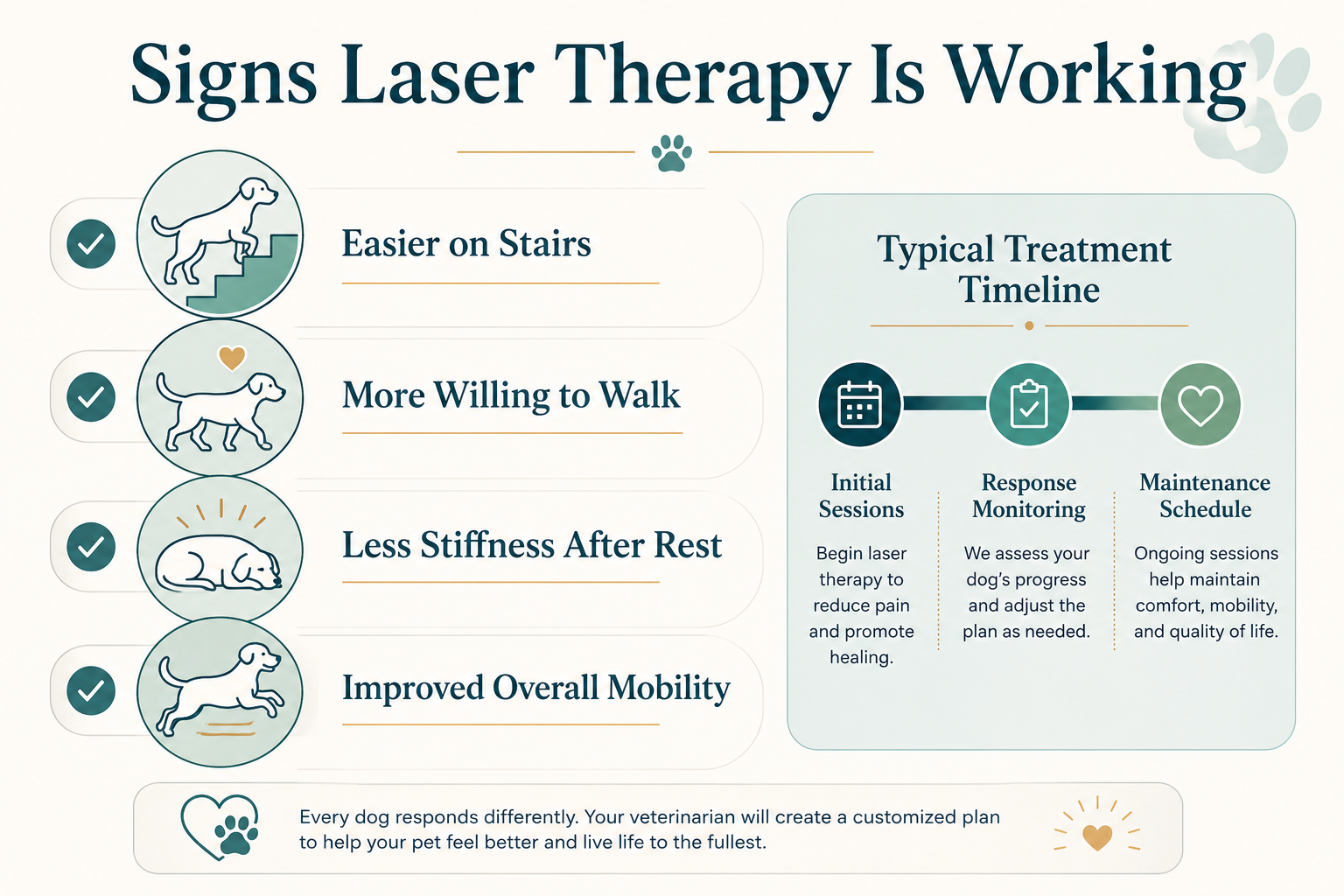
Acute conditions, including post-surgical recovery and fresh soft tissue injuries, typically respond within three to six sessions. Chronic conditions like arthritis require an ongoing maintenance protocol, often starting with more frequent visits and tapering to monthly or bimonthly sessions once a response is established.
What a Typical Treatment Protocol Looks Like
A chronic case might start with two to three sessions per week during the first month, then shift to a maintenance schedule based on how the individual dog responds. Every plan is adjusted to the patient, not applied as a fixed template.
How We Measure Whether It's Working
Improvement is tracked through mobility changes, willingness to engage in normal activity like stairs or walks, and reduced reliance on other pain management tools. Owners are usually the first to notice the shift, often describing a dog who seems more like themselves.
Is Laser Therapy Worth the Investment for Dogs in Plantation?
For dogs with chronic pain conditions where long-term pharmaceutical management carries side effect risks, particularly NSAID use in dogs with liver or kidney concerns, laser therapy offers a real quality of life improvement without adding systemic risk. For post-surgical patients, it measurably reduces recovery time. This is especially relevant for older dogs, where laser therapy as part of senior dog pain management often becomes one piece of a larger wellness plan built around aging joints, reduced mobility, and medication sensitivity. The value depends on the individual patient, the condition being treated, and how consistent the owner is with the recommended schedule.
Frequently Asked Questions About Laser Therapy for Dogs
What are the side effects of laser therapy for dogs?
Laser therapy for dogs has very few side effects. The most common response is mild, temporary soreness at the treatment site within the first 24 hours, particularly after early sessions for chronic conditions. Serious adverse effects are rare, and protective eyewear is worn by all personnel and the patient during every session.
How many laser therapy sessions does a dog need?
The number of sessions depends on the condition. Acute injuries and post-surgical recovery typically need three to six sessions over one to two weeks. Chronic conditions like arthritis usually begin with a more intensive schedule, often two to three sessions weekly for the first month, followed by maintenance visits tailored to the dog.
Is cold laser therapy effective for dogs with hip dysplasia?
Yes. Laser therapy is one of the most commonly used supportive treatments for hip dysplasia in dogs. It reduces joint inflammation, relieves pain, and supports the soft tissue around the affected joint. It doesn't reverse the structural changes of dysplasia, but it can meaningfully improve mobility and comfort, especially in dogs who aren't surgical candidates.
Can laser therapy replace medication for a dog with arthritis?
In some cases, particularly mild to moderate arthritis in an otherwise healthy dog, laser therapy combined with joint supplements and weight management can reduce or eliminate the need for pharmaceutical pain control. In more advanced cases, it works best as part of a broader plan that may still include medication. Dr. Frione evaluates each patient individually before making that call.
Dr. Frione's Perspective
"Laser therapy is one of the tools I reach for most often in dogs I'd describe as not sick enough to need surgery but not comfortable enough to just manage with supplements. It's a meaningful middle ground that owners don't always know exists. I recommend it often for senior dogs where long-term NSAID use raises kidney concerns, and for post-surgical patients where I want to speed healing without adding more medication to the recovery plan. In my experience, the dogs who respond best are the ones whose owners stay consistent with the treatment schedule. It's not a one-session fix."
— Dr. Jennifer Frione, DVM, Lakeside Animal Hospital
Schedule a Laser Therapy Consultation at Lakeside
If your dog is slowing down, reluctant to climb stairs, or showing early signs of joint discomfort, laser therapy may offer real relief without adding another pharmaceutical to their daily routine. Every treatment plan at Lakeside starts with a full evaluation from Dr. Frione, whose focus on rehabilitation and preventative care means the recommendation is built around your dog specifically, not a general protocol. Lakeside Animal Hospital has served pet families throughout Plantation, Sunrise, Lauderhill, and Plantation Gardens for over a decade, and laser therapy is one of the more requested additions to senior and post-surgical care plans.
Your pet is family, and we treat them as if they are ours. If you're ready to explore whether laser therapy for dogs at Lakeside Animal Hospital in Plantation is right for your companion, our team is ready to walk you through what a personalized plan would look like.
Laser therapy for dogs in Plantation isn't a trend. It's a clinically supported tool that, in the right hands and with the right patient, can change how a dog moves through their day. Dr. Frione and the Lakeside team are here to help you figure out if it's the right next step for yours.