What Changes in Your Dog's Healthcare After Age 7 and What Senior Wellness Exams Actually Catch
TL;DR
- Dogs and cats enter their senior years around age 7, and annual wellness visits are no longer enough for most of them.
- Senior pets need twice-yearly exams, expanded bloodwork panels, mobility and pain assessments, and dental evaluations with anesthesia considerations factored in.
- Catching age-related conditions early is the single most effective way to extend your pet's healthy, comfortable years.
There is a version of aging that happens gradually, quietly, and in plain sight. Your dog still meets you at the door, still eats well, still seems fine. Then one day you notice the hesitation at the bottom of the stairs. The way they take longer to stand up after a nap. The subtle shift from "energetic" to "mellow" that you wrote off as maturity.
For Plantation families with dogs and cats over age 7, that shift is often the first signal that their pet's healthcare needs have changed. Senior pets develop conditions that don't announce themselves loudly. They manage discomfort, adapt their behavior, and carry on until the problem has progressed well past the point where early intervention was the easiest option.
Senior dog wellness exams in Plantation exist for exactly this reason. What follows is a plain-language guide to what changes in your pet's health after age 7, what a comprehensive senior exam actually includes, and why twice a year matters more than most owners realize.
When Is a Dog or Cat Considered "Senior" and Why Does It Matter?
Dogs are generally considered senior at age 7, though large breeds age faster and may reach geriatric status by age 6. Cats enter their senior years around age 10 to 12. The designation matters because the conditions most likely to affect your pet's health shift significantly at this life stage, and the standard of veterinary monitoring needs to shift with them.
This is not a symbolic milestone. It marks a real physiological transition. The body's ability to compensate for developing disease starts to narrow. Organ function, joint health, dental disease, and hormonal balance all behave differently in senior patients than in younger ones, and they change faster. A condition that would take years to become apparent in a 3-year-old dog can progress meaningfully between annual visits in a 9-year-old.
How Breed and Body Size Affect Aging Rate in Dogs
Large and giant breeds such as Great Danes, Mastiffs, and Rottweilers are considered senior by age 6 and may be geriatric by age 8. Small breeds like Chihuahuas and Toy Poodles often don't hit their senior years until age 8 or 9. Medium breeds generally fall in between. If you're unsure where your dog lands, your veterinarian can walk you through what the life stage means for their specific breed.
The Difference Between Senior and Geriatric and Why It Changes the Exam
A senior pet is in the early stage of the aging transition. A geriatric pet is further along, and the monitoring requirements are more intensive. The distinction matters because geriatric patients often need more frequent diagnostics, a closer eye on organ function trends over time, and more careful anesthesia planning for any procedures. Knowing which category your pet falls into helps your veterinarian build a monitoring schedule that actually keeps pace with how your pet is aging.
What Does a Senior Pet Wellness Exam Include That a Standard Exam Doesn't?
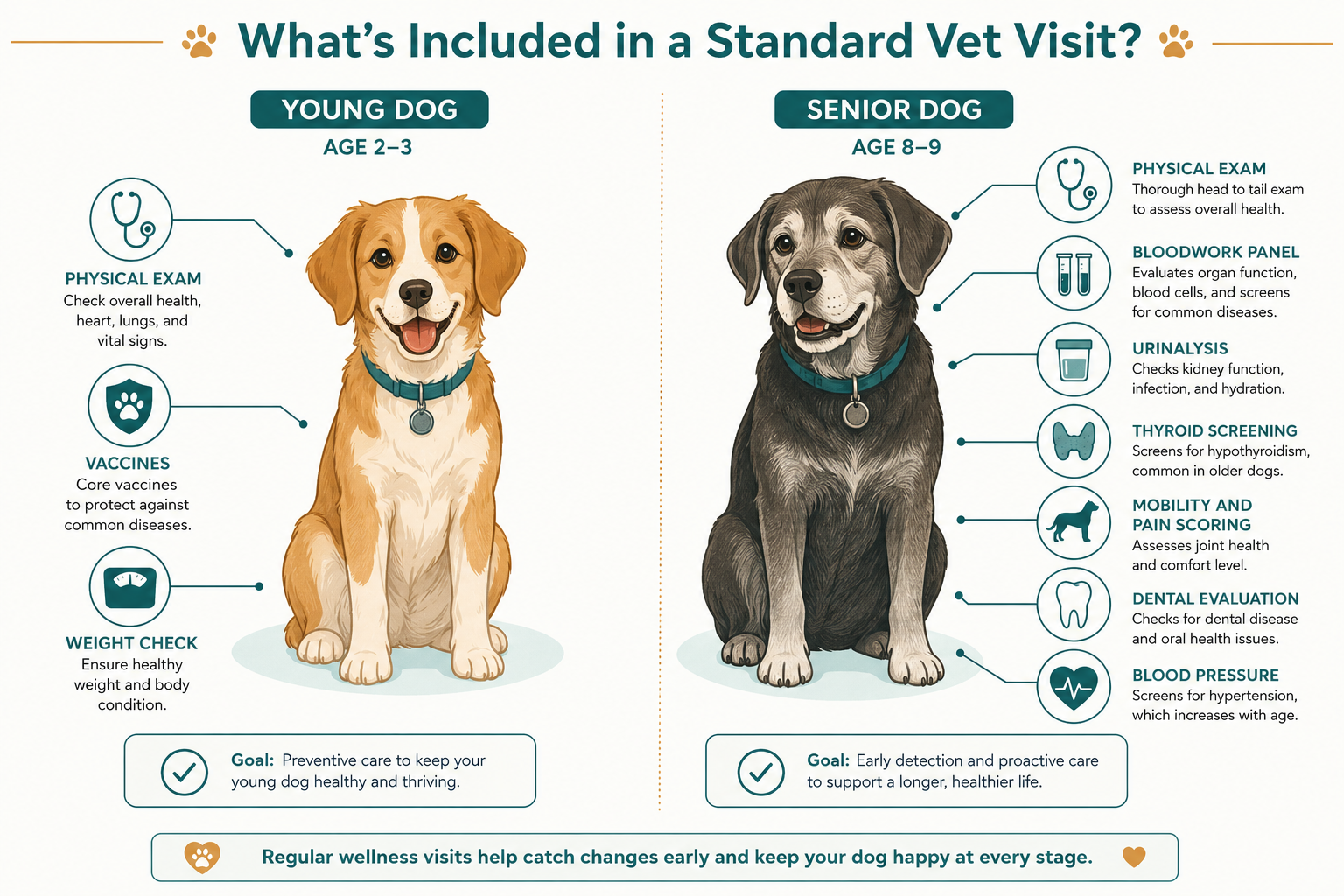
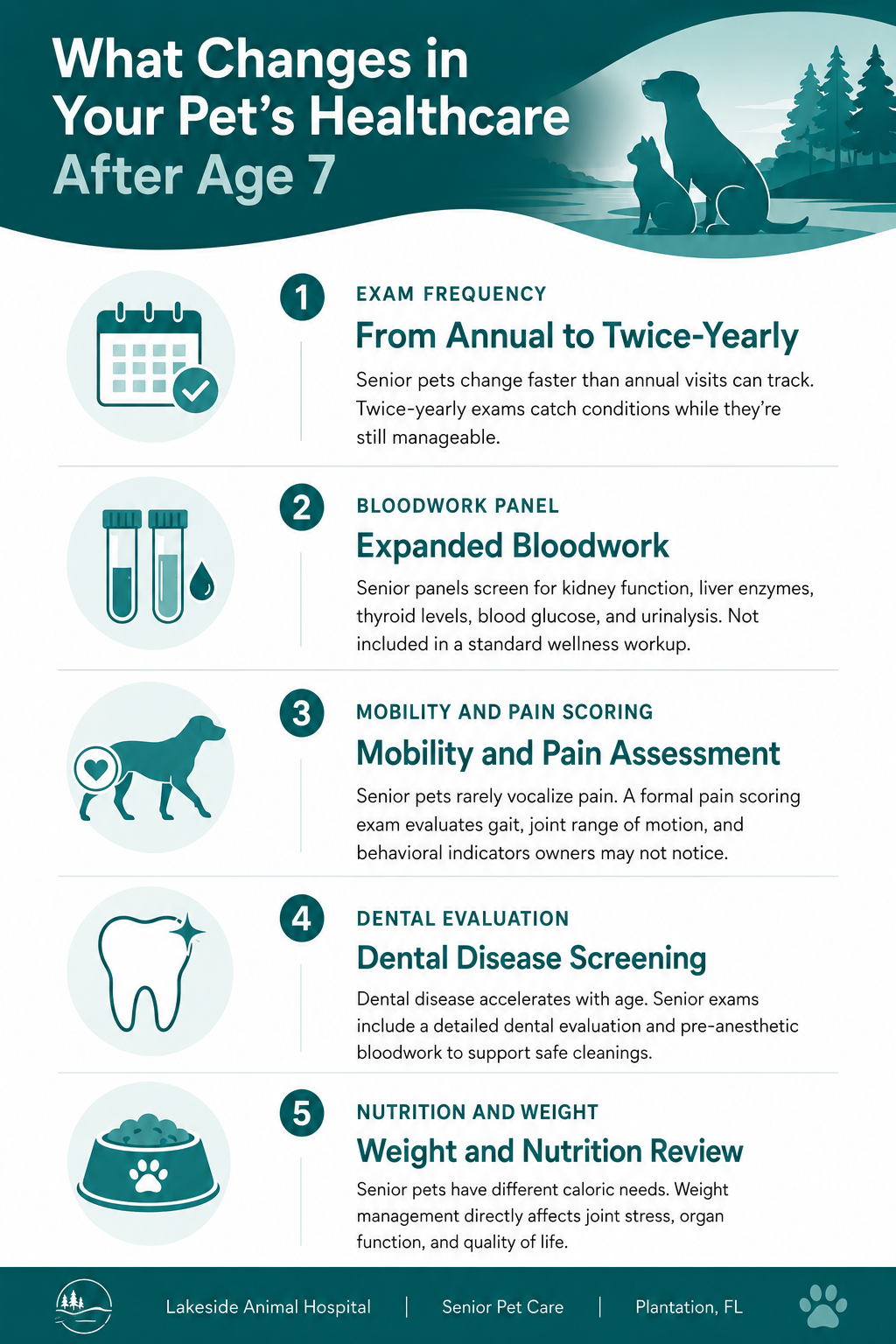
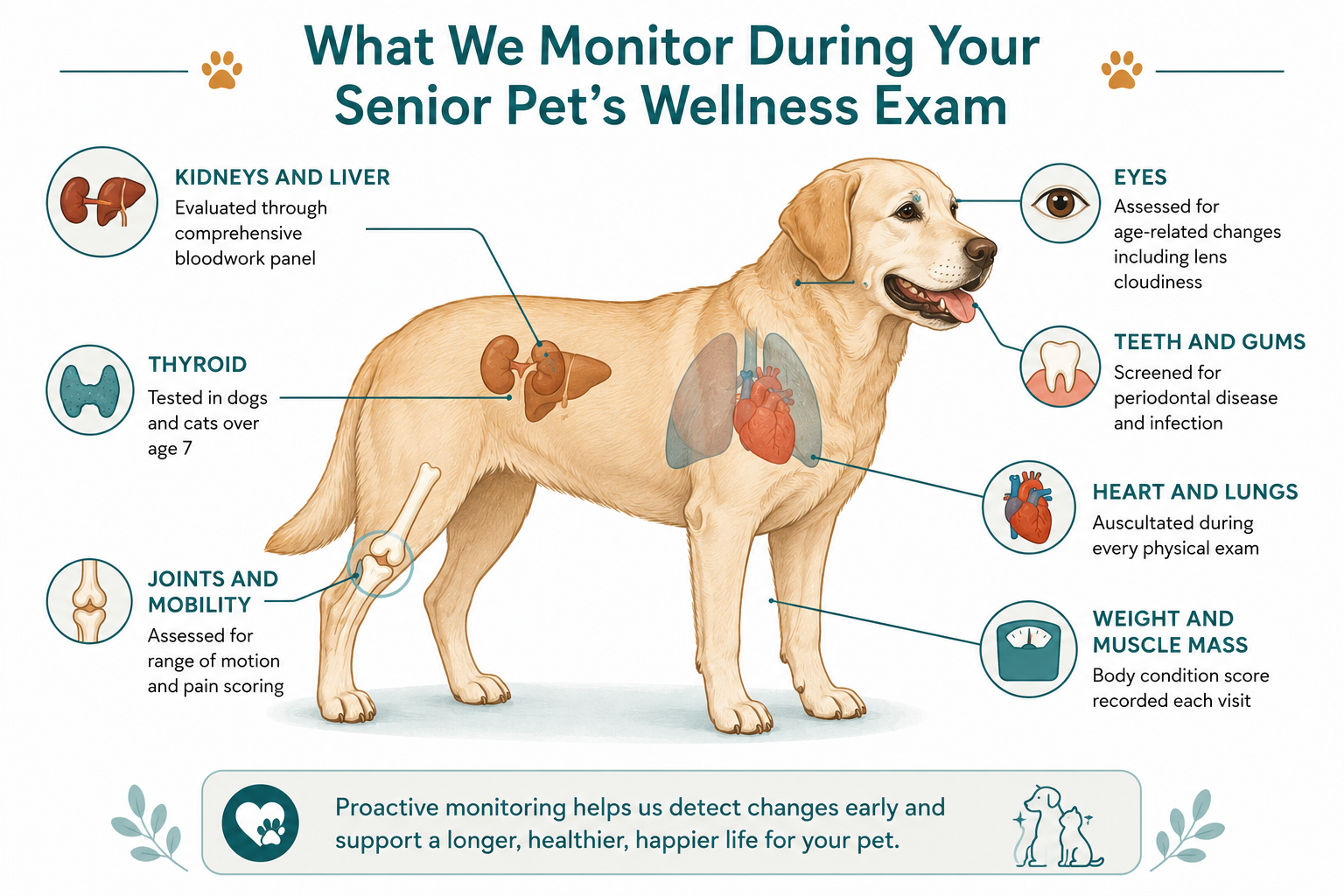
A senior wellness exam goes well beyond a standard physical to include a comprehensive bloodwork panel assessing kidney, liver, and thyroid function, a urinalysis, a mobility and pain scoring assessment, and a detailed dental evaluation. Most veterinarians recommend moving to twice-yearly exams for senior patients rather than annual.
The standard annual exam that served your pet well at age 3 is not the right tool for a 9-year-old. The scope of what needs to be evaluated expands, and some of the most important findings come from diagnostics rather than physical observation alone.
Senior Bloodwork: What We're Screening For and Why
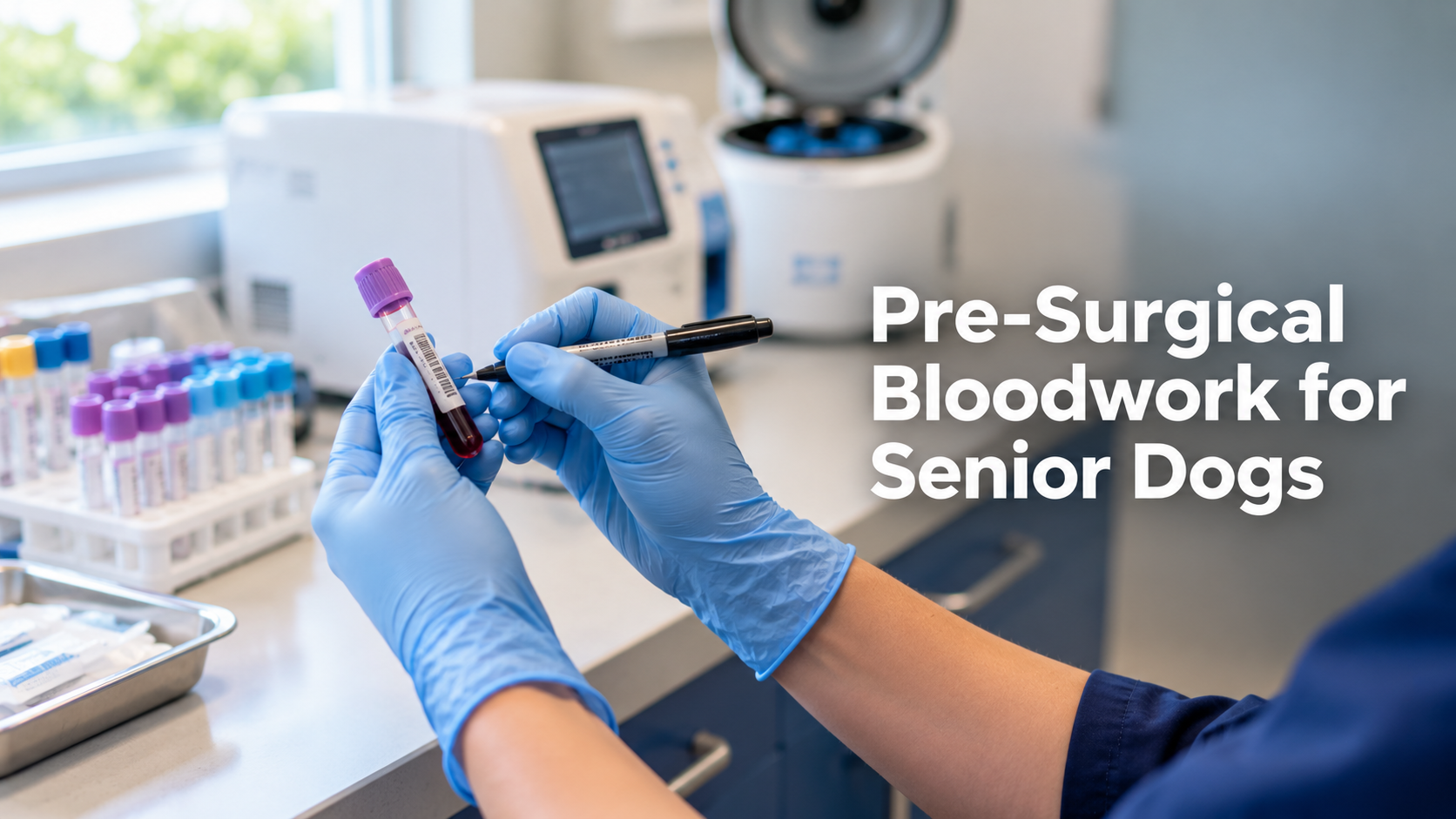
A complete senior bloodwork panel typically includes a complete blood count (CBC) and a comprehensive metabolic panel that assesses kidney function, liver enzymes, blood glucose, and electrolytes. Thyroid function testing is added for cats and often for dogs as well. Together, these results give a baseline picture of internal organ health that a physical exam alone cannot provide.
The value of bloodwork compounds over time. A single panel tells you where your pet stands today. A second panel six months later tells you whether things are stable or trending in a direction that warrants action. That trajectory is often more informative than any single data point, and it's also one of the core reasons why.
How often senior dogs need veterinary exams is a question worth understanding before your pet reaches that life stage, not after.
Mobility and Pain Assessment: What It Looks Like in Practice
Pain scoring in senior pets involves evaluating gait, posture, range of motion in the joints, and behavioral responses to palpation. Your veterinarian will also ask what you're observing at home, because behavioral changes between visits are often the earliest indicators of pain. How does your dog move after rest? Do they hesitate on stairs? Have they stopped jumping onto the couch? Those answers matter as much as anything the exam itself reveals.
What Are the Early Signs That a Senior Dog Is in Pain?
Senior dogs rarely vocalize pain. Instead, they slow down, hesitate on stairs, stop jumping onto furniture, sleep more, or become reluctant to play. Changes in gait, stiffness after rest, and reduced appetite are all pain signals that owners frequently attribute to normal aging.
This is one of the most important things to understand about senior dog care. Dogs are biologically inclined to mask discomfort. In the wild, showing weakness invites vulnerability. In your home, that same instinct means your dog may be managing significant joint pain while still wagging their tail at dinner time.
The Seven Subtle Signs Pet Owners Miss
These are the behavioral changes that warrant a conversation with your veterinarian, even if your dog seems otherwise fine.
Hesitation before standing up from a lying position is one of the most common early arthritis signals. Reluctance to climb stairs or jump onto furniture they previously used without a second thought is another. You may also notice changes in sleep, including more of it, frequent position shifts, or a preference for hard surfaces when they used to choose soft ones. Reduced enthusiasm for walks or play, a change in posture when standing, licking or chewing at a specific joint, and increased irritability when touched around the hips or back are all worth noting. None of these alone is a diagnosis. Together, they are a clear signal that a mobility and pain assessment is overdue.
Why Dogs Hide Pain and What That Means for Their Care
The instinct to mask pain is deeply wired, and it means that by the time a dog shows obvious signs of discomfort, the underlying condition has usually been present for some time. Twice-yearly exams with a formal pain scoring component exist to catch what behavior alone won't reveal. When your veterinarian can assess range of motion, joint symmetry, and pain response directly, they can identify conditions your dog is quietly compensating for at home.
How Should Senior Pet Care Change for Cats Specifically?
Senior cats are even more skilled than dogs at masking illness. Hyperthyroidism, chronic kidney disease, dental disease, and high blood pressure are the four conditions most commonly diagnosed in cats over age 10, and all four are fully manageable when caught early through routine screening.
Cats are also exceptionally good at maintaining normal-looking behavior until a condition is quite advanced. Weight loss in a senior cat is frequently overlooked because it happens slowly. Changes in litter box habits, increased thirst, altered sleep patterns, and reduced grooming are signs that warrant a veterinary evaluation, but they are easy to write off as personality or age.
Senior Cat Bloodwork: The Four Conditions We Test For
A senior cat panel screens specifically for thyroid hormone levels (hyperthyroidism is extremely common in cats over 10), kidney values including BUN and creatinine, blood glucose, and complete blood count findings that can indicate infection or anemia. Blood pressure measurement is also recommended for senior cats, as hypertension frequently accompanies both hyperthyroidism and kidney disease.
All four of these conditions are manageable with early intervention. Hyperthyroidism responds well to medication or dietary management. Early-stage kidney disease can be slowed significantly with dietary modification and supportive care. Catching these conditions at the screening stage rather than the crisis stage makes a real difference in prognosis and quality of life. For cat owners specifically wondering
whether senior cats can safely undergo dental procedures, that question deserves its own careful answer, and we cover it in detail.
Arthritis in Cats: Why It's Underdiagnosed and How We Address It
Arthritis in cats is significantly underdiagnosed because cats don't limp the way dogs do. Instead, they stop jumping to high surfaces, become less active, groom inconsistently, and may grow more reclusive. Studies suggest that more than 90 percent of cats over age 10 have radiographic evidence of arthritis, yet most owners don't identify it as the cause of the behavioral changes they're seeing. A mobility assessment and targeted imaging can confirm what physical observation alone may not reveal.
How Does Lakeside Animal Hospital Approach Senior Pet Care in Plantation?
Lakeside's approach to senior pets combines comprehensive in-house diagnostics, including bloodwork, urinalysis, and digital X-rays, with Dr. Frione's focus on rehabilitation and pain management, including laser therapy as a non-pharmaceutical option for mobility issues.
Plantation families benefit from the fact that most diagnostics your senior pet needs don't require an outside referral. Bloodwork runs in-house with same-day results, and imaging is available during the same visit. That matters for senior patients in particular, because minimizing trips while maximizing the information gathered is both kinder to the animal and more practical for the family.
On-Site Imaging for Senior Diagnostics
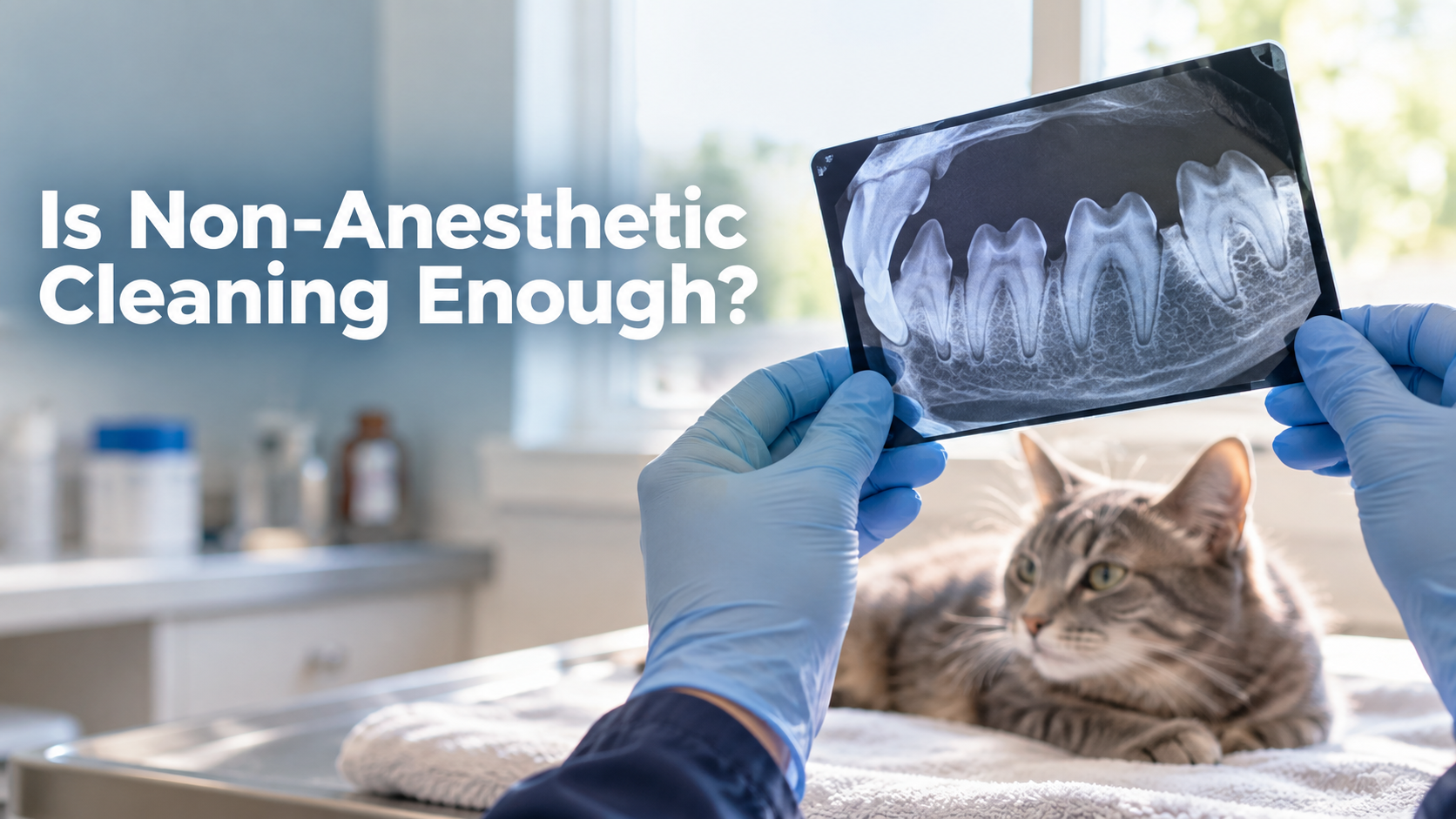
Digital X-rays allow the team to evaluate joint health, organ size, and structural changes that bloodwork alone wouldn't reveal. For a senior dog showing early signs of arthritis, X-rays can confirm the degree of joint involvement and help guide a treatment plan. For a cat with suspected kidney disease, imaging adds context to bloodwork values. Having this capability in-house means your pet can have a full senior workup in a single appointment.
Laser Therapy as Part of Senior Pain Management
For senior dogs and cats managing arthritis or post-surgical recovery, laser therapy for senior dog pain and mobility is an option that addresses inflammation and discomfort without pharmaceutical side effects. Dr. Frione incorporates laser therapy into senior care plans when appropriate, particularly for patients where long-term NSAID use raises organ function concerns. It is a practical, evidence-supported tool that fits naturally into a comprehensive senior care plan.
Frequently Asked Questions About Senior Pet Wellness
How often should a senior dog go to the vet?
Most veterinarians recommend twice-yearly wellness exams for dogs over age 7. Senior pets experience health changes more rapidly than younger animals, and conditions like kidney disease, dental disease, and arthritis progress faster than an annual exam cycle can reliably catch. Twice-yearly visits allow for earlier intervention and meaningfully better outcomes over your pet's lifespan.
What does a senior pet wellness exam cost?
Senior wellness exams are typically priced similarly to standard annual exams, though the recommended diagnostic workup, including a comprehensive bloodwork panel and urinalysis, adds to the total. The investment in early detection routinely prevents significantly more expensive emergency treatment down the line. A bloodwork panel that identifies early kidney disease at a manageable stage costs a fraction of what a crisis requires.
What are signs that a senior dog is hiding pain?
Watch for hesitation before standing, reluctance to climb stairs or jump onto familiar furniture, changes in gait or posture, increased sleep, reduced appetite, and withdrawal from activities your dog previously enjoyed. "I recommend taking note of any behavioral change that doesn't have an obvious explanation," says Dr. Jennifer Frione, DVM. "That note is often the most useful thing an owner brings to a senior exam."
Can senior dogs and cats still have dental cleanings?
Yes, with appropriate pre-anesthetic screening. Senior pets often have more significant
dental care for senior dogs and cats needs than younger animals, and the risk of untreated dental infection frequently outweighs the carefully managed risk of anesthesia in a healthy senior patient. Pre-anesthetic bloodwork helps identify any organ function concerns before proceeding, and on-site diagnostics mean that screening happens before any anesthesia decision is made.
Dr. Jennifer Frione's Perspective on Senior Pet Care
"I find that owners of senior pets often interpret slowing down as a normal part of aging, and sometimes it is. But in my experience, slowing down is also one of the most reliable early indicators of pain that we have. A dog who used to greet you at the door and now stays on the couch may be managing joint pain every time they stand up. I recommend twice-yearly exams for every patient over age seven, not to find problems for the sake of finding them, but because the conditions I most want to catch are the ones that are completely manageable when we find them early."
— Dr. Jennifer Frione, DVM, Lakeside Animal Hospital
Ready to Schedule Your Senior Pet's Wellness Exam in Plantation?
If your dog or cat is over 7 and still on an annual exam schedule, they may be missing the monitoring window where the most common senior conditions are still fully manageable. Kidney disease, dental disease, thyroid dysfunction, and arthritis don't wait for a yearly appointment to progress. The twice-yearly schedule exists because that's the interval that actually matches how quickly senior pets change.
Senior pet care at Lakeside Animal Hospital in Plantation includes a comprehensive physical exam, in-house bloodwork panel, urinalysis, mobility and pain assessment, and digital imaging when indicated, all in a single visit. Dr. Frione brings ten years of experience serving Plantation, Sunrise, Lauderhill, and Plantation Gardens families, with specific expertise in rehabilitation, preventative care, and soft tissue surgery for senior patients.
Call Lakeside Animal Hospital or book online to schedule your senior pet's wellness exam. Broward County families trust us with the pets who matter most.