What Are the Side Effects of Laser Therapy for Dogs, and Are There Any Real Risks to Know About?
TL;DR: Laser therapy for dogs has very few side effects. The most common response is mild, temporary soreness at the treatment site within the first 24 hours, and serious complications are rare outside of a small list of contraindications, including active cancer at the treatment site, pregnancy, and active hemorrhage.
Laser therapy has become a routine recommendation for dogs recovering from surgery, managing arthritis, or healing from soft tissue injuries. Pet owners across Plantation often ask about the side effects of laser therapy for dogs before agreeing to a treatment plan, and that caution makes sense. The treatment is non-invasive, but knowing what a normal response looks like helps owners tell the difference between expected soreness and something that needs a call to the vet.
What Side Effects Can Dogs Experience From Laser Therapy?
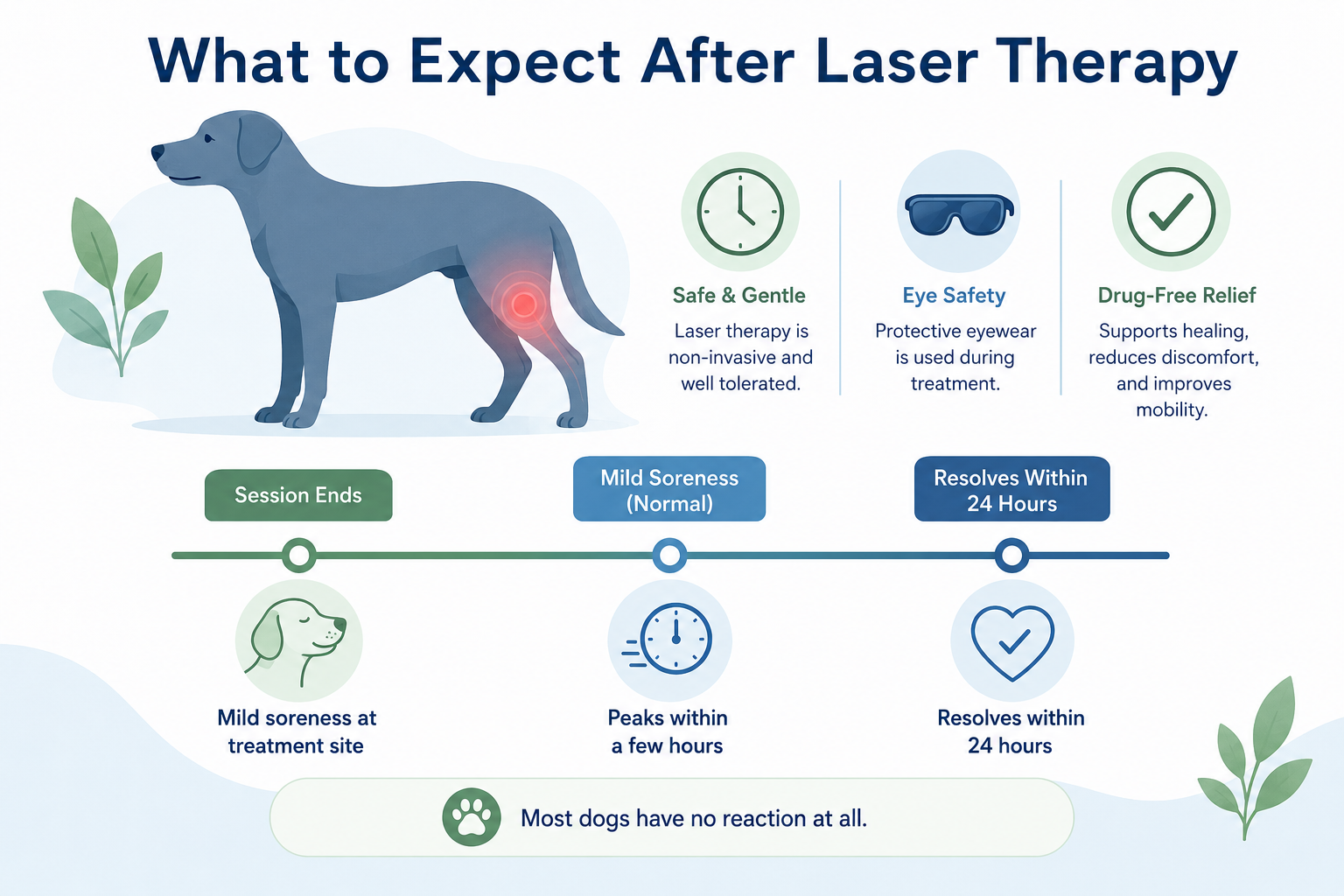
The most common side effect of laser therapy in dogs is mild, temporary soreness at the treatment site, usually appearing after the first one or two sessions. The feeling is similar to the muscle fatigue a person notices after a hard workout, and it typically fades within 24 hours. This response reflects photobiomodulation at the cellular level, the same mechanism that drives the healing benefits of the treatment.
Dogs with chronic conditions, like long-term arthritis or old injuries, tend to notice this more, since their tissue is reacting to increased circulation and cellular activity. As the treatment protocol continues, most dogs show less soreness over time, and the majority have no reaction at all.
"In my experience, the dogs who do worst with laser therapy are the ones whose owners stop after the first session because the dog seemed a little sore the next day. That temporary response is actually a sign the treatment is working, not a reason to stop," says Dr. Jennifer Frione, DVM at Lakeside Animal Hospital.
For a full walkthrough of how the treatment works from the first appointment onward, our complete guide to laser therapy for dogs in Plantation covers the entire process.
Are There Dogs Who Should Not Receive Laser Therapy?
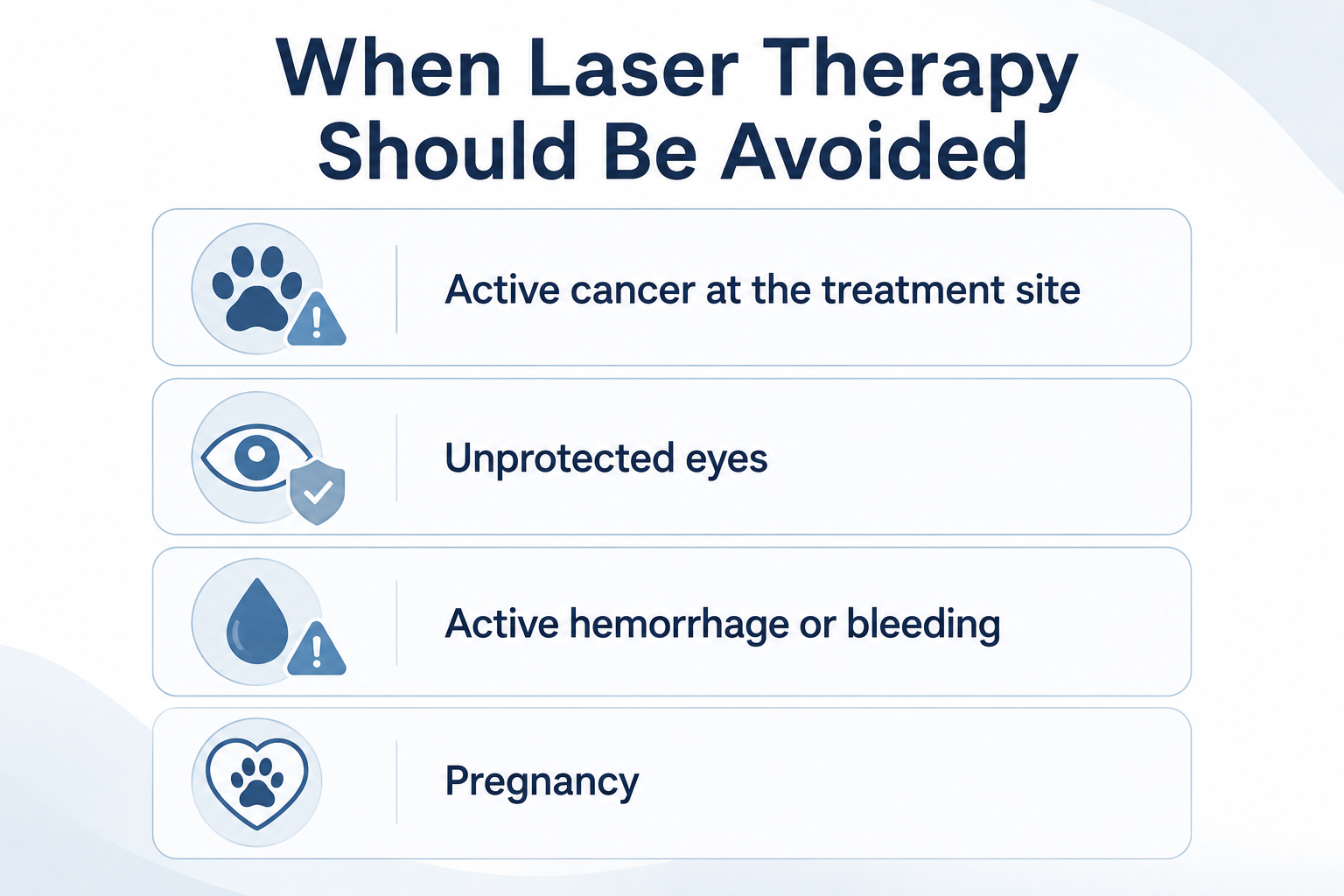
Laser therapy should not be applied directly over active cancer sites, over unprotected eyes, over actively hemorrhaging tissue, or on pregnant dogs. These are specific, situational contraindications, not a reason to avoid the treatment as a whole.
A dog with a history of cancer elsewhere in the body, for example, may still be a good candidate for laser therapy on an unrelated joint or injury. The limits apply to the treatment site and the animal's current condition, not to laser therapy as a category. This is why a clinical assessment happens before every new patient starts treatment. Owners bringing pets in from Sunrise and Lauderhill for rehabilitation care at Lakeside ask about these limits often, and it's a fair question to raise before the first session.
How Does Lakeside Ensure Laser Therapy Is Administered Safely?
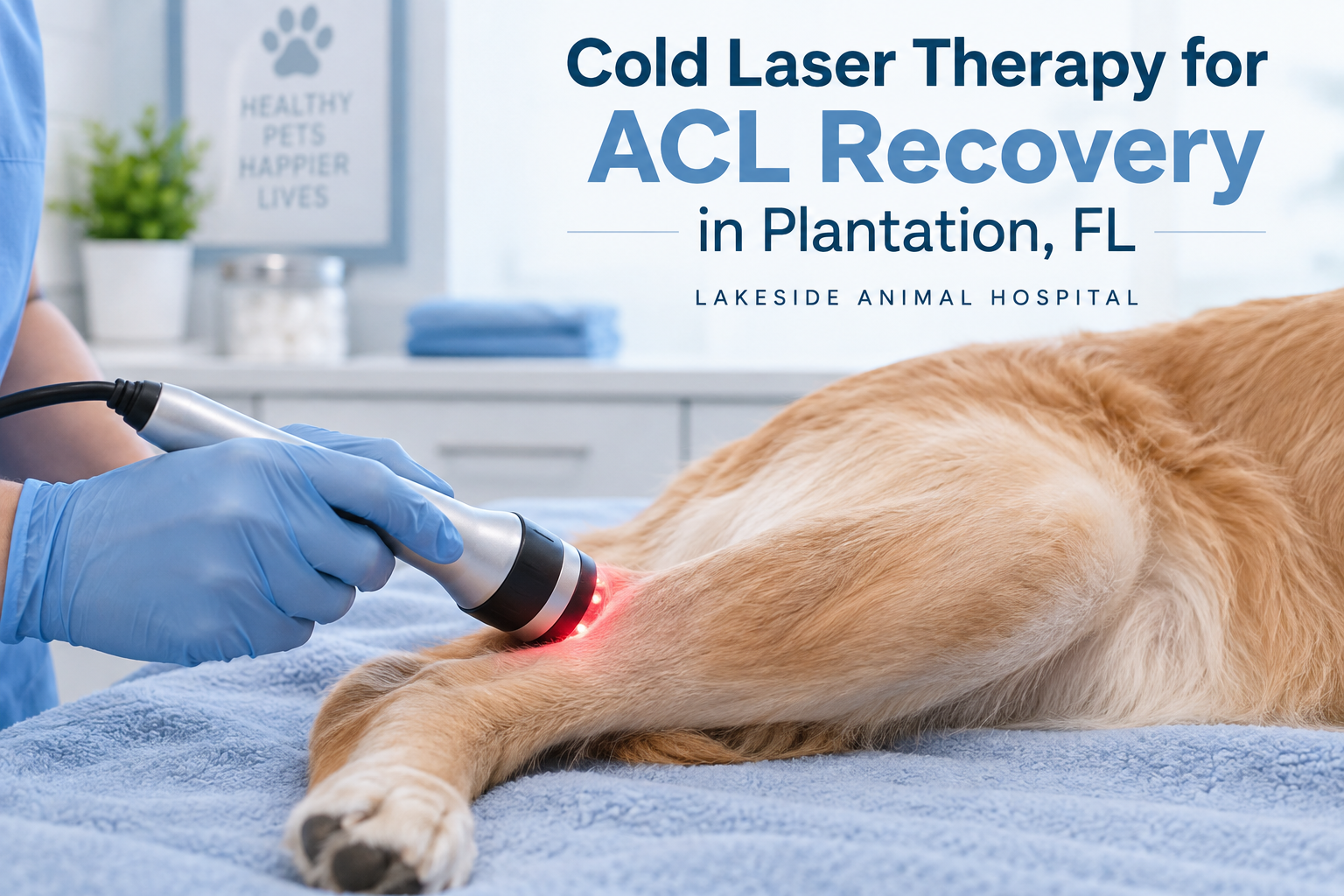
At Lakeside, every laser therapy patient gets a clinical assessment before treatment begins, and protective eyewear is worn by the dog and everyone in the room during each Class IV laser session. Protocols are set for the individual, not applied at one fixed setting for every patient.
Coat thickness, treatment area, and the underlying condition all shape how a session is set up. A senior dog with hip arthritis and a young dog recovering from a soft tissue injury are not treated the same way, even on the same afternoon. This individualized approach is a large part of why side effects stay minimal in practice. Pet owners considering laser therapy consultations at Lakeside Animal Hospital can expect that same evaluation before a single session is scheduled.
Quick Questions
Are there any side effects of laser therapy for dogs? Side effects from laser therapy in dogs are uncommon and usually mild. The most frequent response is temporary soreness at the treatment site in the first 24 hours after initial sessions, a normal reaction to increased circulation that resolves quickly. Serious adverse effects are rare when treatment follows proper veterinary protocols.
Is laser therapy safe for senior dogs? Yes. Laser therapy is generally well tolerated by senior dogs and is a preferred pain management option for older patients who cannot take NSAIDs long term due to kidney or liver concerns. A veterinary assessment beforehand confirms the protocol fits the dog's current health status.
Can laser therapy make a dog's condition worse? Laser therapy does not worsen the underlying condition being treated. Dogs may feel more soreness after initial sessions as tissue responds, but this is temporary and expected. If symptoms worsen significantly after treatment, a follow-up visit is worth scheduling to reassess the plan.
Ready to Find Out if Your Dog Is a Candidate for Laser Therapy?
Most dogs tolerate laser therapy well, and the side effects of laser therapy for dogs are limited to mild, short-lived soreness in the majority of cases. Dr. Frione's background in rehabilitation medicine, paired with a clinical assessment before every first session, means the treatment plan is built around your dog specifically, not a standard protocol. Families across Plantation, Sunrise, Lauderhill, and Plantation Gardens trust this Broward County animal hospital because every laser therapy session follows the same protective standards, session after session. If your dog is dealing with arthritis, a slow-healing injury, or post-surgical recovery, a conversation with the team is the next step.