Can Cold Laser Therapy Help Your Dog Recover from an ACL Injury?
TL;DR: Cold laser therapy uses light energy to reduce inflammation and support tissue healing, and it's commonly used alongside physical recovery after ACL or TPLO surgery to help dogs regain mobility more comfortably. Sessions are painless, take about 10 to 15 minutes, and typically start within the first couple of weeks after surgery.
A torn ACL, or cruciate ligament, is one of the most common orthopedic injuries Plantation dog owners bring to our exam rooms. Whether your dog jumped off the couch wrong or the injury developed slowly from years of wear, the recovery period after surgery is often the part owners worry about most. Cold laser therapy for dog ACL recovery in Plantation has become a standard part of many post-surgical plans at Lakeside Animal Hospital, not because it replaces rest and rehabilitation, but because it supports the body's own healing process during a window when comfort matters.
This article walks through how the therapy works, when it typically starts after TPLO surgery, what a session actually looks like, and what kind of timeline you can reasonably expect. If your dog is heading into surgery or already recovering, this should answer the questions you're likely asking your vet at the next visit.
How Does Cold Laser Therapy Support ACL Recovery?
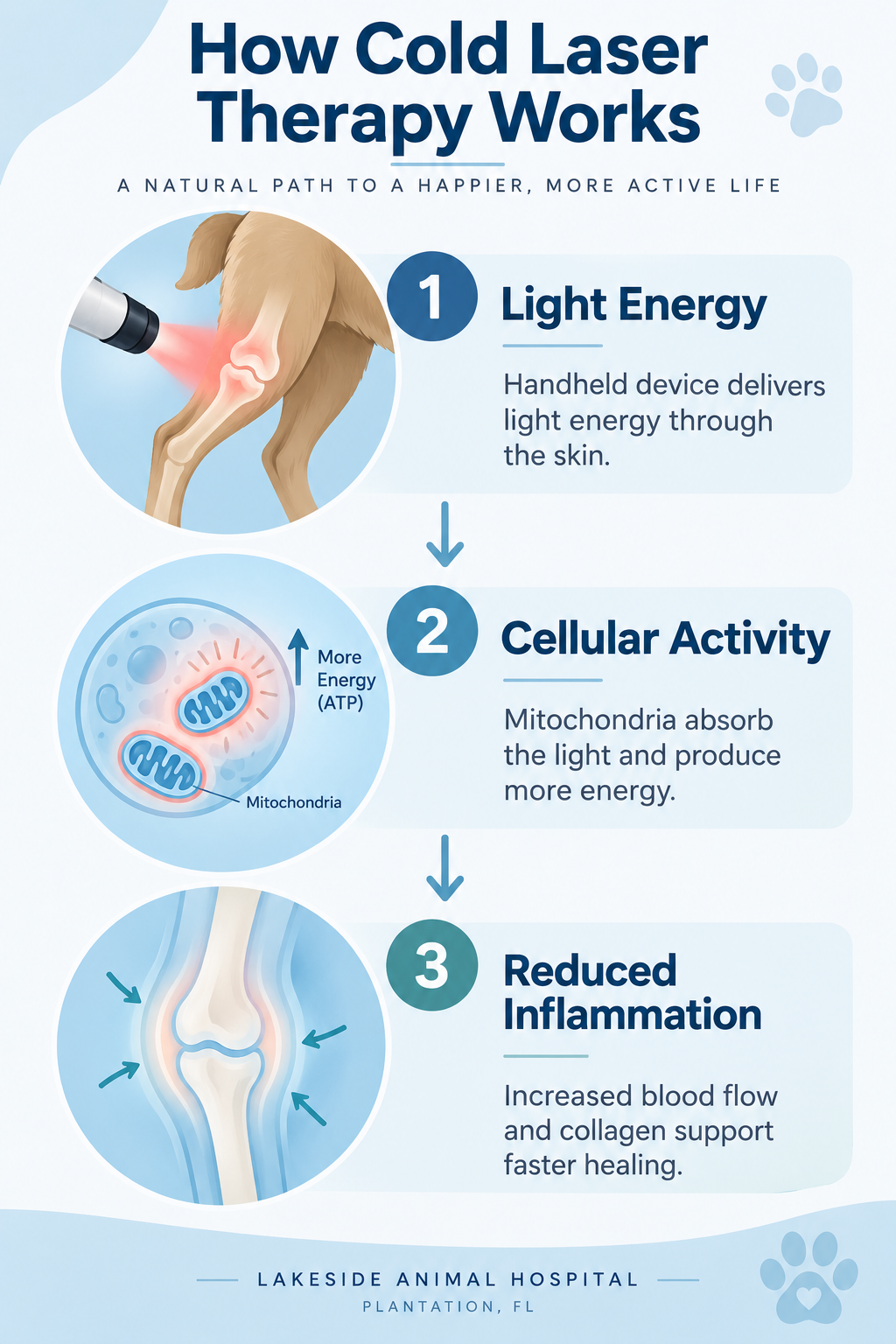
Cold laser therapy stimulates cellular activity that reduces inflammation and encourages tissue repair, which can ease pain and support healing around the surgical site. The laser delivers light energy in specific wavelengths that penetrate the skin without generating heat or causing discomfort.
This process, known as photobiomodulation, works by triggering the mitochondria inside cells to produce more energy. With more energy available, cells repair tissue faster and inflammation begins to settle sooner than it might on its own. For a dog recovering from TPLO surgery in Plantation, that translates to a joint that swells less, moves more freely, and hurts less during the early weeks when the surgical site is still healing.
What Happens at the Cellular Level
The light energy from the laser increases blood flow to the treated area and reduces the chemical markers associated with inflammation. Over a series of sessions, this supports collagen production and helps the surrounding soft tissue rebuild strength around the joint. None of this requires sedation or clipping fur, which is part of why it fits so easily into a recovery plan already full of restrictions and activity limits.
When Should Laser Therapy Start After TPLO Surgery?
Many vets begin laser sessions within the first one to two weeks post-surgery, once the incision is stable enough for treatment. The exact timing depends on how the surgical site is healing and whether any complications have come up during recovery checks.
Starting laser therapy early in the recovery window can support a smoother healing process, which is why we usually schedule the first session around the same time as the initial post-op recheck. At that visit, we look at swelling, incision closure, and how your dog is bearing weight before deciding the treatment is appropriate to begin. Waiting too long into recovery doesn't cause harm, but starting closer to surgery tends to produce a more comfortable few weeks for the dog.
Every case is different. A dog with a straightforward TPLO recovery might start sooner than one with additional soft tissue involvement or a slower initial healing pattern. This is one of the reasons recovering from surgery at Lakeside often overlaps with the same laser therapy protocols used for orthopedic cases, since post-surgical inflammation responds similarly regardless of the procedure.
What Does a Laser Therapy Session Involve?
A typical session takes 10 to 15 minutes, is painless, and involves a handheld laser device passed over the treatment area while your dog stays relaxed. Most dogs lie comfortably on a treatment table or blanket during the process, and no restraint beyond a gentle hold is needed.
The technician moves the device in slow, steady passes over the joint and surrounding tissue. There's no clipping, no needles, and no sedation. Some dogs feel a mild warmth, but most simply relax, and it's not unusual for a dog to doze off partway through. Because the treatment is so low-stress, it fits into a recovery plan without adding another source of anxiety for a dog that's already adjusting to activity restrictions and a cone.
How Many Sessions Does a Dog Typically Need?
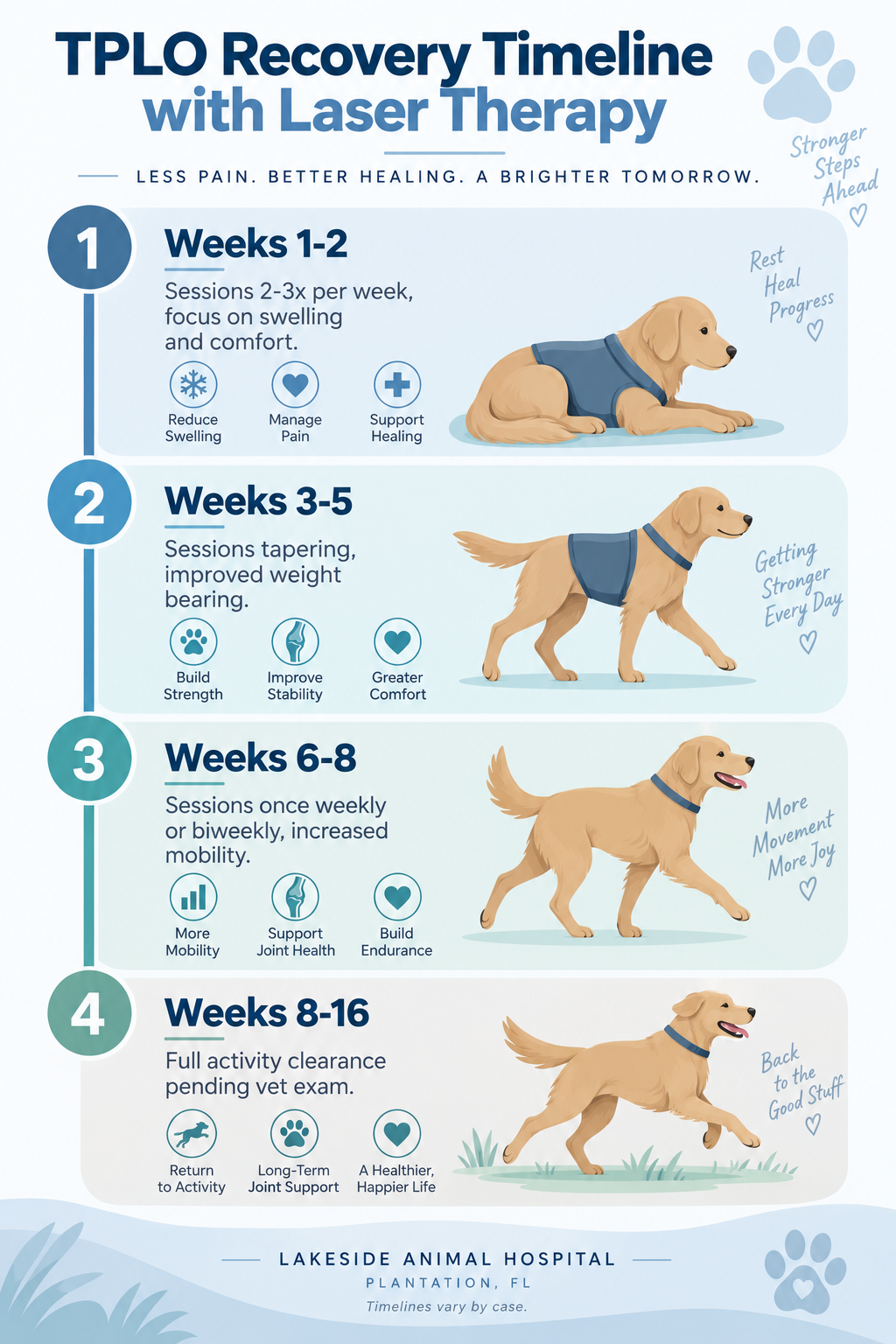
Recovery protocols vary, but many dogs receive sessions two to three times per week initially, tapering as healing progresses. The exact schedule depends on the severity of the original injury and how the dog responds to early treatments.
In a standard TPLO recovery, we often start with more frequent sessions during the first two to three weeks, then space them out as swelling decreases and mobility improves. By the six to eight week mark, most dogs have moved to once weekly or biweekly sessions, if they're still receiving treatment at all. This tapering approach mirrors the natural healing curve of the joint itself. If you want a closer look at how quickly owners typically see change, how long laser therapy takes to show results breaks down what to expect week by week.
What Results Should You Expect, and When?
Many owners notice improved comfort and mobility within a few weeks of consistent sessions, though full recovery timelines depend on the severity of the original injury. TPLO recovery generally spans two to four months before a dog returns to full activity.
Improvement usually shows up gradually. You might notice your dog putting more weight on the leg during short walks, standing up with less hesitation, or showing less stiffness after resting. These are meaningful signs that the tissue is healing and inflammation is under control. Full return to normal activity, including running and jumping, typically happens closer to the four month mark and only after your vet clears the joint on imaging or exam. Laser therapy supports that timeline, but it works in combination with controlled activity, weight management, and any physical rehabilitation your vet recommends, not as a replacement for those steps.
Frequently Asked Questions About Cold Laser Therapy for Dog ACL Recovery
Is cold laser therapy painful for dogs?
No. Cold laser therapy is non-invasive and painless. Most dogs tolerate sessions well, and some even relax or fall asleep during treatment. There's no need for sedation or restraint beyond a gentle hold.
Can laser therapy replace physical therapy after ACL surgery?
No. Laser therapy works best alongside a broader recovery plan that may include controlled activity and physical rehabilitation, not as a standalone replacement. "I recommend laser therapy for almost every post-op orthopedic case I see, but it works best as part of a full recovery plan, not instead of one," says Dr. Jennifer Frione, DVM.
How soon after surgery can laser therapy begin?
This depends on your dog's specific procedure and healing, but many dogs start laser sessions within the first couple of weeks post-surgery once cleared by their vet. Dr. Frione typically evaluates this timing at the first post-op recheck.
How many laser sessions will my dog need overall?
Most dogs need somewhere between eight and twelve sessions over the course of a full recovery, though this varies by injury severity and how the dog responds early on. Your vet will adjust frequency based on progress at each recheck.
Does laser therapy work for older dogs too?
Yes. Laser therapy is often just as effective, and sometimes more valuable, for senior dogs whose tissue naturally heals more slowly. It's frequently paired with senior wellness plans for dogs managing joint issues beyond a single surgery.
Dr. Frione's Perspective
"I recommend laser therapy for almost every post-op orthopedic case I see because it genuinely helps manage discomfort during a recovery period that can otherwise be frustrating for both the dog and the owner. It's not a shortcut, but it makes the process smoother." Dr. Frione's clinical interests include rehabilitation and soft tissue surgery, and she oversees each dog's laser protocol as part of a personalized treatment plan built around that individual patient's healing pace, not a one-size schedule.
Ready to Support Your Dog's Recovery?
Watching your dog work through ACL or TPLO recovery is hard on the whole family, and getting the healing process right matters as much as the surgery itself. Lakeside Animal Hospital offers cold laser therapy for post-surgical recovery as part of a personalized treatment plan built around your dog's specific procedure and progress, overseen by a board-certified team with dedicated experience in rehabilitation.
We work with Plantation, Sunrise, and Lauderhill families whose pets are recovering from orthopedic surgery, and we know that every dog heals at a different pace. If your dog is scheduled for TPLO surgery or is already in recovery, schedule a laser therapy consultation and we'll walk you through what a treatment plan would look like for your dog specifically, session frequency, timeline, and all.
Recovering from an ACL injury takes patience, and cold laser therapy gives Plantation dogs a gentler path through it. Your pet is family, and we treat every recovery plan with the same care we'd want for our own.