How Much Does Dog Mass Removal Surgery Cost, and What's Involved?
TL;DR: Dog mass removal surgery in Plantation typically costs between a few hundred and over a thousand dollars, depending on the size and location of the mass, whether bloodwork or imaging is needed, and how long the procedure takes. An exact quote requires an in-person exam.
If you found a new lump on your dog during a belly rub last week, you're probably doing two things right now: watching it closely and wondering what it's going to cost to deal with. Plantation pet owners bring their dogs in for lump evaluations every week, and the first question is almost always the same one. What's this going to run me?
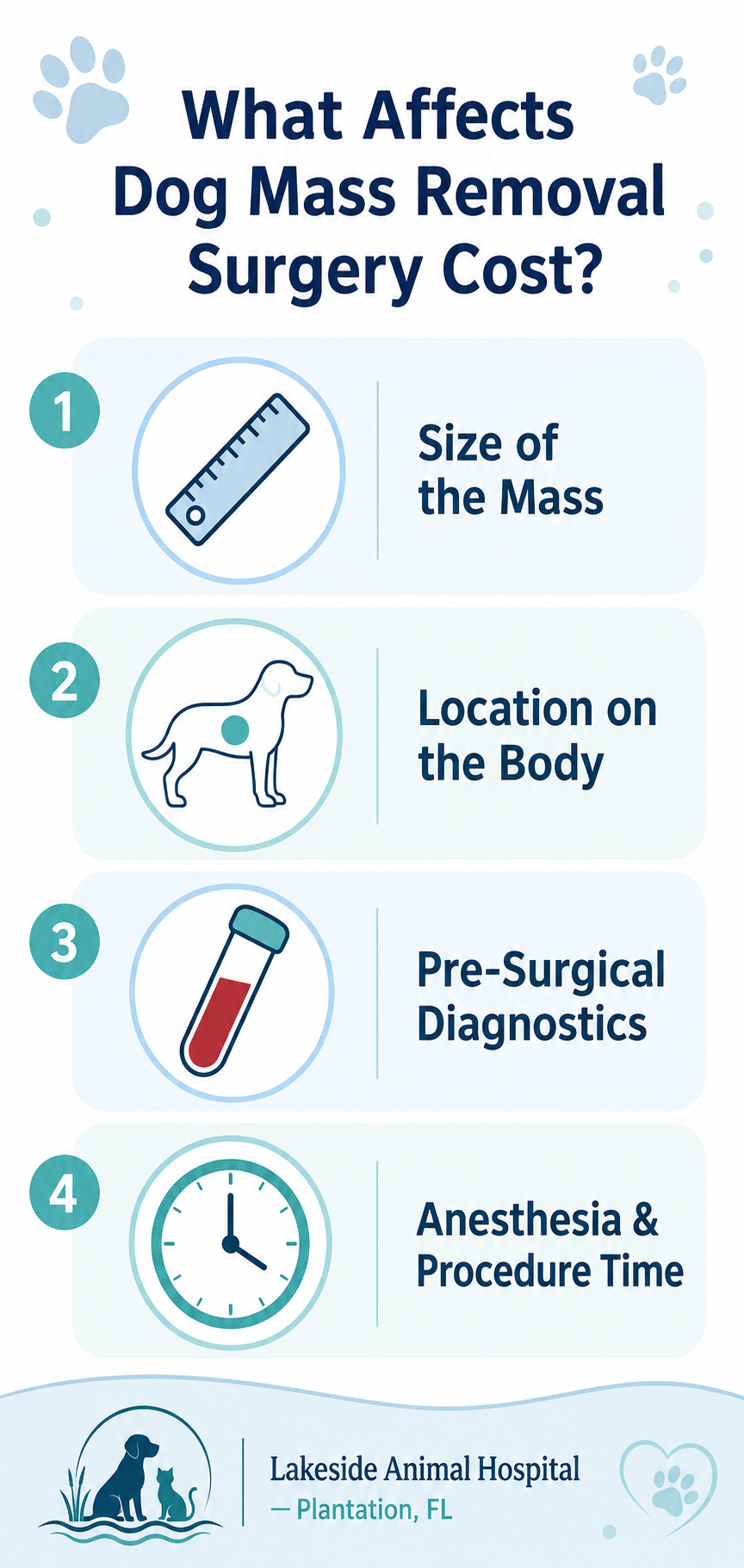
There's no single number that applies to every dog, every lump, or every situation. Mass removal surgery cost depends on real variables: how big the mass is, where it sits on your dog's body, what diagnostics are needed beforehand, and how much anesthesia time the procedure requires. This article breaks down each of those factors, walks through what the day of surgery actually looks like, and explains when it's time to stop watching and start scheduling.
What Determines the Cost of Mass Removal Surgery?
Cost depends on the size and location of the mass, whether pre-surgical bloodwork or imaging is needed, and how long the procedure and anesthesia time run. A small, superficial lump on the flank is a very different case than a larger mass near a joint or close to major blood vessels.
Location matters because some areas require more precision and longer surgical time. A mass near the eye, paw, or armpit takes more care to remove cleanly than one sitting on open skin along the back or side. Size matters for a similar reason: larger masses often need a bigger incision, more suturing, and sometimes reconstructive closure to keep the skin healthy afterward.
Pre-Surgical Diagnostics
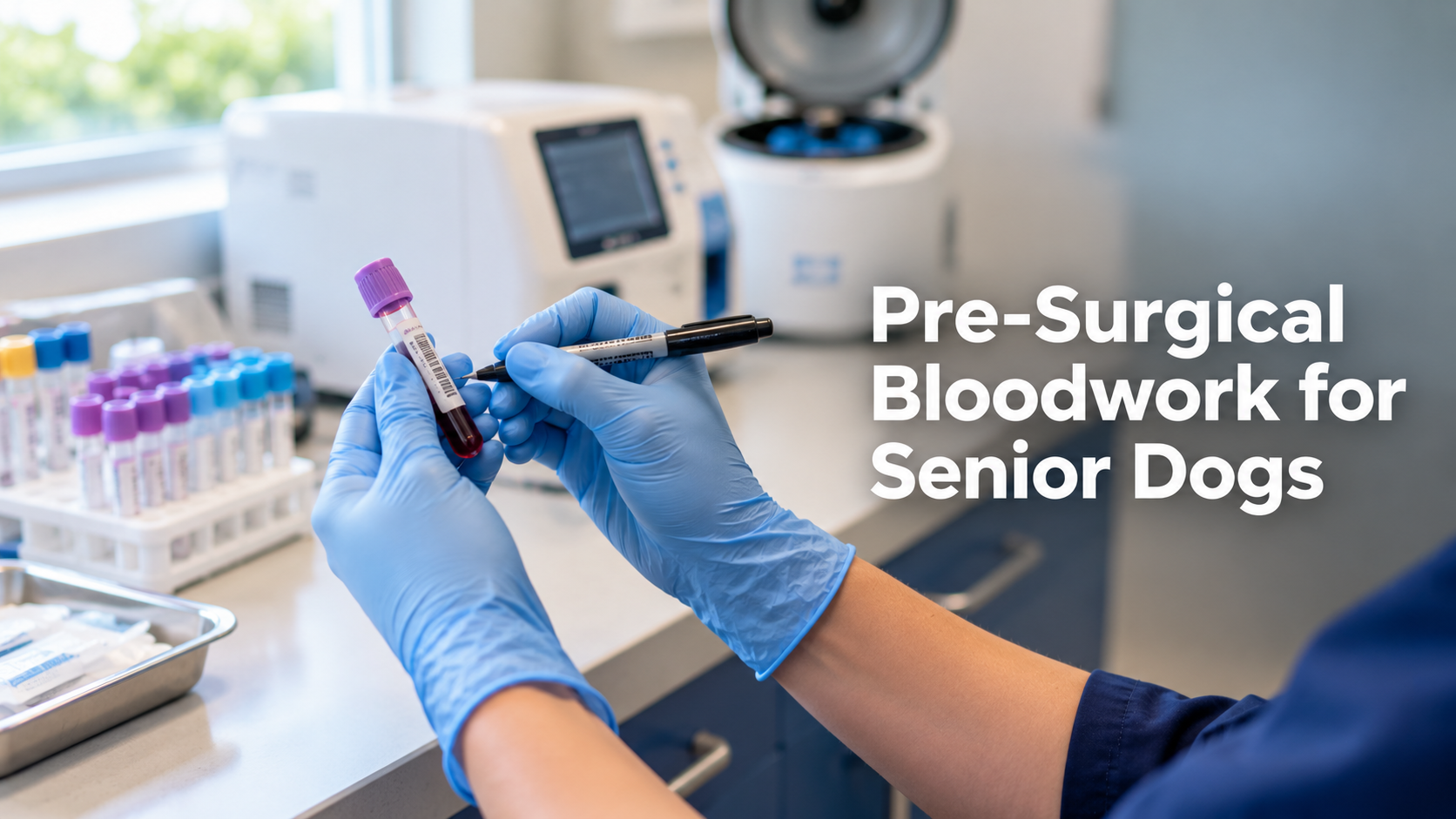
Most dogs need bloodwork before surgery to confirm they're a safe candidate for anesthesia, and some masses warrant a needle aspirate or biopsy beforehand to understand what the team is dealing with. These diagnostics add to the overall cost but reduce surprises in the operating room.
Anesthesia and Procedure Time
Anesthesia is priced based on time under, and complex removals simply take longer than straightforward ones. A quick five-minute excision costs less in anesthesia time than a mass requiring careful dissection around nerves or muscle.
How Do You Know If a Lump Needs to Be Removed?
Any new, growing, or changing lump should be evaluated by a vet, since appearance alone can't reliably tell you whether a mass is benign or something that needs attention. Dogs get lumps for all kinds of reasons, and plenty of them turn out to be harmless.
That said, guessing from home is a gamble Plantation families shouldn't have to take. A lipoma (a soft, fatty, benign lump) can look similar to something with a very different growth pattern underneath the surface. The only way to know for certain is a hands-on exam, and in many cases, a biopsy or fine needle aspirate to look at the cells directly.
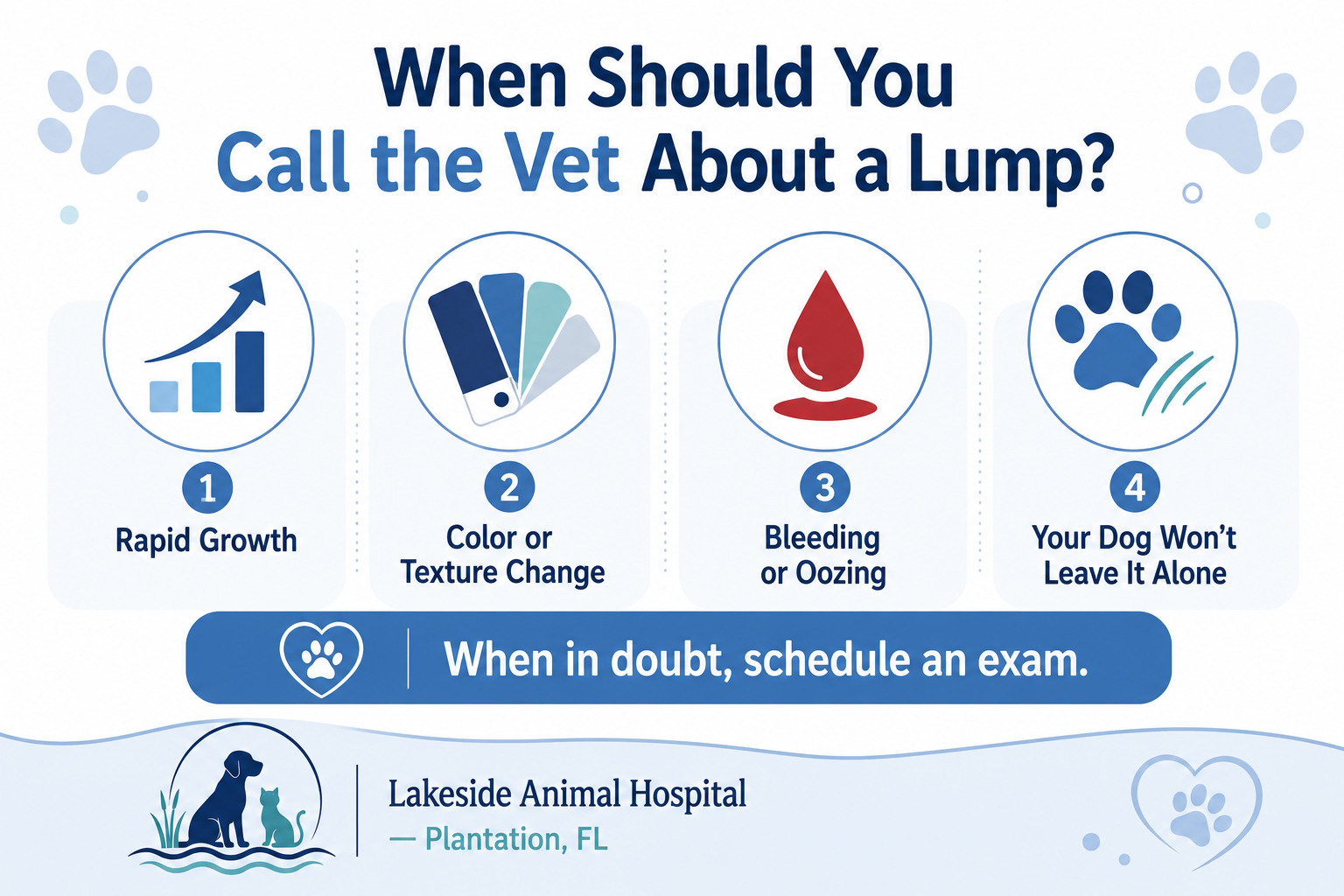
Signs worth watching for include rapid growth over days or weeks, changes in color or texture, bleeding or oozing, or your dog licking or bothering the area more than usual. None of these guarantee a serious diagnosis, but they're reasons to move up your appointment rather than wait for the next annual exam.
What Happens During the Procedure?
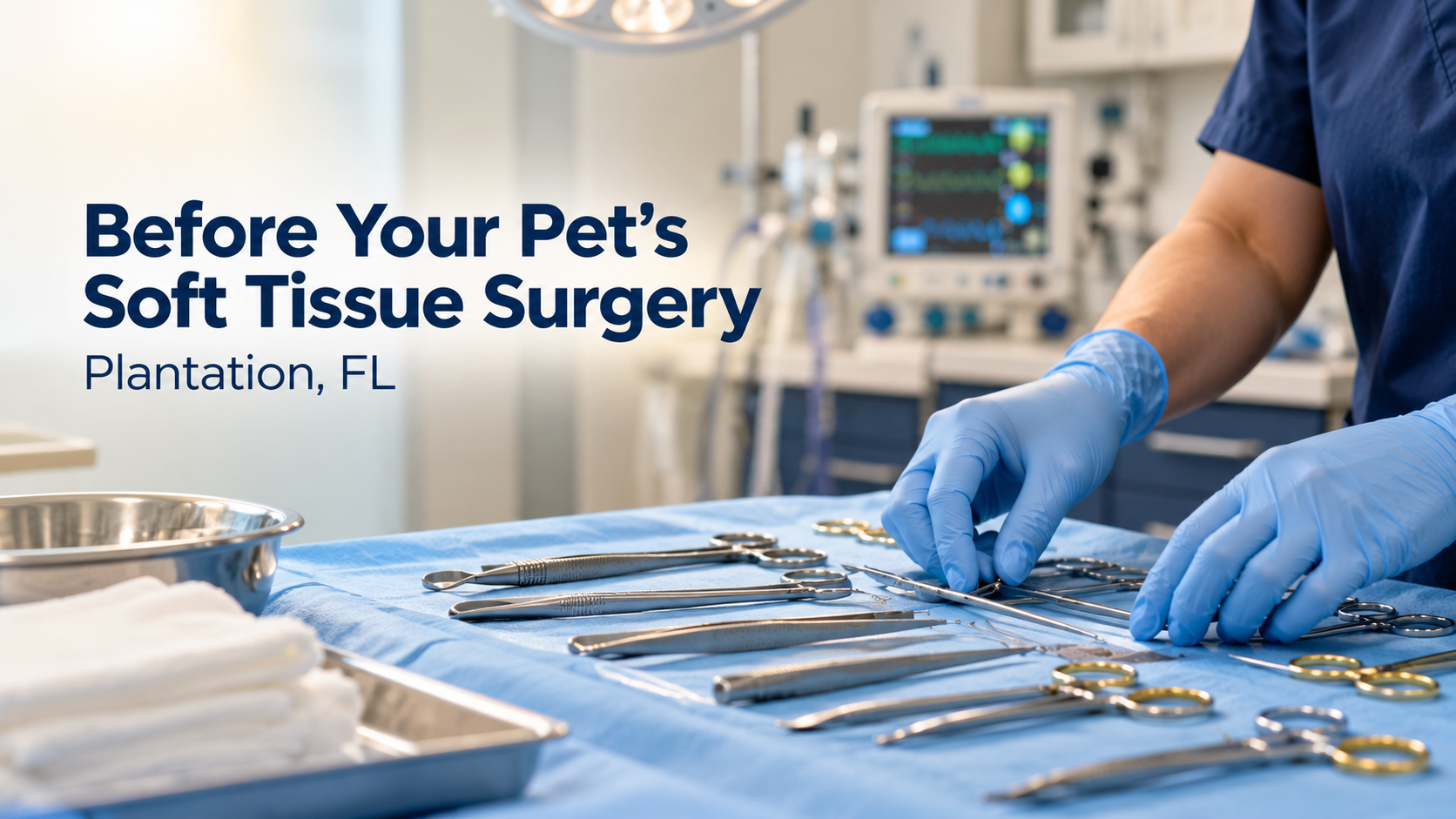
Your dog will have pre-surgical bloodwork, general anesthesia, mass removal with clean margins, and the tissue is typically sent for histopathology to confirm exactly what it is. The goal during surgery is to remove the entire mass along with a margin of healthy tissue around it, reducing the odds that anything gets left behind.
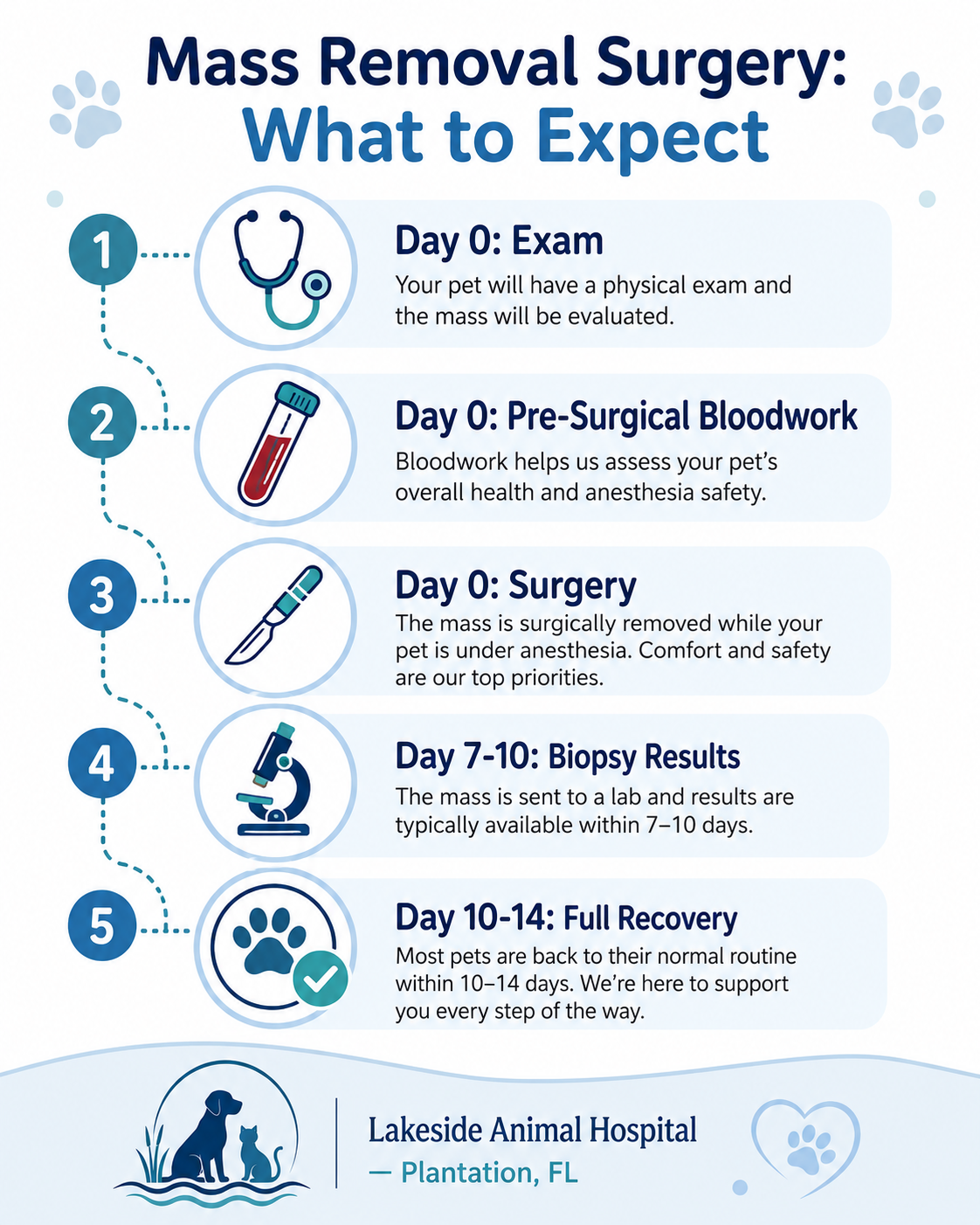
Your dog is monitored closely throughout the procedure, with vital signs tracked continuously under anesthesia. Once the mass is removed, the incision is closed with sutures, and your dog moves into a recovery area to wake up under supervision before heading home the same day in most cases.
Biopsy and Lab Results
The removed tissue is sent out for histopathology, which examines the cells under a microscope to determine whether the mass was benign or something requiring follow-up. Results typically come back within a week to ten days, and your vet will call to walk you through what they mean for your dog going forward.
What Does Recovery Look Like?
Most dogs go home the same day with pain management and an e-collar, with full incision healing typically within 10 to 14 days. The e-collar isn't optional. Dogs are remarkably determined to lick or chew at an itchy incision, and doing so is the most common reason healing gets delayed.
Activity restriction matters just as much as the collar. Keeping your dog calm, on leash for bathroom breaks only, and away from jumping or rough play for the first two weeks gives the incision the best chance to heal cleanly. You'll typically come back for a suture check or removal around the ten to fourteen day mark, at which point most dogs are back to normal.
When Should You Schedule a Surgical Consultation?
Schedule promptly if a mass is growing, changing in texture or color, or causing your dog discomfort, since earlier evaluation generally means simpler surgery. A small mass caught early is often a quicker, less involved procedure than the same mass six months later after it's had time to grow.
Waiting doesn't make the decision easier. It usually just changes the size of the mass you're dealing with by the time you do come in. If you've been keeping an eye on something on your dog and it hasn't gone away or has changed in any way, that's your signal to book an exam rather than keep watching.
Frequently Asked Questions About Dog Mass Removal Surgery
Is every lump on a dog cancerous?
No. Many lumps in dogs are benign, such as lipomas or cysts. Only a veterinary exam, and often a biopsy, can confirm what a specific mass actually is, so an evaluation is the only reliable way to know.
How long does recovery take after mass removal surgery?
Most dogs recover within 10 to 14 days, with activity restrictions and an e-collar to prevent licking or chewing at the incision site while it heals.
Will my dog need bloodwork before surgery?
Yes. Pre-surgical bloodwork is standard practice to confirm your dog is a safe candidate for anesthesia before any procedure gets scheduled, and it's one of the first steps in the process.
Does insurance cover mass removal surgery?
Coverage depends on your specific pet insurance policy and whether the condition was considered pre-existing. We recommend checking directly with your provider before your appointment so there are no surprises.
Dr. Frione's Perspective
"I recommend evaluating any new lump within a couple of weeks of noticing it, not because most are dangerous, but because the ones that need attention are much easier to treat early. In my experience, owners are often relieved once they have an actual answer instead of wondering." — Dr. Jennifer Frione, DVM
Schedule a Surgical Consultation for Your Dog's Mass
New or changing lumps are easier and less costly to treat when caught early, and putting off an exam rarely works in your dog's favor. At Lakeside Animal Hospital, soft tissue surgery is one of Dr. Frione's named clinical interests, and every procedure follows pre-surgical safety protocols under board-certified oversight.
We work with families throughout Plantation, Sunrise, and Lauderhill who want a straightforward answer about what's going on with their dog's lump and what it will take to handle it. If you've noticed something new or changing, don't wait for it to get bigger. Soft tissue and mass removal surgery is available with a hands-on consultation where we can give you real answers, not guesses.
Call to schedule a surgical consultation. For a full breakdown of pricing factors, a full cost breakdown for mass removal surgery walks through it in more detail.
Dog mass removal surgery cost in Plantation depends on the specifics of your dog's individual case, from mass size to anesthesia time to whether diagnostics are needed beforehand. The only way to get a real number, and real peace of mind, is an exam. Your pet is family, and Lakeside Animal Hospital treats every evaluation with the same care we'd want for our own.