Is Sedated Grooming Safe for an Older Cat with Severe Matting?
TL;DR: Sedated grooming can be safe for older cats when it's preceded by a pre-sedation health screening and performed under veterinary monitoring. Age alone doesn't rule it out.
Severe matting on a senior cat is a common problem for Plantation pet owners, especially with long-haired breeds who groom themselves less as they age or develop arthritis. Shaving out heavy mats without sedation can be painful and stressful for an older cat, which is why many owners start researching sedated grooming. The real question isn't whether your cat is "too old." It's whether her bloodwork and overall health support a light sedation protocol, and whether the grooming happens somewhere with a veterinarian present, not just grooming staff.
What Makes Sedation Safe for a Senior Cat?
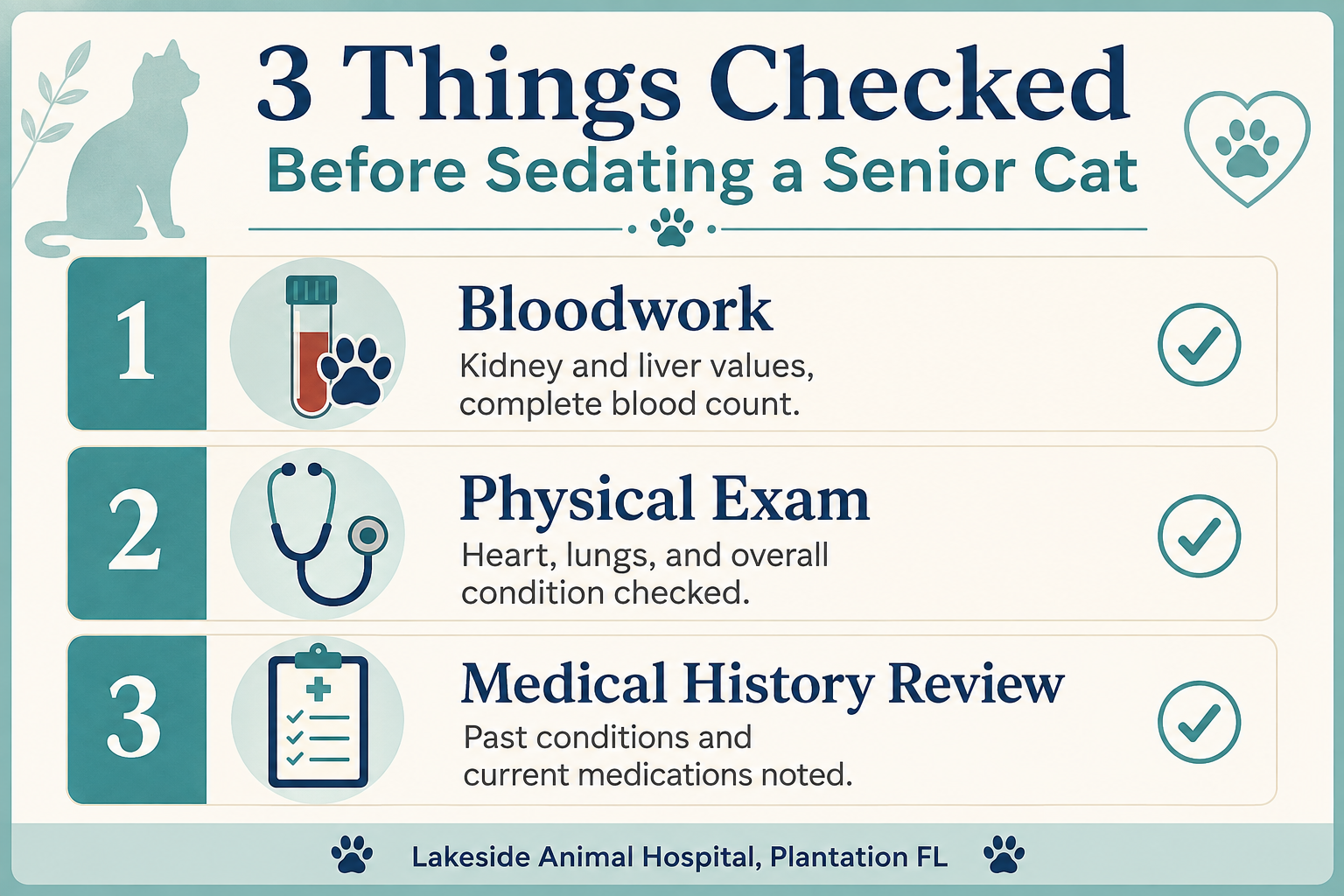
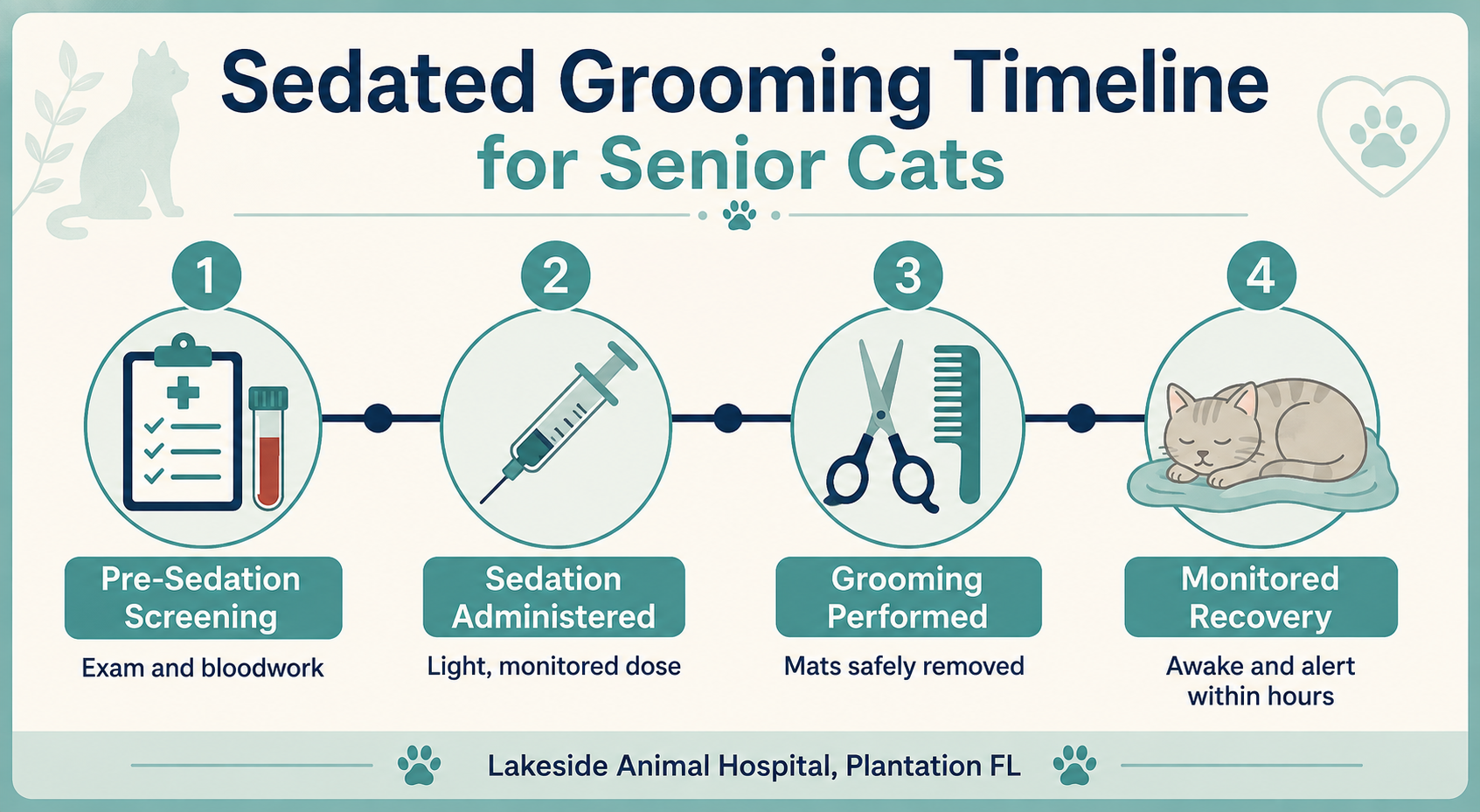
Safety comes down to a proper pre-sedation health screening, including bloodwork, to confirm your cat's organs can safely process a light sedative. This isn't a formality. It's the piece that separates a safe sedated grooming appointment from a risky one.
At our grooming services, every senior cat scheduled for sedation gets a pre-sedation exam and bloodwork first. That screening checks how well the kidneys and liver are functioning, since those organs process the sedative. If anything looks off, the sedation gets adjusted or postponed until it's addressed. A cat with matting isn't an emergency. There's almost always time to do this correctly.
Why This Matters More for Older Cats
Senior cats are more likely to have underlying conditions like kidney or heart issues that need to be identified before sedation, not any other order. Many of these conditions don't show outward symptoms, which is exactly why bloodwork matters more here than it would for a younger, healthier cat.
A cat that seems perfectly fine at home can still have kidney values or a heart murmur that changes how sedation should be dosed. This is where a monitored, in-clinic setting matters. If something unexpected shows up during the screening or during the appointment itself, a veterinarian is right there to respond, not a groomer working alone.
What Should You Ask Before Scheduling?
Ask whether a pre-sedation exam and bloodwork are included, and whether a veterinarian, not just grooming staff, will be monitoring your cat throughout. Those two questions filter out a lot of options quickly.
It's also worth asking what happens if the bloodwork comes back with a concern. A facility built around this kind of grooming will have a plan for that. If a groomer can't answer these questions with specifics, that's a sign to look elsewhere. For a full breakdown of what the appointment itself looks like from start to finish, is sedated grooming right for your cat walks through the entire process.
Quick Questions
What bloodwork is needed before sedating a senior cat?
A standard pre-sedation panel typically checks kidney and liver values, along with a complete blood count, to confirm your cat can safely tolerate sedation.
How long does recovery take for an older cat after sedation?
Most senior cats are back to normal within 24 hours, though some grogginess for the rest of the day is common and expected.
Dr. Jennifer Frione, DVM, puts it simply: "Age is a number I factor in, but it's not a deal-breaker on its own. The bloodwork tells me the real story."
What Should You Do Next?
If your senior cat's matting has gotten to the point where a regular groom isn't realistic, a health screening is the right first step, not the sedation itself. Lakeside Animal Hospital includes a pre-sedation exam and bloodwork with every senior grooming appointment, so nothing is guessed at.
Plantation, Sunrise, and Lauderhill families can get the full picture of how the appointment works, from screening to recovery, in our guide to see how sedated grooming works.