What Happens If Feline Stomatitis Is Left Untreated?
TL;DR: Without treatment, feline stomatitis typically worsens, causing chronic pain, appetite and weight loss, and ongoing inflammation that rarely resolves on its own.
Untreated cat stomatitis is one of the more painful conditions we see in our Plantation exam rooms, and it does not improve with time. Cats are experts at hiding discomfort, which means many owners do not realize how much their cat is suffering until eating has become genuinely difficult. Stomatitis is a severe, whole-mouth inflammation, and left alone, it tends to follow a predictable and difficult path.
What Happens to an Untreated Cat Over Time?
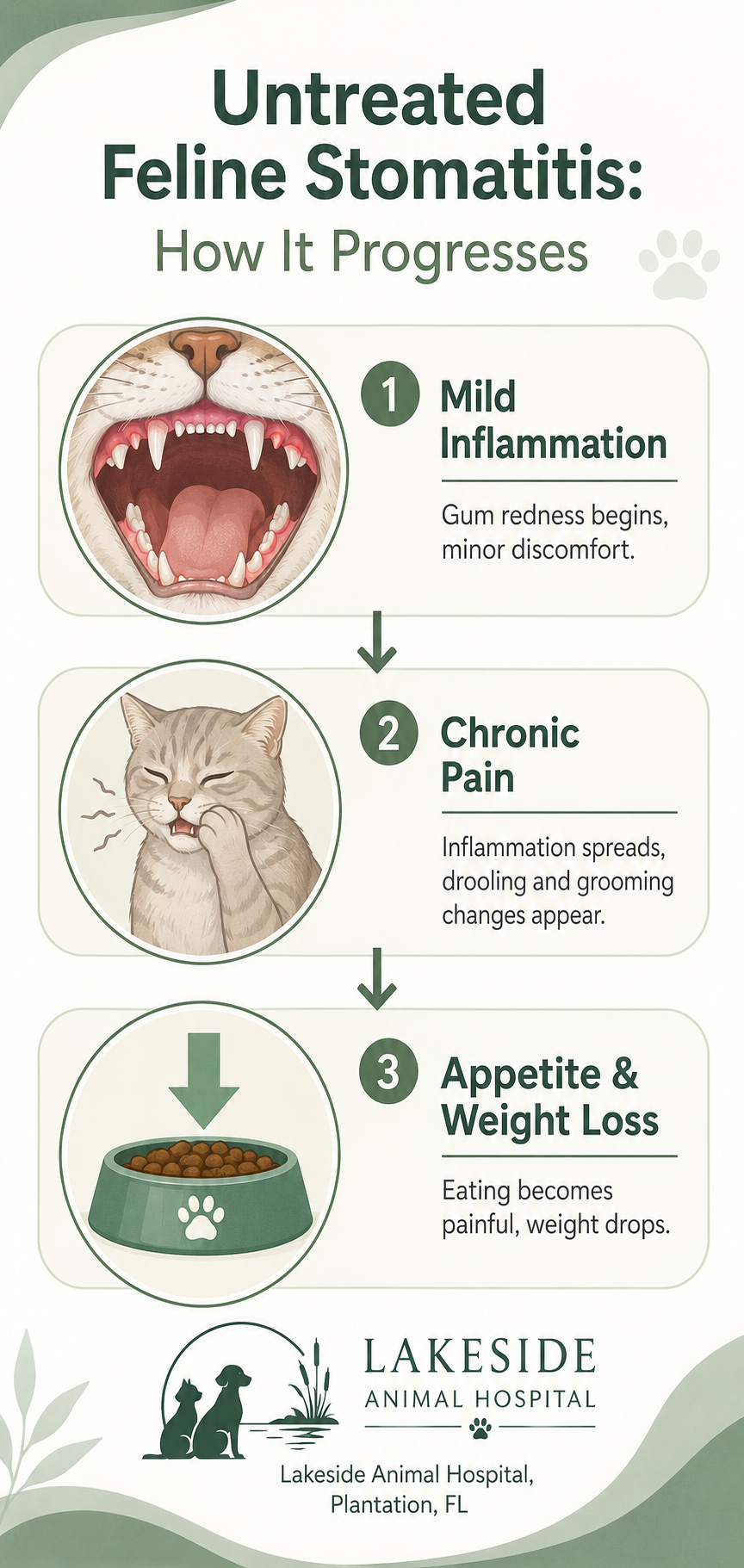
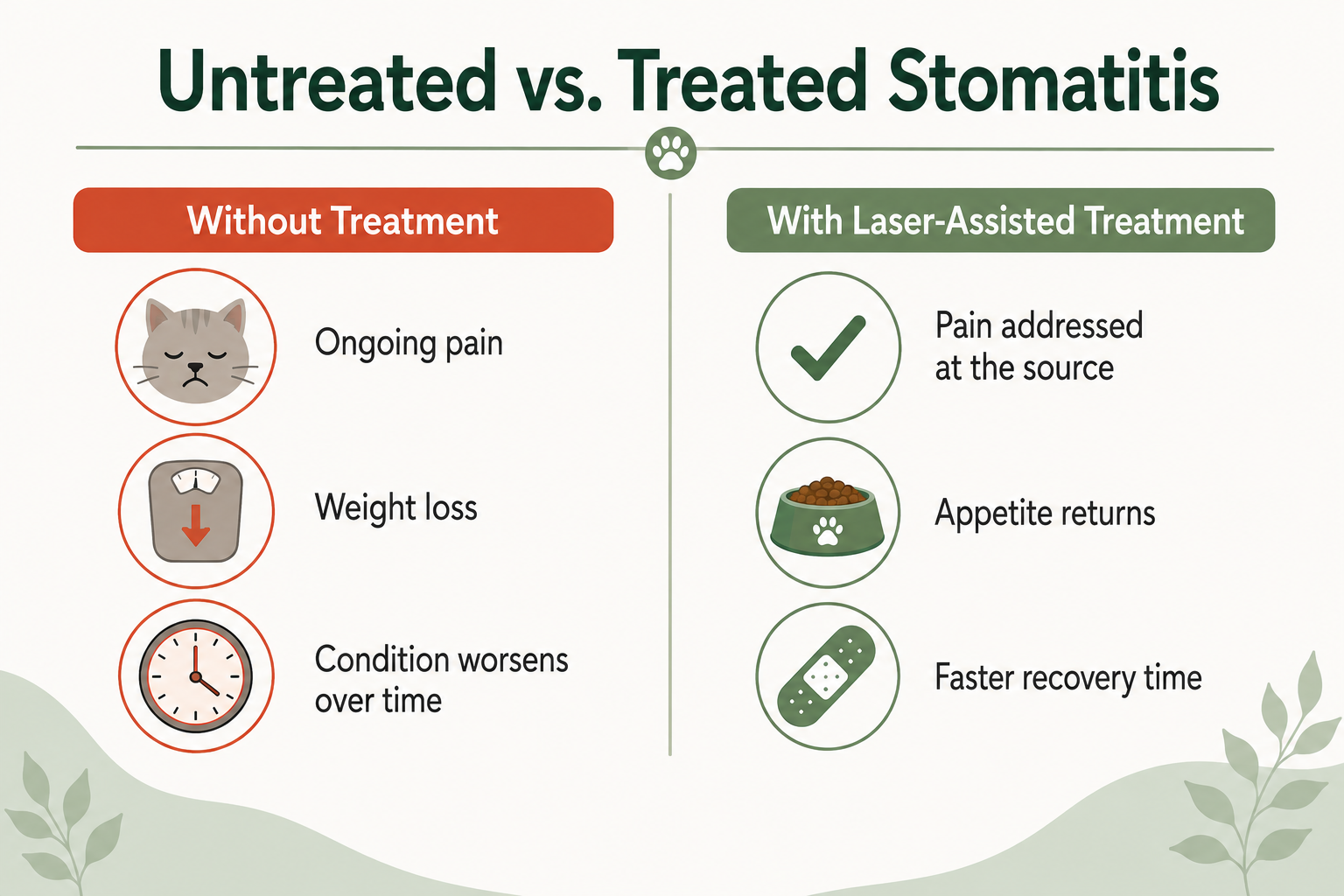
Pain and inflammation tend to progressively worsen, often leading to significant appetite loss and weight loss as eating becomes increasingly uncomfortable. What starts as mild redness along the gums can spread across the entire mouth, including the back of the throat.
Cats with advanced, untreated stomatitis often stop grooming normally, drool more than usual, and paw at their face. Some will only eat soft food, and eventually, even that becomes too painful to chew. How stomatitis is diagnosed and treated covers the full clinical picture, but the short version is this: the longer inflammation goes unaddressed, the more entrenched the pain becomes, and the harder it is for a cat's body to recover fully once treatment finally starts.
Why Doesn't Stomatitis Resolve on Its Own?
Because stomatitis is driven by an ongoing immune response to bacteria on the teeth, the inflammation typically persists or worsens without addressing that source. A cat's immune system essentially overreacts to normal plaque bacteria, treating it as a much bigger threat than it is.
That overreaction is why antibiotics or steroids alone rarely fix the problem long term. They can quiet symptoms for a while, but the bacteria causing the reaction are still there. For Plantation and Sunrise families who have tried medication first, this is often the missing piece: the teeth themselves are usually the source that needs to be removed, not just managed around.
Quick Questions
Can medication alone manage stomatitis long-term?
Medication can help manage symptoms temporarily, but most cases require extraction to address the underlying cause and achieve lasting relief. Cats who stay on medication alone often relapse once treatment stops.
How quickly does stomatitis typically progress if untreated?
Progression varies by cat, but many owners notice worsening symptoms, including reduced appetite, drooling, and weight loss, over weeks to a few months without treatment.
As Dr. Jennifer Frione, DVM, puts it: "I've never seen stomatitis get better on its own. Waiting only means more pain for the cat."
What Should Plantation Cat Owners Do Next?
The next right step is understanding what treatment actually looks like, since full mouth extractions sound more dramatic than the recovery usually is. Our laser-assisted approach reduces pain and shortens healing time compared to traditional extraction methods, and most cats are eating comfortably again within days.
If your cat in Plantation, Sunrise, or Lauderhill has been diagnosed with stomatitis or is showing early signs like drooling or reluctance to eat, Learn How Stomatitis Is Treated walks through exactly what to expect. You can also explore our dental care services to see how we approach oral health for every stage of a pet's life.
Untreated cat stomatitis does not improve with patience. The sooner it is addressed, the sooner your cat can eat, groom, and live without mouth pain again.