How Do I Know If My Dog's Scratching Is From Fleas or Environmental Allergies, and Does It Matter?
TL;DR: The location of your dog's itching is the fastest way to tell the two apart. Flea allergy dermatitis concentrates at the base of the tail and lower back, while environmental allergies usually show up as paw licking, face rubbing, and recurring ear infections, and in Plantation dogs the two often overlap since fleas and pollen are both present year round.
If your dog has been chewing at the same spot for weeks, you have probably already tried a flea comb, a bath, maybe an oatmeal shampoo from the pet store. Plantation dogs deal with two allergy sources that never fully go away: fleas that survive our mild winters and pollen that circulates through every season. Figuring out which one is driving your dog's scratching, or whether both are involved, changes how the problem should be treated.
Where Is Your Dog Itching, and What Does Location Tell You?
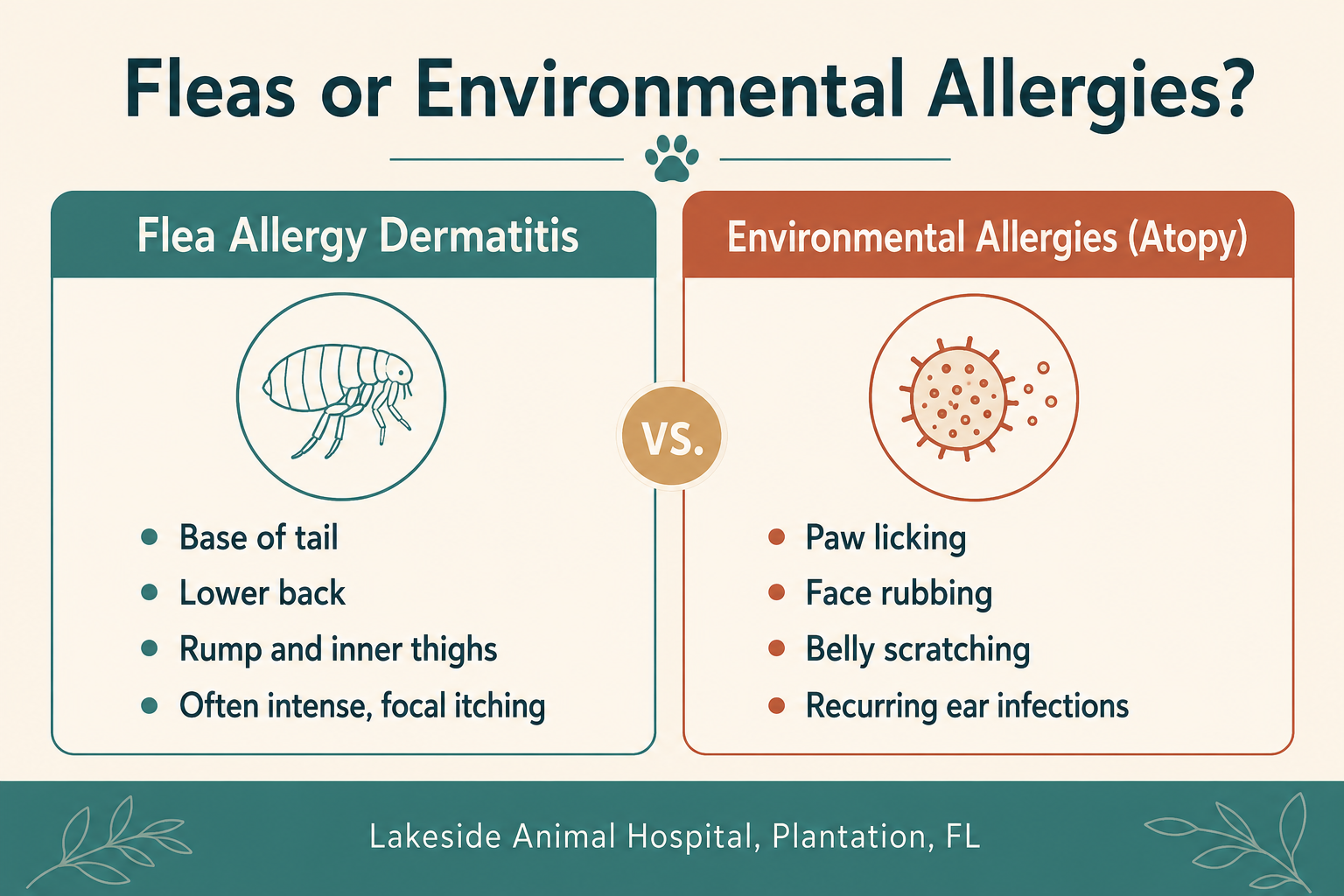
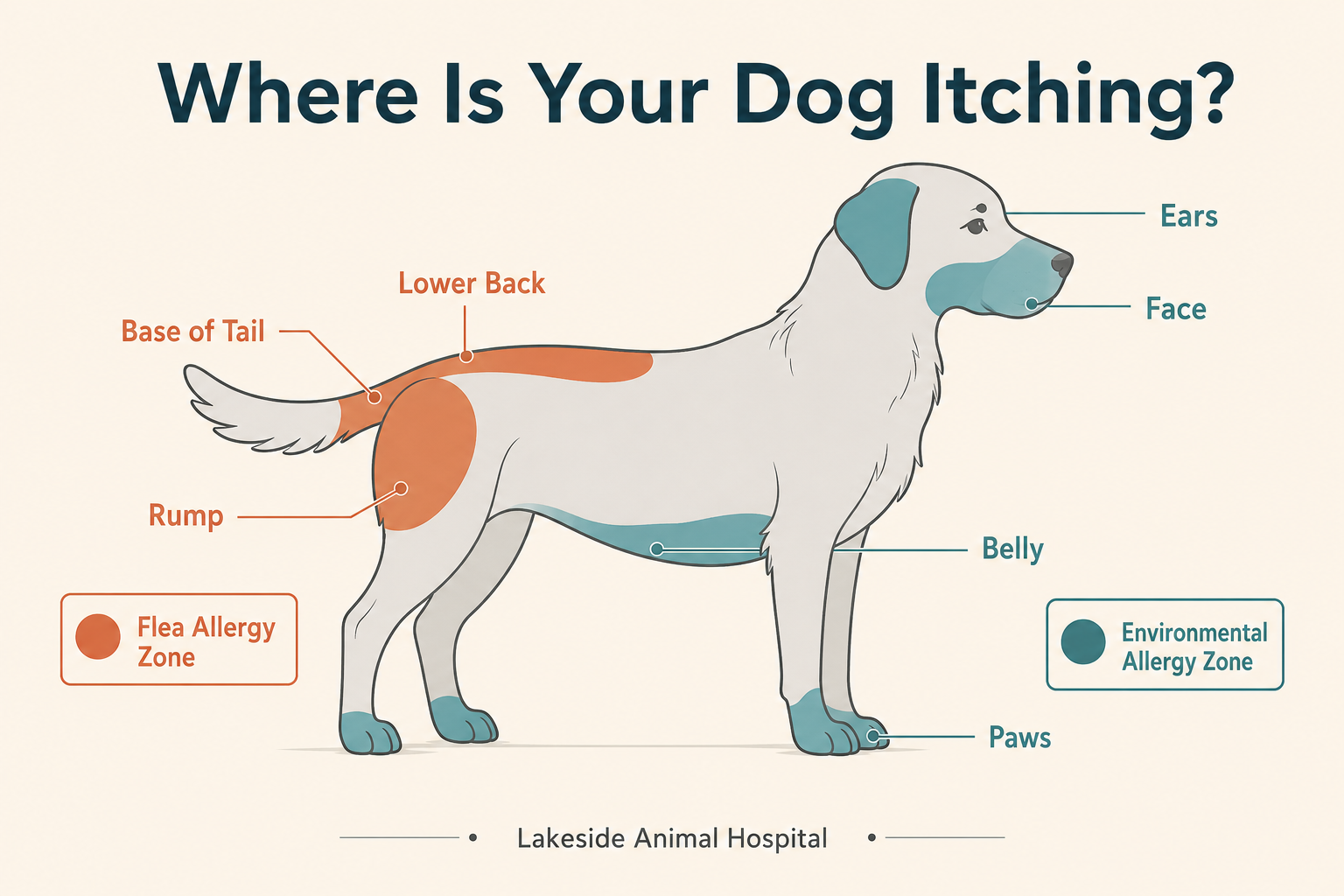
Flea allergy dermatitis almost always concentrates at the base of the tail, the rump, the inner thighs, and the lower abdomen, the areas where fleas feed most. Environmental allergies, known clinically as atopy, tend to show up differently. Dogs with atopy lick their paws raw, rub their faces against furniture, scratch their bellies, and develop ear infections that keep coming back.
A dog scratching in both zones at once is common in South Florida. That pattern usually means more than one allergy type is contributing, not that the diagnosis is unclear. Skin cytology, a quick test a vet can run in office, identifies any secondary infection that has developed on top of the original allergy and helps narrow down the cause.
Why Are Both So Common in Plantation and Broward County Dogs?
South Florida's climate does not give dogs the seasonal break that colder regions get. Fleas stay active all year here, since there is no hard freeze to interrupt their life cycle. At the same time, grass pollen, mold spores, and dust mites are present in Broward County in every month of the calendar.
That constant allergen load is why single-cause scratching is less common in Plantation than a textbook case might suggest. A dog can be current on flea prevention and still develop atopic symptoms from pollen, or a dog with mild environmental sensitivity can tip into a full flare the moment flea exposure adds to the total burden.
When Does Scratching Require a Veterinary Visit Rather Than Home Management?
Occasional scratching after a walk is normal. Persistent scratching, hair loss, thickened skin, hot spots, or ear infections that return every few weeks mean the allergen load has outpaced what home care can manage. Humidity in South Florida also allows secondary bacterial and yeast infections to take hold quickly on irritated skin, and those infections need veterinary treatment regardless of the original allergy trigger.
Our
dog allergy diagnosis and treatment in Plantation guide walks through the full workup, including intradermal testing and dietary elimination trials, for dogs whose scratching has moved past what flea prevention alone can solve.
Quick Questions
Can a dog have both flea allergies and environmental allergies at the same time?
Yes, and it is common in South Florida. Year round flea pressure combined with year round pollen exposure means multiple allergy triggers often stack on top of each other, producing more severe symptoms than either allergy would cause alone.
What does a vet do to diagnose which type of allergy a dog has?
Diagnosis starts with a physical exam and skin cytology to check for infection. From there, a vet may run a dietary elimination trial for suspected food allergy, intradermal testing for environmental triggers, or a strict flea prevention trial as the simplest first step.
"In Plantation, I almost always start with flea prevention as the first diagnostic step, because year round flea exposure here is so consistent that ruling it out completely saves a significant amount of time and money," says Dr. Jennifer Frione, DVM, of Lakeside Animal Hospital.
Ready for an Answer Instead of a Guess?
Persistent scratching deserves a real diagnosis, not another round of shampoo and guesswork. Dr. Frione's on-site laboratory allows same-visit skin cytology, so you find out what is actually driving your dog's symptoms before you leave the appointment.
Schedule a dermatology consultation at Lakeside Animal Hospital and get your Plantation dog started on a plan built around what is actually causing the itch.