What Does a Routine Pet Wellness Exam Include and Why Can't You Just Get the Vaccines Without One?
TL;DR
- A routine wellness exam is a head-to-tail physical assessment of your pet's overall health, not a vehicle for administering vaccines.
- Veterinarians use it to catch early signs of disease, assess weight and nutrition, check dental health, and build a personalized treatment plan.
- Vaccines are one component of the visit, not the reason for it.
Most Plantation pet owners come in thinking the annual visit is about the shots. That's understandable. The exam happening before those shots is where the actual medicine gets practiced. The vaccines take seconds. The 20 minutes before them are what your pet's long-term health depends on.
At Lakeside Animal Hospital, Dr. Jennifer Frione and her team see dogs and cats across Plantation, Sunrise, Lauderhill, and Plantation Gardens every day. One of the most persistent misconceptions they encounter is that the physical exam is a formality. It isn't. For cats and dogs especially, animals who cannot tell you when something feels off, the annual wellness visit is often the only diagnostic opportunity available before a problem becomes serious.
Here is exactly what that visit includes and why it matters.
What Does a Routine Wellness Exam Actually Include?
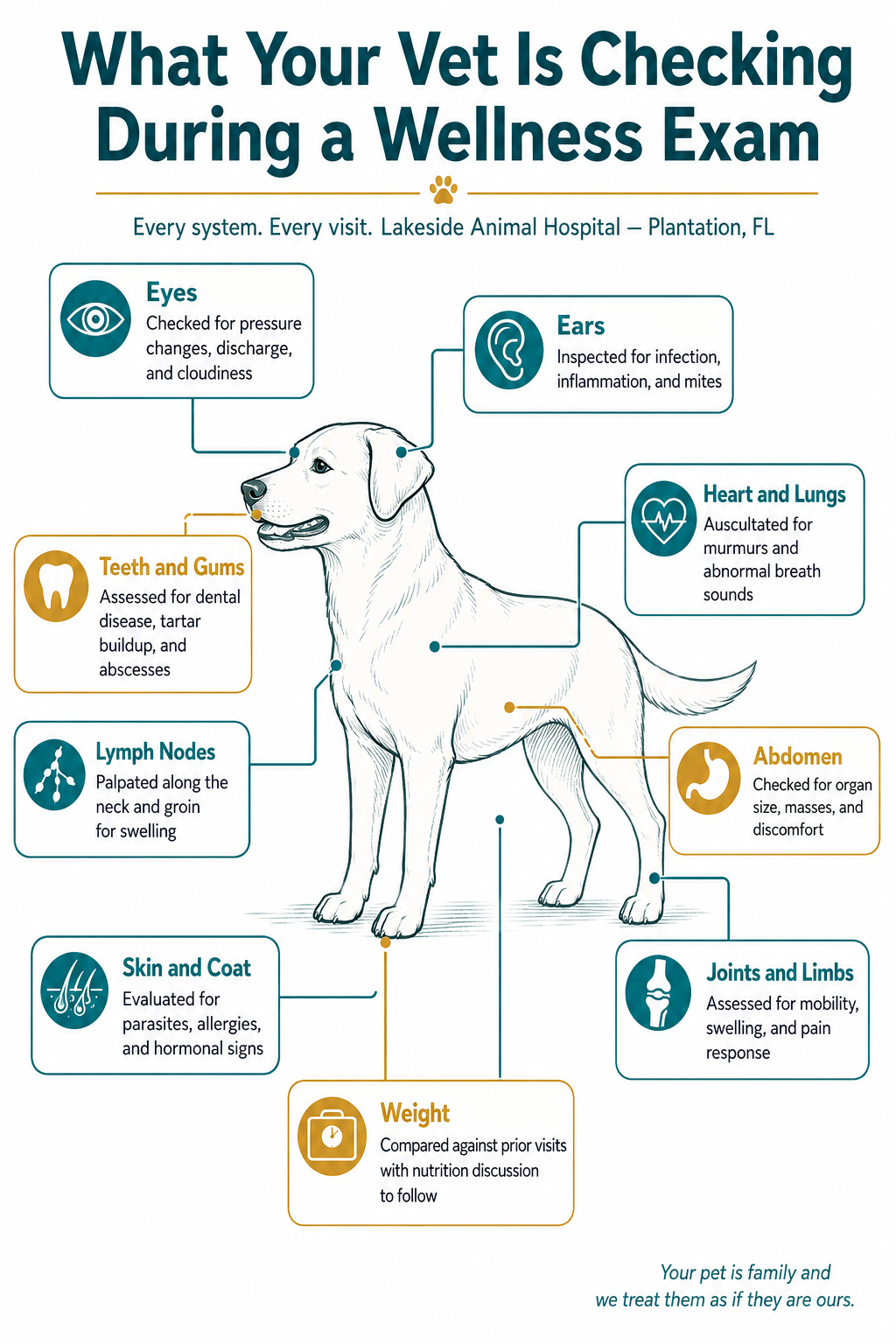
A standard wellness exam covers a full physical assessment of eyes, ears, teeth, skin, coat, lymph nodes, heart and lung sounds, abdomen, joints, and weight, along with a conversation about your pet's diet, behavior, and any changes since the last visit. Vaccines and parasite prevention are administered based on what is due at that appointment.
The Head-to-Tail Assessment: What We're Checking and Why
Every system gets evaluated. Dr. Frione checks your pet's eyes for cloudiness, discharge, and pressure changes. She palpates the lymph nodes for swelling. She assesses coat and skin condition, which can signal anything from allergies to hormonal dysfunction. She evaluates joint mobility, particularly in older dogs. She checks the abdomen for organ size and abnormal masses. The mouth gets its own careful assessment, because dental disease is one of the most under-diagnosed conditions in pets and rarely announces itself with obvious symptoms.
This is why the visit takes time. It is a systematic screen of every body system your pet has.
What Your Vet Learns From Listening to Your Pet's Heart and Lungs
Auscultation (listening with a stethoscope) reveals murmurs, arrhythmias, and abnormal lung sounds that owners have no way to detect at home. Heart murmurs in dogs are graded on a scale of one to six. Catching a Grade 2 murmur at an annual exam gives you options. Catching a Grade 5 murmur after a collapse gives you fewer of them. Early detection means earlier intervention and, in most cases, a better outcome.
Do Dogs and Cats Really Need a Physical Exam Every Year, or Just Vaccines?
Vaccines cannot tell a veterinarian whether your dog has early heart disease, a dental abscess, a growing lump, or the beginning of kidney dysfunction. The physical exam is the diagnostic window. Skipping the exam to get vaccines only means missing the entire point of preventative care.
What Gets Caught at Annual Exams That Owners Don't Notice at Home
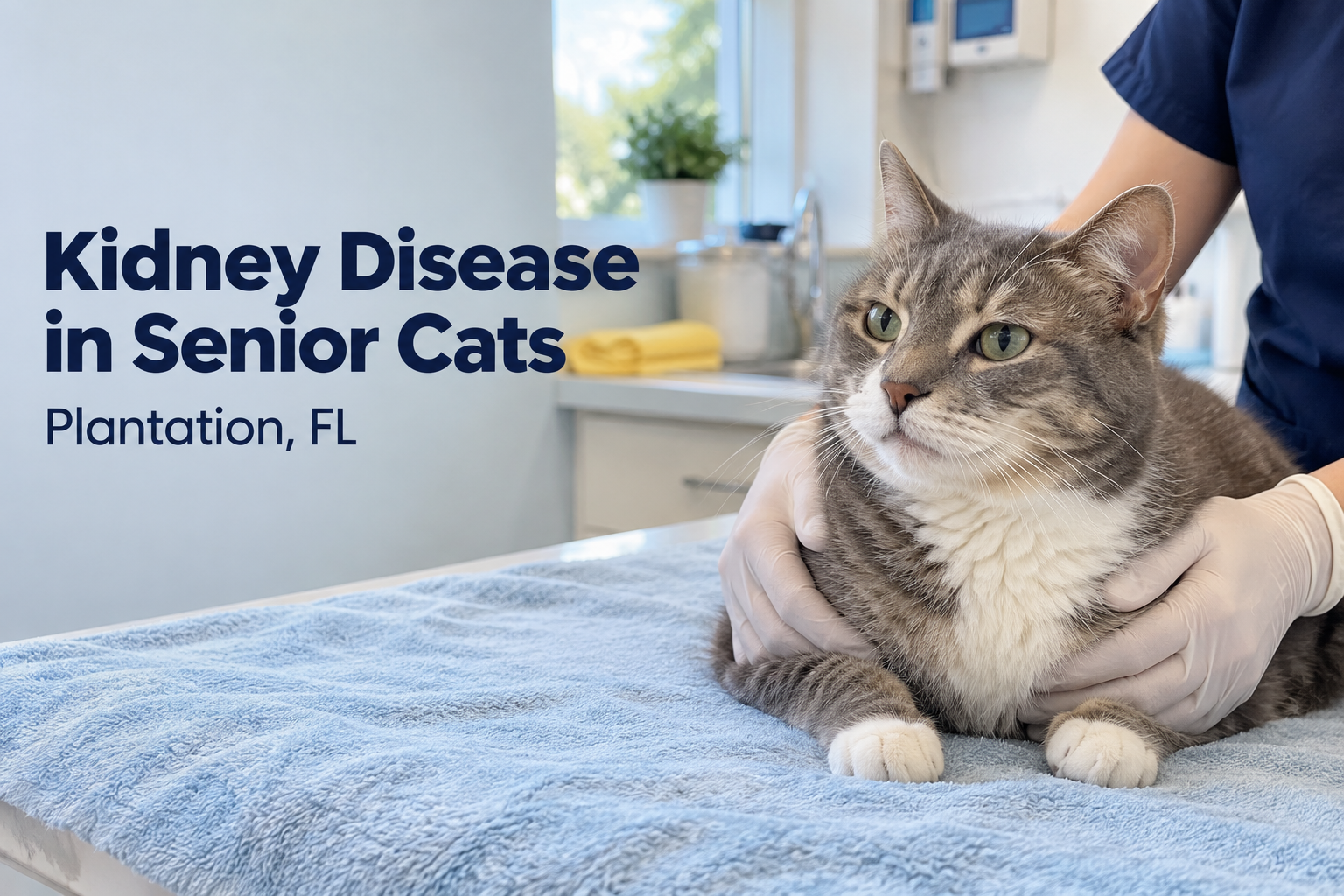
Pets are remarkably good at hiding discomfort. It is instinct. A cat with early-stage kidney disease drinks a little more water, sleeps a little more, and eats slightly less. Those changes are easy to attribute to aging or weather. A dog with a Grade 2 heart murmur may show no symptoms for years. A dental abscess can exist with no obvious signs of pain.
Dr. Frione has found tumors, undetected abscesses, and early-stage cardiac conditions at what owners described as a routine shot appointment. This happens regularly at full-service practices that conduct thorough physical exams. Not because those owners were negligent, but because these conditions are genuinely difficult to detect without the right tools and training.
For a deeper look at exactly why that annual exam cannot be replaced by a vaccine-only visit,
why pets need an exam every year, not just vaccines walks through the clinical reasoning in full.
Why Florida Law and Most Boarding Facilities Require a Current Exam
Florida veterinary law requires a valid veterinarian-client-patient relationship before any veterinary service can be legally provided, including vaccine administration. That relationship is established through a physical examination. Most boarding facilities in Broward County require proof of current vaccinations, and many now require proof of a recent wellness exam as well. There is a practical reason for that requirement: it protects the health of every animal in the facility.
What Vaccines Do Dogs and Cats Need in Broward County, FL?
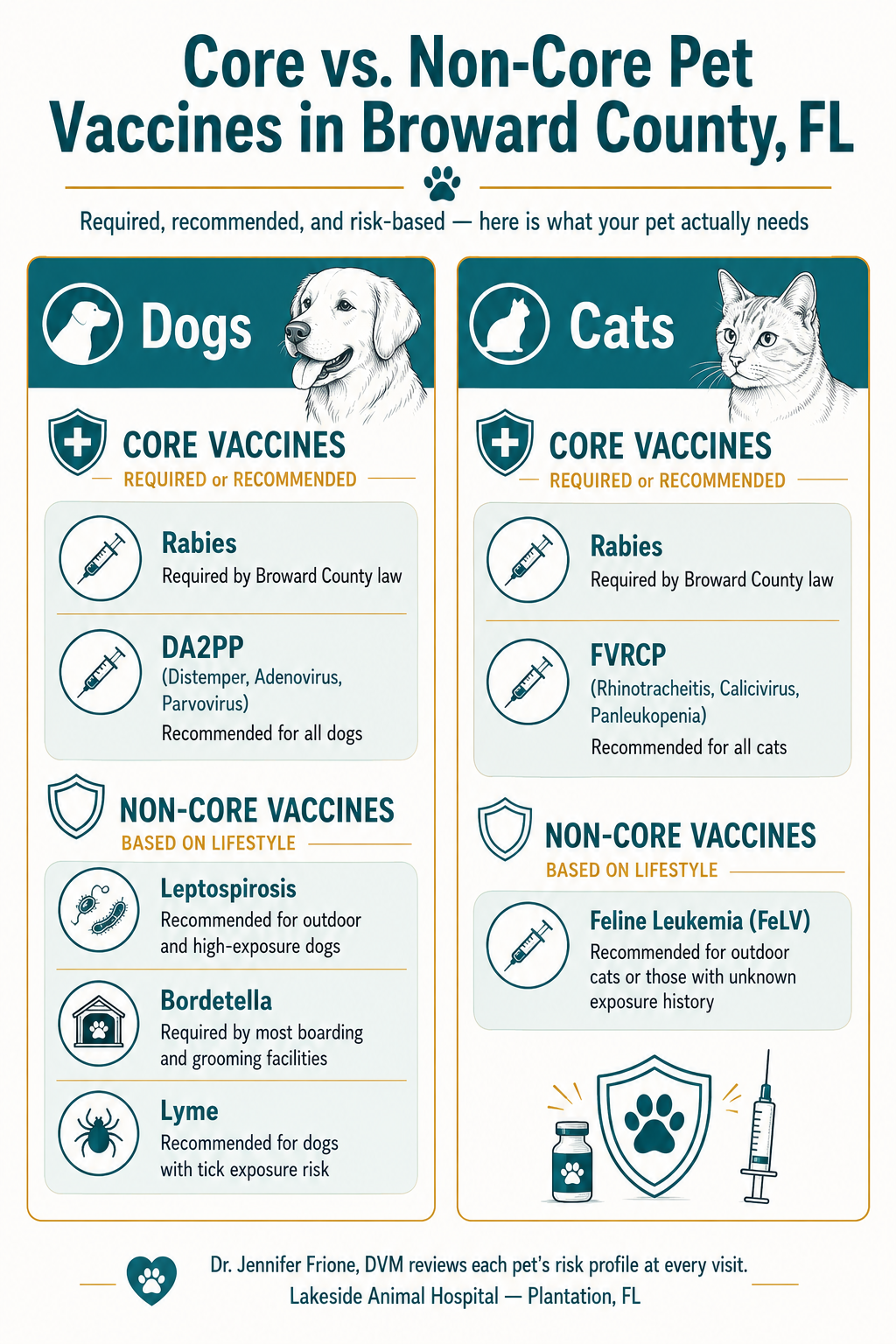
Broward County requires rabies vaccination for all dogs and cats. Core vaccines recommended for all pets regardless of lifestyle include distemper, parvovirus, and adenovirus for dogs, and feline viral rhinotracheitis, calicivirus, and panleukopenia for cats. Non-core vaccines are recommended based on each pet's environment and individual risk profile.
Core vs. Non-Core Vaccines: What's Required vs. Recommended
Core vaccines protect against diseases that pose a serious risk to virtually every pet, regardless of lifestyle. For dogs, the DA2PP combination covers distemper, adenovirus types 1 and 2, and parvovirus. For cats, the FVRCP covers feline viral rhinotracheitis, calicivirus, and panleukopenia. Rabies is core for both species and required by law in Broward County.
Non-core vaccines cover diseases relevant based on exposure risk. Leptospirosis, bordetella, and lyme vaccines may be recommended for dogs that spend time outdoors, visit dog parks, or board regularly. Feline leukemia vaccination is recommended for cats with outdoor access or contact with unknown cats. Dr. Frione reviews each pet's lifestyle at every visit and makes specific recommendations rather than applying a one-size-fits-all protocol.
Broward County Licensing Requirements and What They Mean for You
Dogs in Broward County must be licensed annually. Current rabies vaccination is required for licensure. A dog found without a current rabies tag can be impounded. The simplest way to stay current is the annual wellness visit, where vaccination status is reviewed and updated as part of the appointment.
What Should I Expect at My Puppy or Kitten's First Wellness Visit?
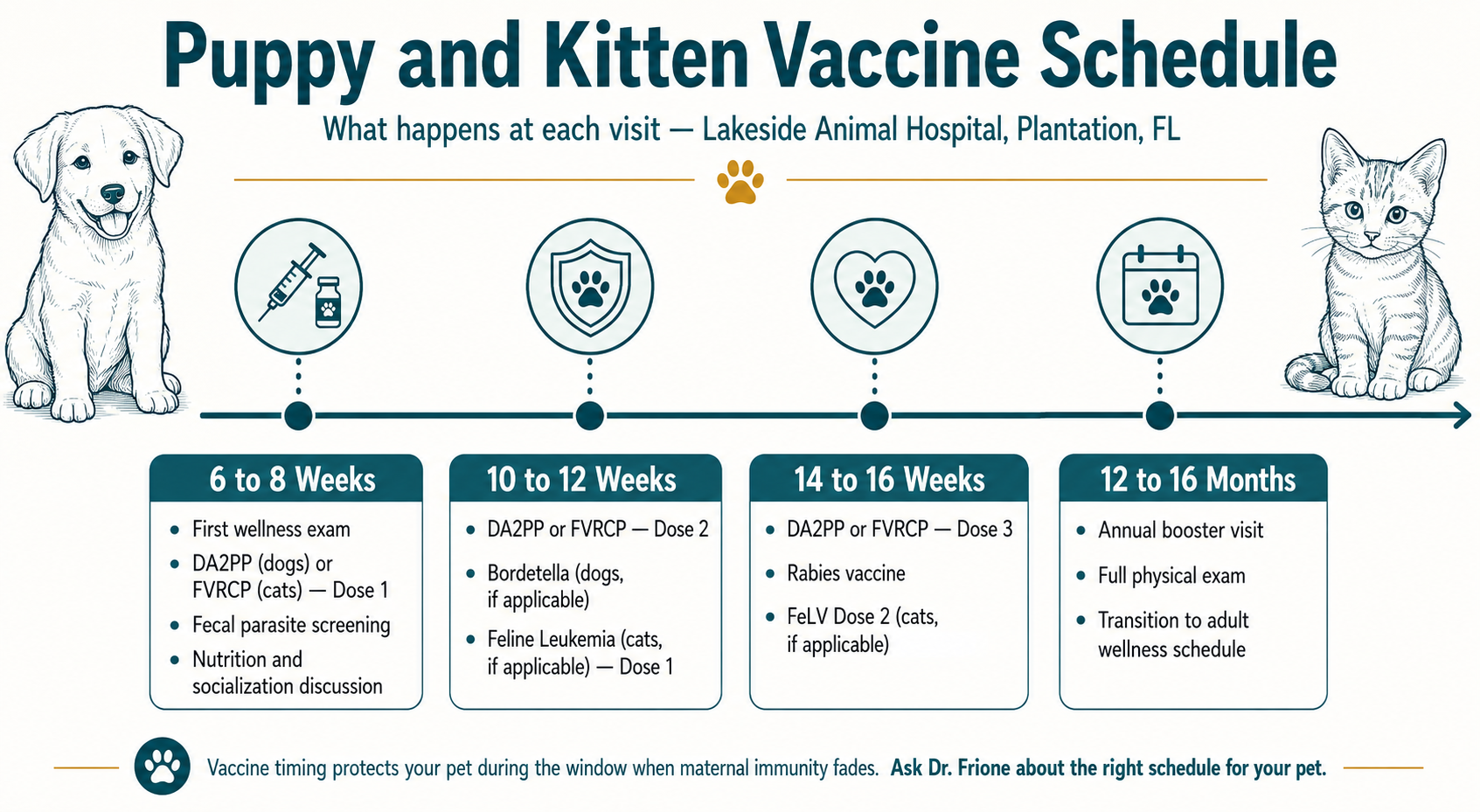
A first wellness visit for a puppy or kitten includes a full physical exam, a fecal parasite check, the first round of core vaccines, and a conversation about nutrition, socialization, spay and neuter timing, and the vaccine schedule for the coming months.
The Puppy and Kitten Vaccine Schedule: What Happens at Each Visit
Puppies and kittens require a series of vaccines spaced three to four weeks apart, typically starting between six and eight weeks of age. Maternal antibodies, protection passed from the mother, gradually wane during this window. Timing the vaccines correctly ensures protection transfers before that immunity gaps out.
For puppies, the typical schedule runs from eight weeks through 16 weeks, covering DA2PP boosters and rabies at the appropriate ages. Kittens follow a similar pattern with FVRCP boosters and a rabies vaccine. After the initial series, your pet transitions to an adult schedule reviewed at each annual visit.
Questions to Bring to Your First Appointment
First-time pet owners often leave wishing they had asked more. A few worth raising at that first visit: What should I feed and how much? When should I schedule spay or neuter? What parasite prevention do you recommend for a pet in South Florida? What behavioral changes should I expect in the coming months?
What to expect at your puppy's first appointment covers this in more detail if you want to go deeper before the visit.
How Does Lakeside Approach Preventative Wellness for Plantation Pets?
At Lakeside, wellness exams are the foundation of every patient relationship. They are how Dr. Frione builds the baseline that makes every future diagnosis and treatment decision more accurate and more personalized.
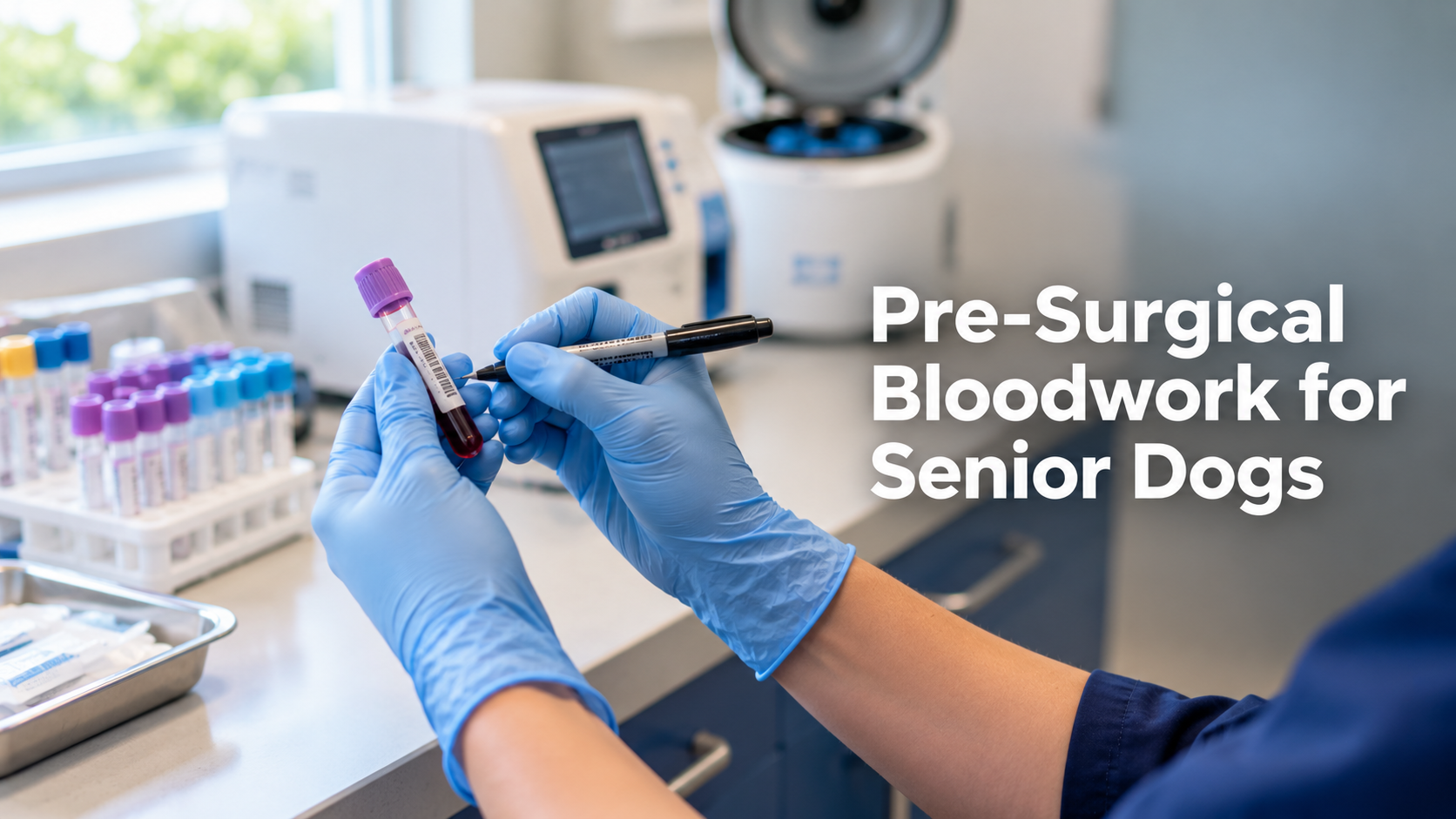
Lakeside Animal Hospital is a full-service facility. On-site laboratory capability means baseline bloodwork can be drawn and analyzed at the same visit, with no waiting on outside lab results when time matters. This is especially relevant for senior pets, where bloodwork at the annual exam can catch kidney, liver, and thyroid changes before they become emergencies. The
dental assessment included in every wellness visit connects directly to long-term systemic health in ways most pet owners do not expect.
Dr. Jennifer Frione's Perspective on the Annual Wellness Visit
"I think the biggest misconception I encounter is that the annual visit is about the vaccines that owners are just coming in to get the shots and leave. The vaccine takes about thirty seconds. The exam before it is where I'm actually practicing medicine. I've found early-stage heart disease, undetected dental abscesses, and tumors that hadn't changed the dog's behavior at all, all at what the owner thought was a routine shot appointment. I recommend not skipping the exam. It's the reason we do this."
- Dr. Jennifer Frione, DVM
Frequently Asked Questions About Routine Pet Wellness Exams
Do dogs need a physical exam every year just to get vaccines?
Yes, and the exam is the more important part of the visit. Vaccines protect against specific diseases, but the physical exam catches the conditions vaccines cannot prevent: dental disease, heart murmurs, early kidney changes, and weight-related health issues. Florida veterinary law also requires a valid client-patient relationship, established through an exam, before vaccines can be legally administered.
What vaccines do dogs legally need in Broward County?
Broward County requires current rabies vaccination for all dogs and cats. Rabies tags are required for dog licensing in the county. Core vaccines (distemper, parvovirus, and adenovirus, known as DA2PP for dogs) are strongly recommended by veterinary standards of care and required by most boarding and grooming facilities in the area.
How much do pet vaccinations cost in Plantation, FL?
Vaccination costs vary depending on which vaccines are due, whether a wellness exam is included, and any additional preventatives recommended at the visit. At a full-service veterinary clinic, pet owners should expect the exam fee plus individual vaccine costs. Taken together, these represent the most cost-effective preventative investment available for a pet's long-term health.
What should I expect at my puppy's first vet appointment?
Your puppy's first appointment includes a full physical exam, fecal parasite screening, the first round of core vaccines, and a detailed conversation about nutrition, socialization, training, and the schedule for follow-up visits. Plan for approximately 30 to 45 minutes and bring any records from the breeder or shelter. Dr. Frione recommends arriving with questions, because that first visit sets the foundation for everything that follows.
Schedule a Wellness Exam at Lakeside Animal Hospital
A wellness exam is the one appointment where we look for problems your pet cannot tell you about. It is not about the vaccines. It is about the 20 minutes before them.
Lakeside Animal Hospital serves pet owners throughout Plantation, Sunrise, Lauderhill, and Plantation Gardens. Dr. Frione has spent 10 years building patient relationships with Plantation families through thorough, personalized preventative care. The clinic's on-site laboratory means baseline bloodwork can be completed same-day when it's needed. Every wellness visit includes a complete vaccine review, parasite screening, nutrition discussion, and a full head-to-tail physical exam.
Routine wellness exams at Lakeside in Plantation.
Call Lakeside Animal Hospital to schedule your pet's annual exam. New patients are welcome.