Can an Old Cat Safely Undergo Dental Surgery? How Veterinarians Actually Decide
TL;DR: Most senior cats can safely undergo dental surgery once pre-anesthetic screening confirms their organ function can support it. The decision comes down to bloodwork and a physical exam, not the number of candles on the birthday cake.
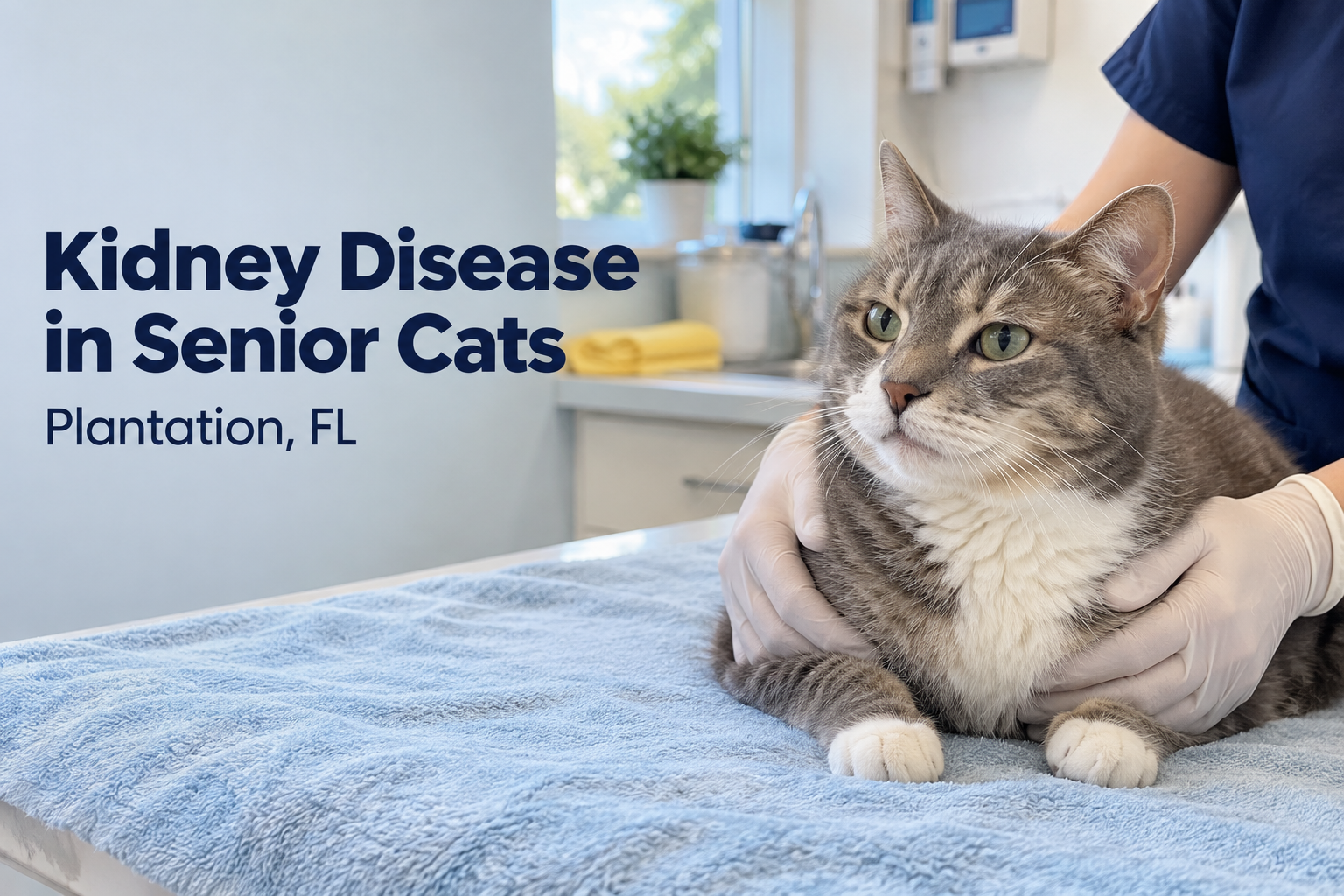
For Plantation families with an aging cat, the word "anesthesia" tends to raise more concern than the word "dental." That reaction makes sense. But senior cat dental surgery is one of the more routine procedures performed on older patients, provided the right screening happens first. The real question isn't whether an old cat can handle surgery. It's whether this specific cat, on this specific day, is medically ready for it.
Is It Safe to Anesthetize a Senior Cat for Dental Surgery?
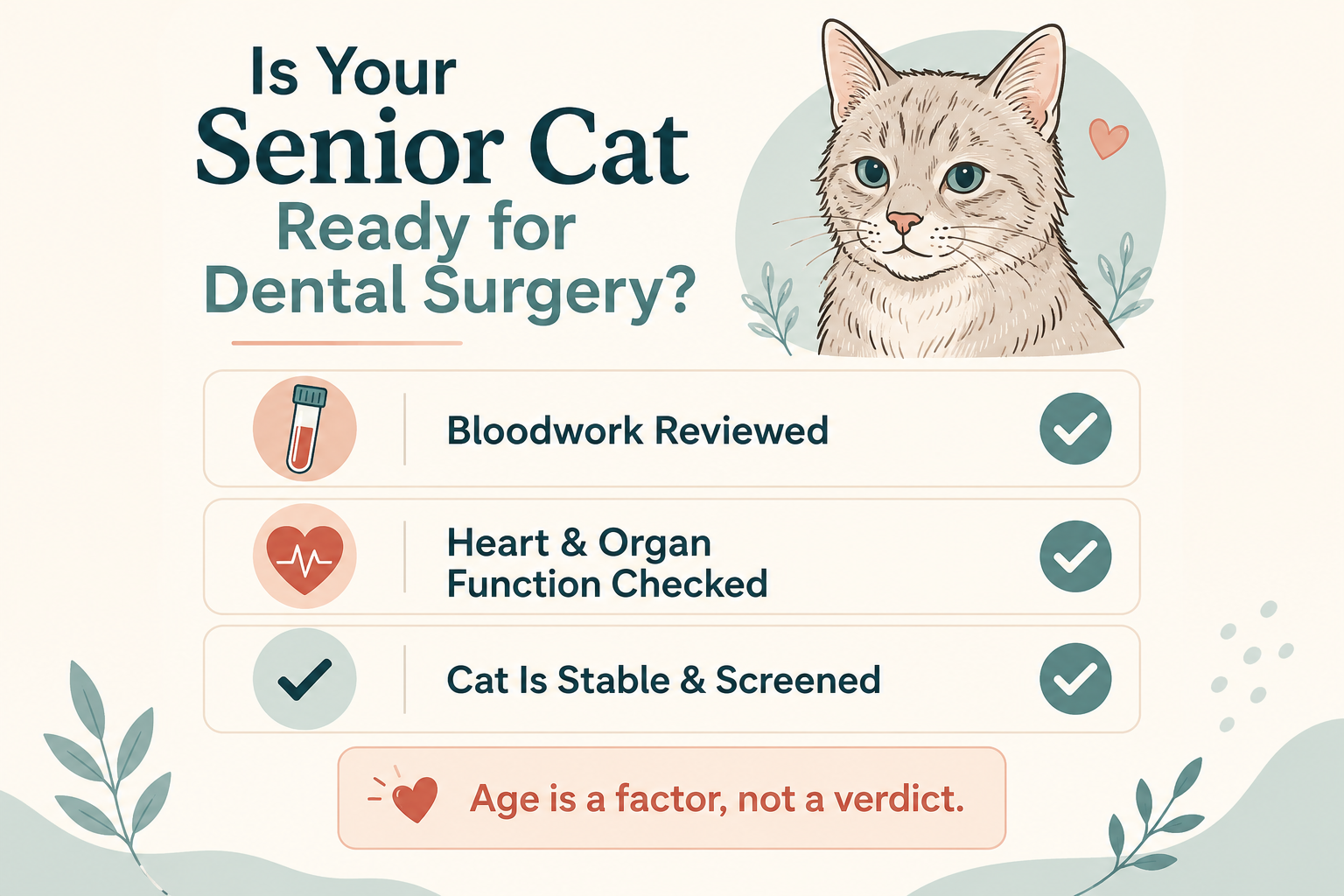
With thorough pre-anesthetic screening, most senior cats can safely undergo anesthesia for dental procedures. Age is one factor in the risk assessment, not a reason to rule surgery out on its own. The clinical question is whether the cat's kidneys, liver, and heart can support anesthesia, and bloodwork answers that question far more reliably than a birth year does.
This is part of the broader approach behind
senior cat care and what to expect from dental procedures at Lakeside, where screening standards are built around the individual cat rather than a generic age cutoff.
What Pre-Anesthetic Screening Does a Senior Cat Need Before Dental Surgery?
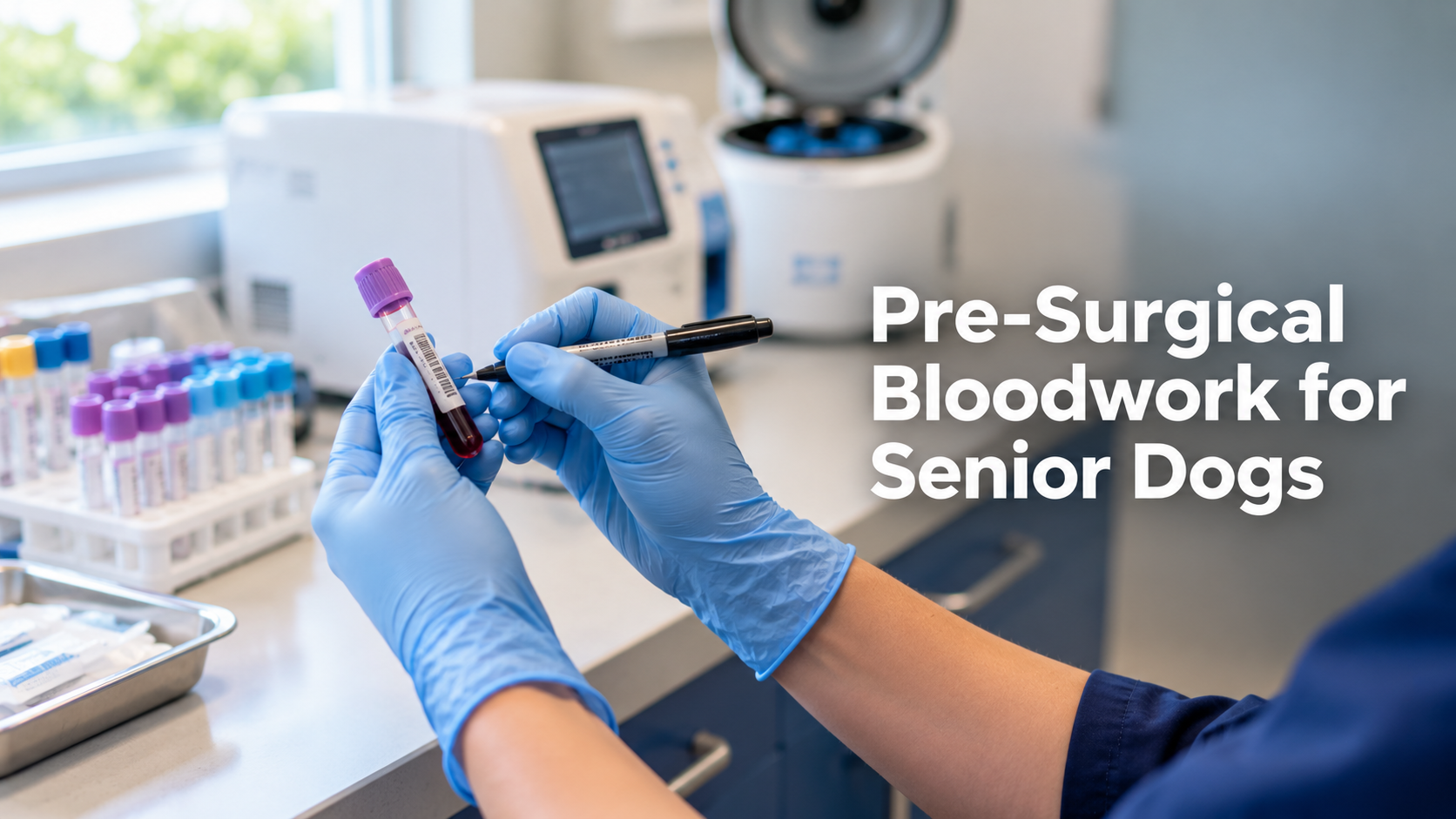
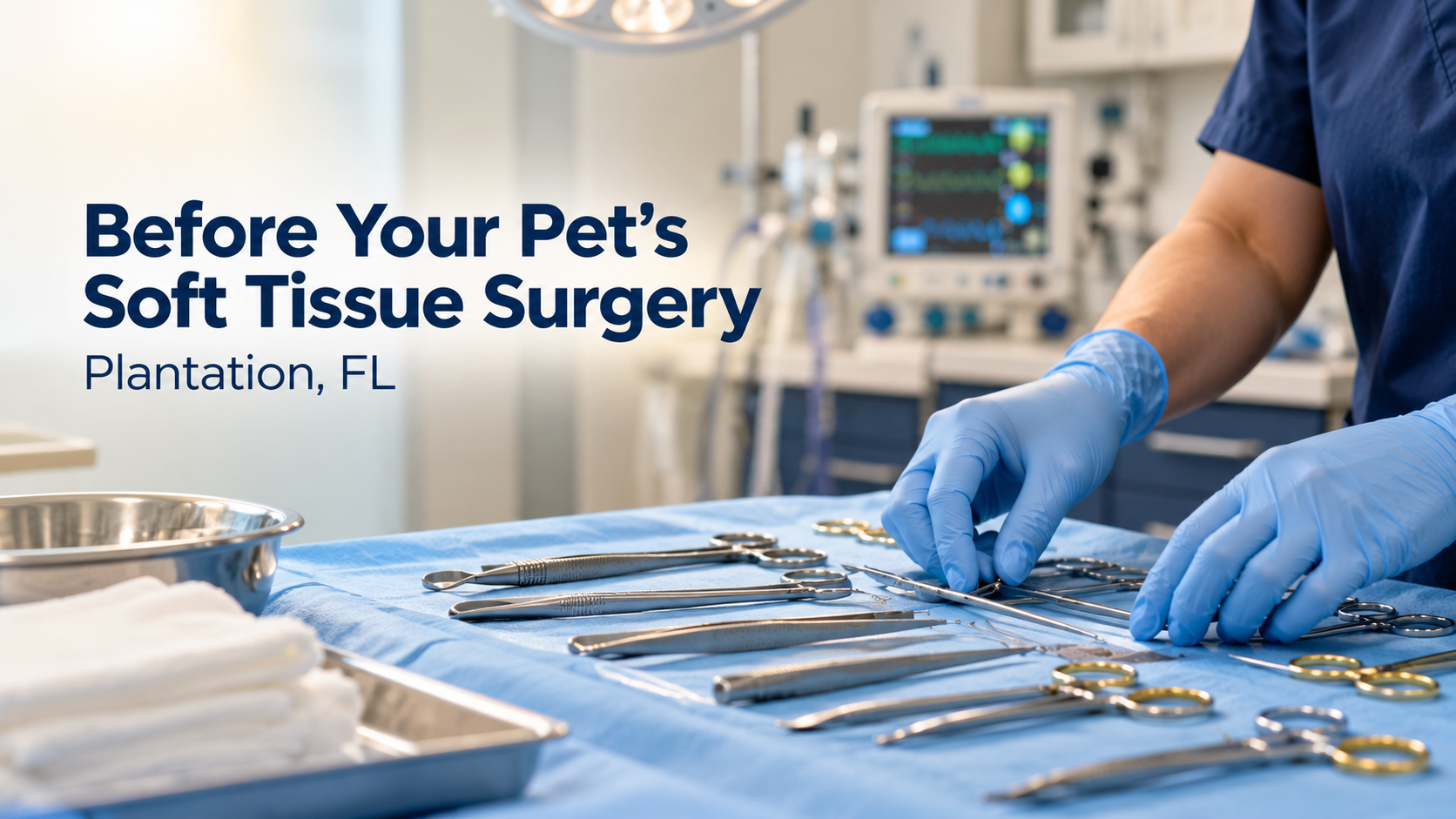
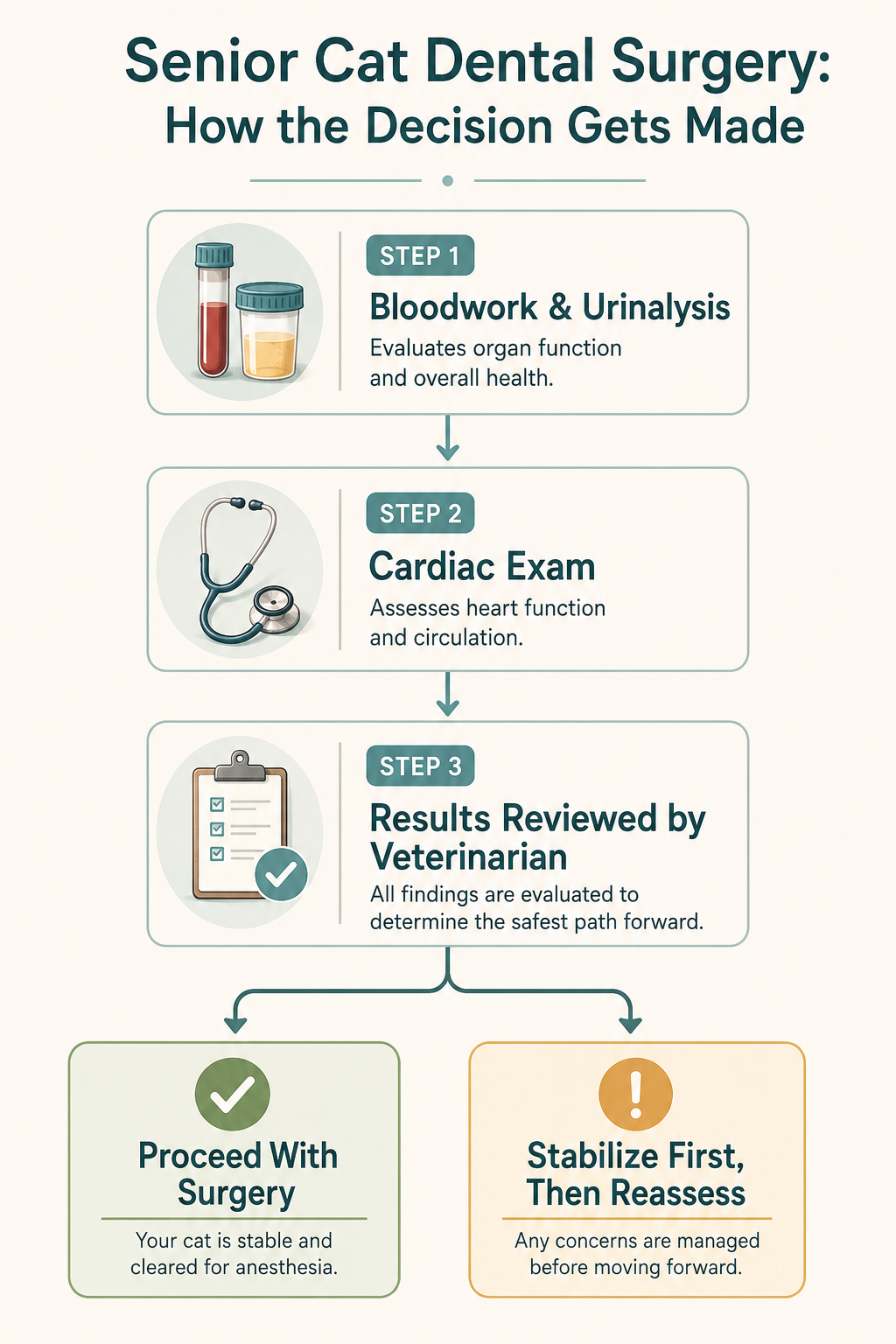
Before anesthetizing a senior cat for any procedure, a comprehensive blood panel evaluating kidney and liver values, thyroid levels, and a complete blood count is required, along with urinalysis and a cardiac exam. Cats with elevated kidney values, cardiac abnormalities, or hyperthyroidism need additional evaluation and often a modified anesthetic protocol before anything proceeds.
This step matters more for Broward County cat owners than most realize. Feline hyperthyroidism and early kidney changes are common in cats over ten, and they're frequently silent until bloodwork uncovers them.
What Happens If a Senior Cat's Dental Disease Is Left Untreated?
Untreated dental disease in senior cats causes chronic oral pain that cats rarely show outwardly, along with progressive tooth loss and ongoing bacterial exposure that adds strain to kidneys and heart function already under age-related pressure. For many senior cats, the real risk isn't the procedure. It's what happens if treatment keeps getting postponed.
"Age is information, not a verdict," says Dr. Jennifer Frione, DVM, of Lakeside Animal Hospital. "When I'm deciding whether a senior cat can safely have a dental procedure, I'm looking at bloodwork and heart function, not a birthday."
Quick Questions
Can an old cat safely have dental surgery?
Yes, in most cases. Once pre-anesthetic screening confirms adequate organ function, age alone isn't a reason to avoid treatment. A well-managed procedure in a properly screened senior cat is typically a smaller risk than leaving progressive dental disease untreated.
What bloodwork does a senior cat need before dental surgery?
A senior cat should have kidney and liver values, thyroid levels, and a complete blood count checked, along with urinalysis and a cardiac assessment. These results let the veterinarian tailor the anesthetic plan to that cat's actual health status.
How do I know if my senior cat is in dental pain?
Watch for reduced appetite, a preference for soft food, facial rubbing, less grooming, or visible tartar and red gums. Cats rarely vocalize dental pain, so behavior changes are usually the first clue.
Ready to Have Your Senior Cat's Teeth Evaluated?
If your older cat is due for a dental evaluation, the next step is a wellness visit built around senior cat care at Lakeside Animal Hospital in Plantation, where in-house pre-anesthetic bloodwork and Dr. Frione's soft tissue surgery experience guide every decision. Plantation, Sunrise, and Lauderhill families trust this process because it treats each cat as an individual case, never a routine.
Senior cat dental surgery isn't a one-size answer. It's a decision made one bloodwork panel at a time, with your cat's comfort as the deciding factor.