Senior Cat Arthritis in Plantation, FL: The Signs Most Owners Miss and What Treatment Actually Looks Like Today
TL;DR
- Arthritis is one of the most underdiagnosed conditions in senior cats, not because it's rare, but because cats are extraordinarily skilled at masking pain.
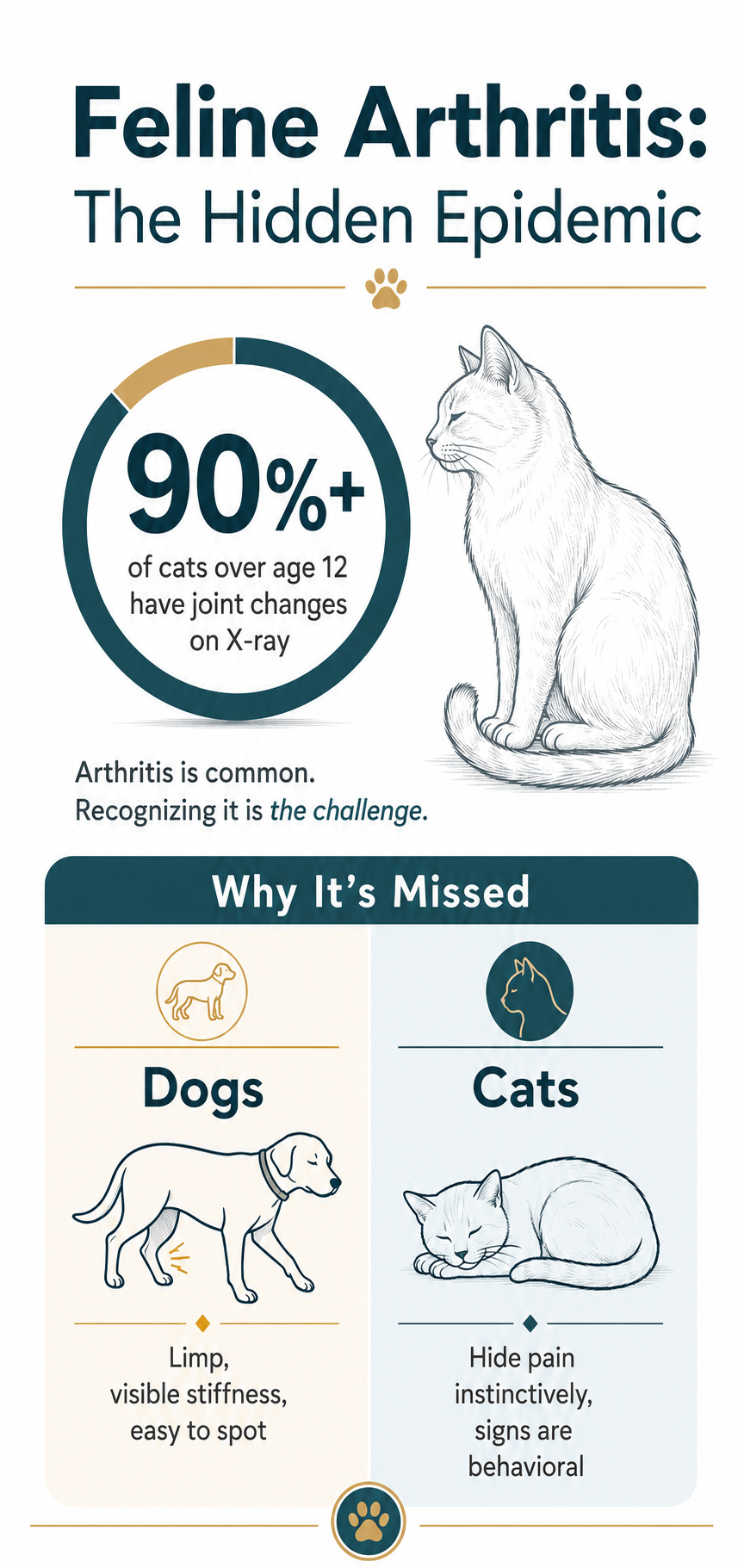
- More than 90 percent of cats over age 12 have radiographic evidence of arthritis, yet most owners never suspect it.
- The signs are subtle behavioral changes, not limping, and treatment options today can meaningfully improve a senior cat's quality of life.
If your cat has quietly stopped jumping onto the counter or the back of the couch, you may have chalked it up to age catching up with her. For most Plantation cat owners, that is exactly how feline arthritis shows up first, not as a limp, but as a series of small decisions a cat makes to avoid pain. Senior cat arthritis care in Plantation, FL starts with recognizing that cats communicate discomfort very differently than dogs do, and differently than most owners expect. A cat with sore hips or an inflamed elbow does not cry out. She adjusts her whole routine around the parts of her body that hurt, and does it gradually enough that most families do not notice until the change is dramatic. At Lakeside Animal Hospital, we see this pattern constantly in cats over age ten. An owner mentions, almost as an aside, that their cat "just does not jump much anymore." That sentence is often the first real clue. This article covers what arthritis actually looks like in senior cats, how it is diagnosed, and what treatment can do for cats living in Plantation and across Broward County today.
How Common Is Arthritis in Senior Cats, and Why Is It So Rarely Diagnosed?
Research indicates that more than 90 percent of cats over age 12 have detectable joint changes on X-ray, yet feline arthritis remains dramatically underdiagnosed compared to dogs. The gap exists because cats hide pain as an instinctive survival behavior, and because the signs they show are behavioral rather than physical.
Why Cats Hide Pain, and What That Means for Owners
In the wild, an animal that appears weak becomes a target. Cats carry that instinct into a Plantation living room even though no predator is nearby. A sore joint gets managed quietly: less movement, more rest, careful positioning around furniture, with no whimper and no obvious favoring of a leg. That leaves owners watching for absence rather than a clear symptom, the absence of jumping, of play, of the usual morning greeting at the top of the stairs.
The Difference Between Arthritis in Cats and Arthritis in Dogs
Dog owners often catch joint pain early because dogs limp, stiffen after walks, or struggle on stairs. Cats rarely limp even with significant joint disease. They need a different lens entirely, one built around routine and behavior rather than movement.
What Are the Behavioral Signs of Arthritis in Senior Cats?
The most reliable signs of arthritis in cats are changes to daily routine: hesitating before jumping, choosing lower resting spots, using the litter box less consistently, grooming less thoroughly, sleeping more, and pulling back from interaction. Limping is rare in arthritic cats, and its absence should never be used to rule out joint pain.
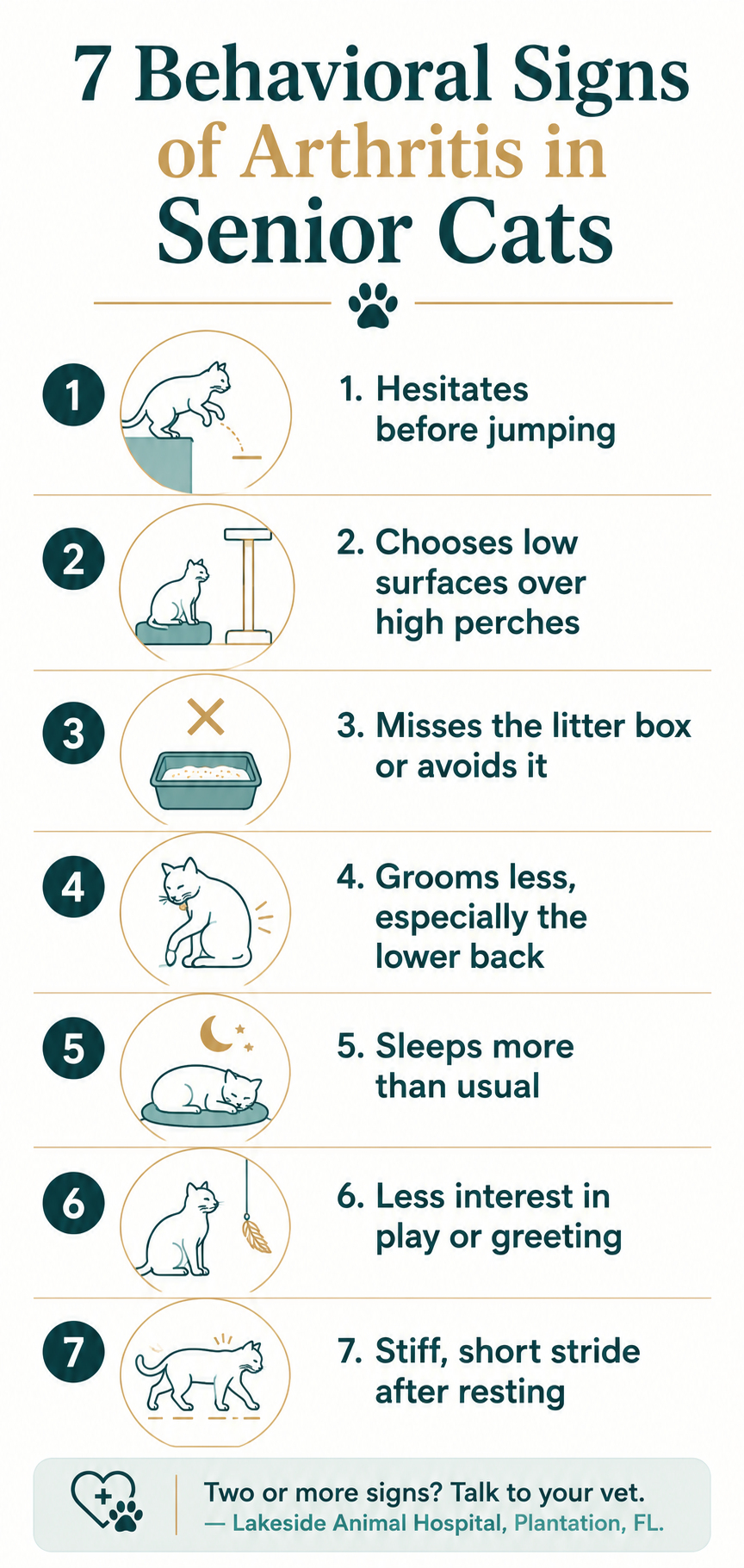
The Seven Behavioral Signs of Feline Arthritis
Dr. Frione looks for a cluster of these signs during senior wellness exams, and asks owners about each one specifically because most go unreported otherwise:
- Hesitating or pausing before jumping onto furniture
- Choosing the floor or a low cushion over a favorite high perch
- Missing the litter box edges or avoiding it altogether
- Grooming less around the lower back and hindquarters
- Sleeping noticeably more hours per day than usual
- Reduced interest in play or greeting family members at the door
- A stiff, shortened stride right after resting
Any one of these on its own might mean nothing. Two or three together, especially in a cat over age ten, are worth a conversation with your vet.
How to Use a Feline Mobility Checklist at Home
Owners can track these behaviors for two weeks using a notebook or phone note, checking whether jumping, grooming, and litter box habits have shifted compared to six months earlier. Arthritis develops gradually enough that a cat's "normal" shifts without families realizing it. Bringing that two-week log to an exam gives Dr. Frione a far clearer picture than one office visit alone.
How Is Arthritis Diagnosed in Senior Cats?
Diagnosis combines a thorough physical and orthopedic exam, a detailed behavioral history from the owner, and digital X-rays to evaluate the joints directly. Bloodwork is also recommended before starting any pain plan, since it confirms organ function and guides which medications are safe.
What a Senior Cat Mobility Exam Looks Like at Lakeside
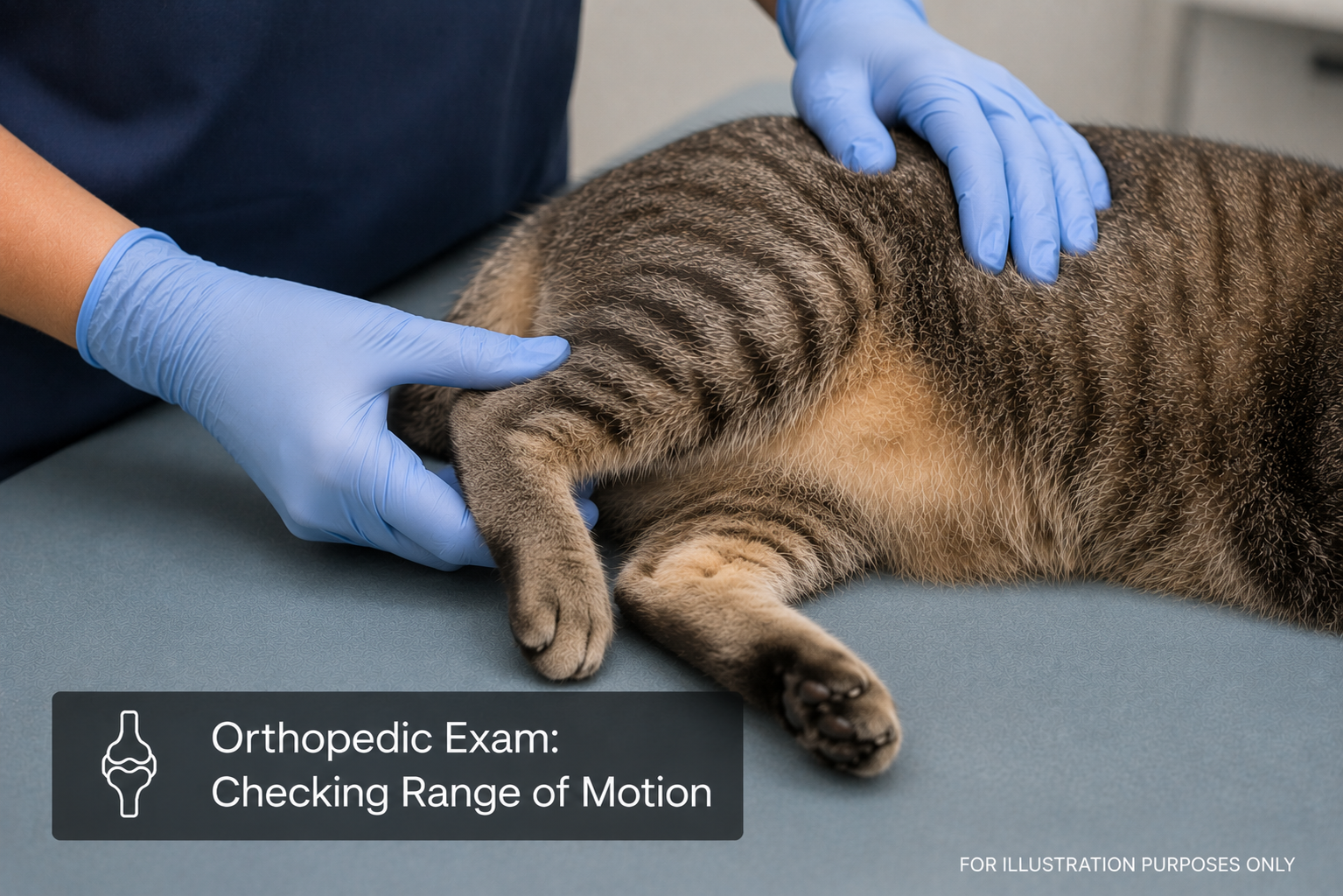
During a mobility exam, Dr. Frione palpates each joint individually, checking for swelling, reduced range of motion, and discomfort on flexion. She also watches the cat move around the room, since gait changes often show up more clearly when a cat is not restrained. Combined with the owner's notes on jumping and grooming, this builds a full picture before any imaging is taken.
Why X-Rays and Bloodwork Are Both Required Before Treatment
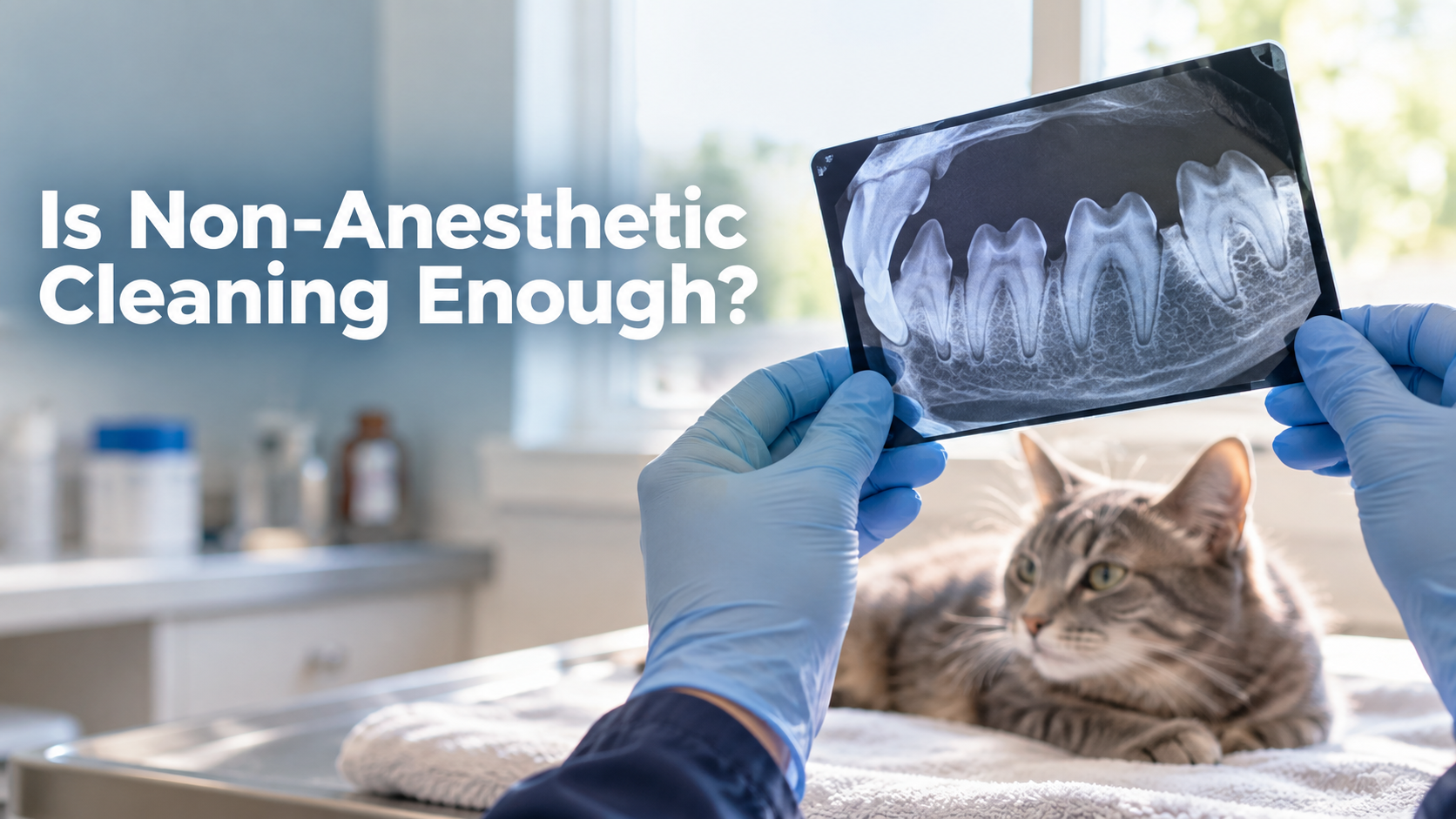
X-rays confirm which joints are affected and how advanced the changes are, which shapes whether laser therapy, medication, or a combination makes the most sense. Bloodwork checks kidney and liver function, since many senior cats have some degree of kidney disease alongside arthritis, and that affects which medications are safe to use. This same protocol overlaps with what we do before dental care for senior cats, anesthesia considerations, since anesthesia and pain medication both depend on kidney and liver function. It is also why families asking whether a senior cat can safely undergo dental surgery get the same answer: it depends on the bloodwork, not just the cat's age.
What Treatment Options Exist for Senior Cats With Arthritis in Plantation?
Treatment for feline arthritis now includes options that did not exist a decade ago. Solensia, a monthly injection that targets the primary pain signaling protein in cats, is one of the most significant advances in feline pain management in recent years, and it is often paired with laser therapy, weight management, and home changes that reduce strain on the joints.
Solensia: What It Is and How It Works in Cats
Solensia is a monthly injectable medication that blocks nerve growth factor, the protein primarily responsible for transmitting pain signals from arthritic joints. It is given in office once a month, and most cats tolerate it well with no sedation. Owners typically notice a difference in mobility within the first few weeks of treatment.
Laser Therapy for Cats: Protocol and Expectations
Therapeutic laser therapy uses focused light to reduce inflammation and ease pain in arthritic joints, and most cats tolerate the sessions well since there is no needle and no sedation. Sessions run about ten minutes and are typically scheduled weekly for the first month, then tapered based on response. Many families combine laser sessions with Solensia.
Environmental Modifications That Reduce Pain Load Daily
Small changes at home help too: a ramp or steps to a favorite window perch, a litter box with a lower entry point, food and water bowls raised slightly off the floor, and orthopedic bedding placed where she already prefers to rest. None of these replace medical treatment, but they cut down on the number of painful movements a cat makes across an average day.
How Does Lakeside Approach Senior Cat Care in Plantation and Broward County?
Lakeside's approach to senior cats combines twice-yearly wellness exams, in-house digital imaging, Dr. Frione's background in rehabilitation, and access to current feline pain management options, giving Plantation and Broward County cat owners a level of access to modern feline arthritis care that many general practices cannot match.
Cats over age ten are seen twice yearly rather than annually at Lakeside, because arthritis, kidney disease, and hyperthyroidism all progress faster than a once-a-year visit can reliably track. Each senior visit includes a full orthopedic assessment, weight and body condition scoring, and a direct conversation about behavior changes at home, not just a quick look and a vaccine.
Families throughout Plantation, Sunrise, Lauderhill, and Plantation Gardens bring their senior cats in specifically for this kind of thorough look, and many arrive after noticing exactly the kind of subtle changes described earlier in this article. That local familiarity matters. Dr. Frione has spent ten years treating cats in this community and has a strong sense of what normal aging looks like here versus what is actually a joint problem asking for attention.
Frequently Asked Questions About Senior Cat Arthritis
How do I know if my senior cat has arthritis?
Watch for behavioral changes rather than limping, which is uncommon in arthritic cats. Common signs include hesitating before jumping, choosing lower resting spots, inconsistent litter box use, reduced grooming, more sleep, and social withdrawal. If your cat is over ten and showing any of these, a mobility assessment is a reasonable next step.
What is Solensia for cats?
Solensia is a monthly injectable medication approved to control pain from osteoarthritis in cats. It works by targeting nerve growth factor, the protein most responsible for pain signaling in arthritic joints. It is given by a veterinarian once a month, and clinical trials have shown meaningful improvement in feline mobility and comfort.
Can cats have laser therapy for arthritis?
Yes. Therapeutic laser therapy is used in cats for arthritis pain with a strong safety record. Sessions are short, non-invasive, and well tolerated by most cats. It reduces joint inflammation and eases pain without the side effects that come with some medications.
How often should a senior cat see the vet?
Most veterinarians recommend twice-yearly wellness exams for cats over age ten. Senior cats are prone to conditions, including hyperthyroidism, kidney disease, dental disease, and arthritis, that can progress faster than an annual visit catches. Twice-yearly exams improve early detection and give treatment a better chance of working well.
Dr. Frione's Perspective
"Cats are the patients I worry about missing, because they are so good at not telling us when something is wrong. I have examined cats who had not jumped onto the couch in six months, and their owners genuinely thought she had just decided to prefer the floor. When I showed them the X-rays, they were stunned at how much joint change was there. The good news is that we have better tools for managing feline arthritis now than we did five years ago. Solensia has changed what I can offer cats who used to be very difficult to manage. I recommend asking about it if your cat is over ten and you have noticed any change in how she moves."
— Dr. Jennifer Frione, DVM, Lakeside Animal Hospital
Schedule a Senior Cat Mobility Exam in Plantation
If your cat over age ten has stopped jumping, changed her litter box habits, or seems less interactive lately, arthritis is the first thing we want to rule out, not the last. A senior cat mobility exam at Lakeside includes a full physical and orthopedic assessment, X-rays when indicated, and a pain management conversation built around your cat specifically.
Dr. Frione's background in rehabilitation, combined with in-house digital X-rays and access to treatments like Solensia and laser therapy, means Plantation families do not need a referral elsewhere for this kind of care. We see cats from Plantation, Sunrise, Lauderhill, and Plantation Gardens for exactly this reason, families who want a vet who takes subtle changes seriously the first time they are mentioned.
If you have noticed any of the signs described above, senior cat care at Lakeside Animal Hospital in Plantation is the right place to start. Schedule a senior cat exam and let's find out what is actually going on before her mobility declines any further.
Feline arthritis is common, quiet, and treatable when it is caught early. The cats who do best have owners who noticed the small stuff: the skipped jump, the shorter litter box visits, the extra hours of sleep. Senior cat arthritis care in Plantation, FL is not about waiting for a limp that may never come. It is about paying attention now, while there is still a lot we can do to help her feel like herself again.