What Does a Professional Dog or Cat Teeth Cleaning Actually Involve, and Is It Worth It?
TL;DR
- A professional veterinary teeth cleaning places your pet under general anesthesia, then scales plaque and tartar from every tooth surface, including below the gumline where periodontal disease actually develops.
- The procedure includes dental X-rays and a full oral health assessment. It is a medical procedure, not a cosmetic service, and for most dogs and cats it is one of the most important preventive steps you can take for their long-term health.
Most Plantation pet owners are diligent about the things they can see: annual vaccines, regular grooming, monthly parasite prevention. But there is one area of your dog or cat's health that stays out of sight, and out of mind, until the problem has progressed far enough to cause real damage. Dental disease is the most common chronic condition in companion animals. It begins below the gumline, in a space no amount of home brushing can reach.
This article answers the question Plantation, Sunrise, and Lauderhill families ask most often: is a professional dental cleaning genuinely necessary, or is it just an upsell?
What Happens During a Professional Pet Teeth Cleaning?
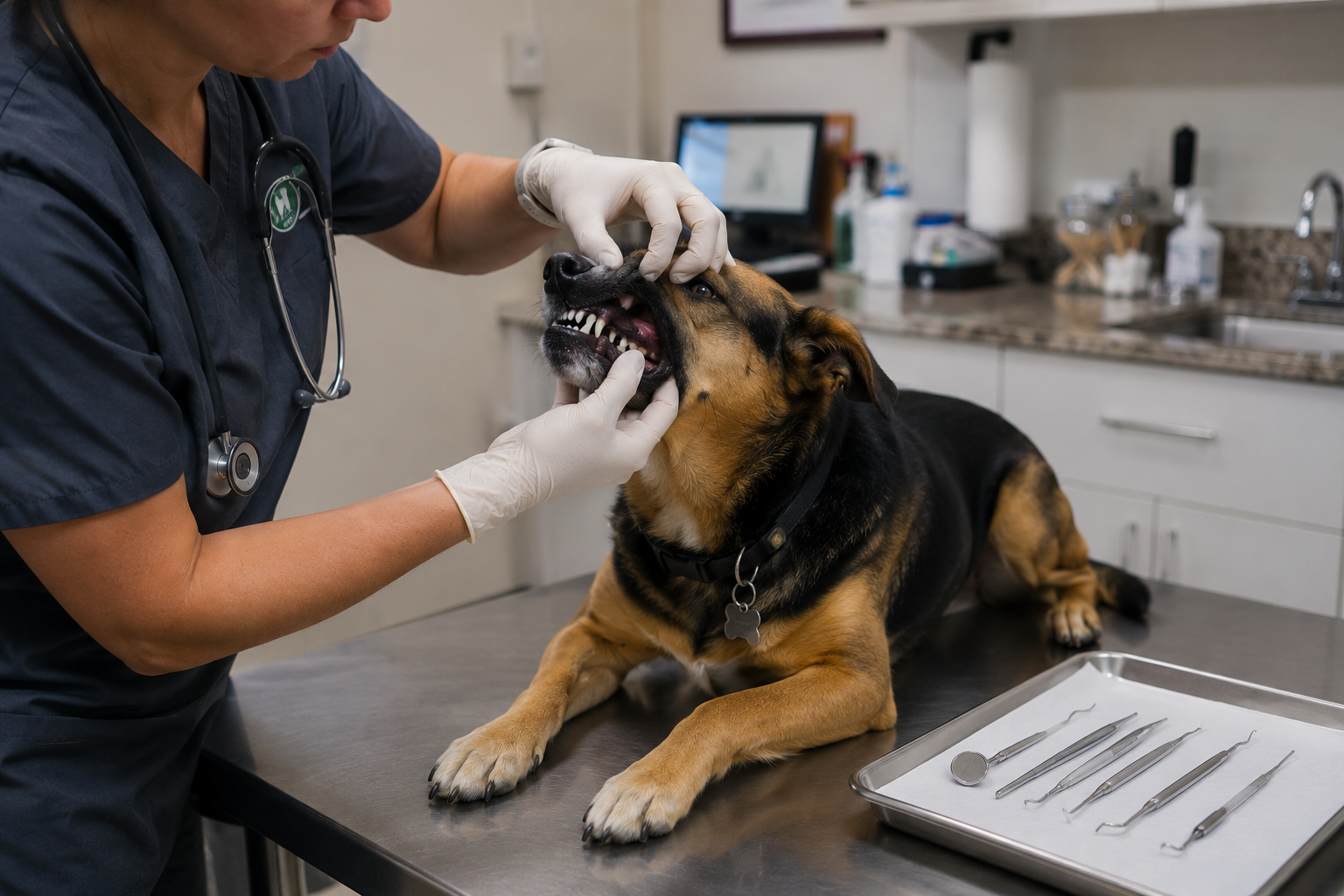
A veterinary dental cleaning places your pet under general anesthesia, then removes plaque and tartar from every tooth surface, above and below the gumline, using hand scalers and ultrasonic instruments. The procedure also includes dental radiographs and a complete oral exam.
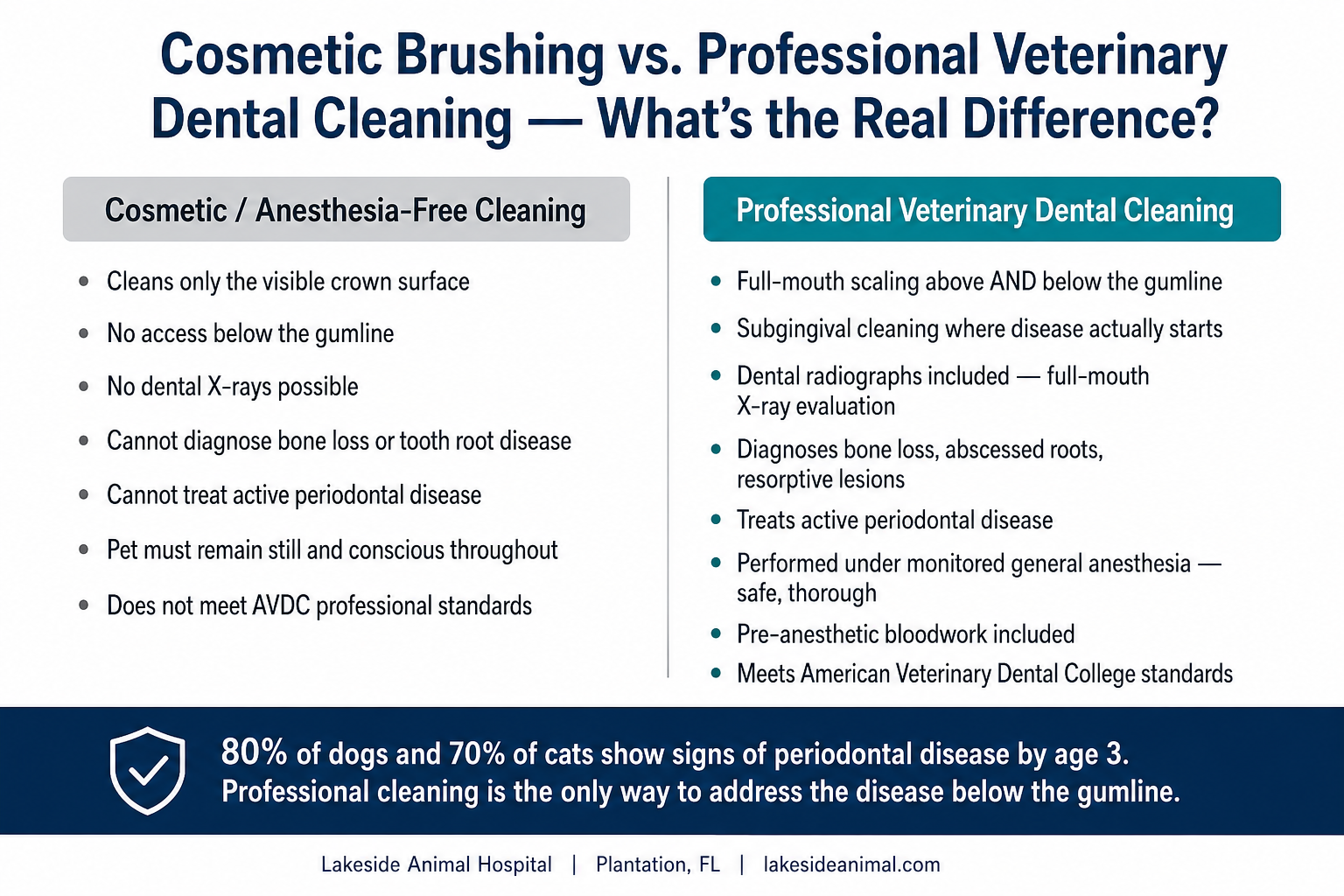
This is not the same as the gentle brushing your pet tolerates at the grooming salon. That service cleans visible surfaces and does nothing to the area where disease actually starts.
Above vs. Below the Gumline: Why Both Matter
The visible portion of your pet's tooth, called the crown, shows you tartar buildup and staining. What it does not show you is what is happening at the root level, inside the gingival sulcus. Bacteria colonize this space, produce toxins, and trigger an inflammatory response that breaks down the ligaments and bone supporting the tooth. By the time you can see gum recession or loose teeth, that process has typically been running for months or years.
Supragingival cleaning (above the gumline) makes your pet's teeth look cleaner. Subgingival cleaning (below the gumline) is what actually treats and prevents periodontal disease. A thorough dental prophylaxis requires both, and both require anesthesia.
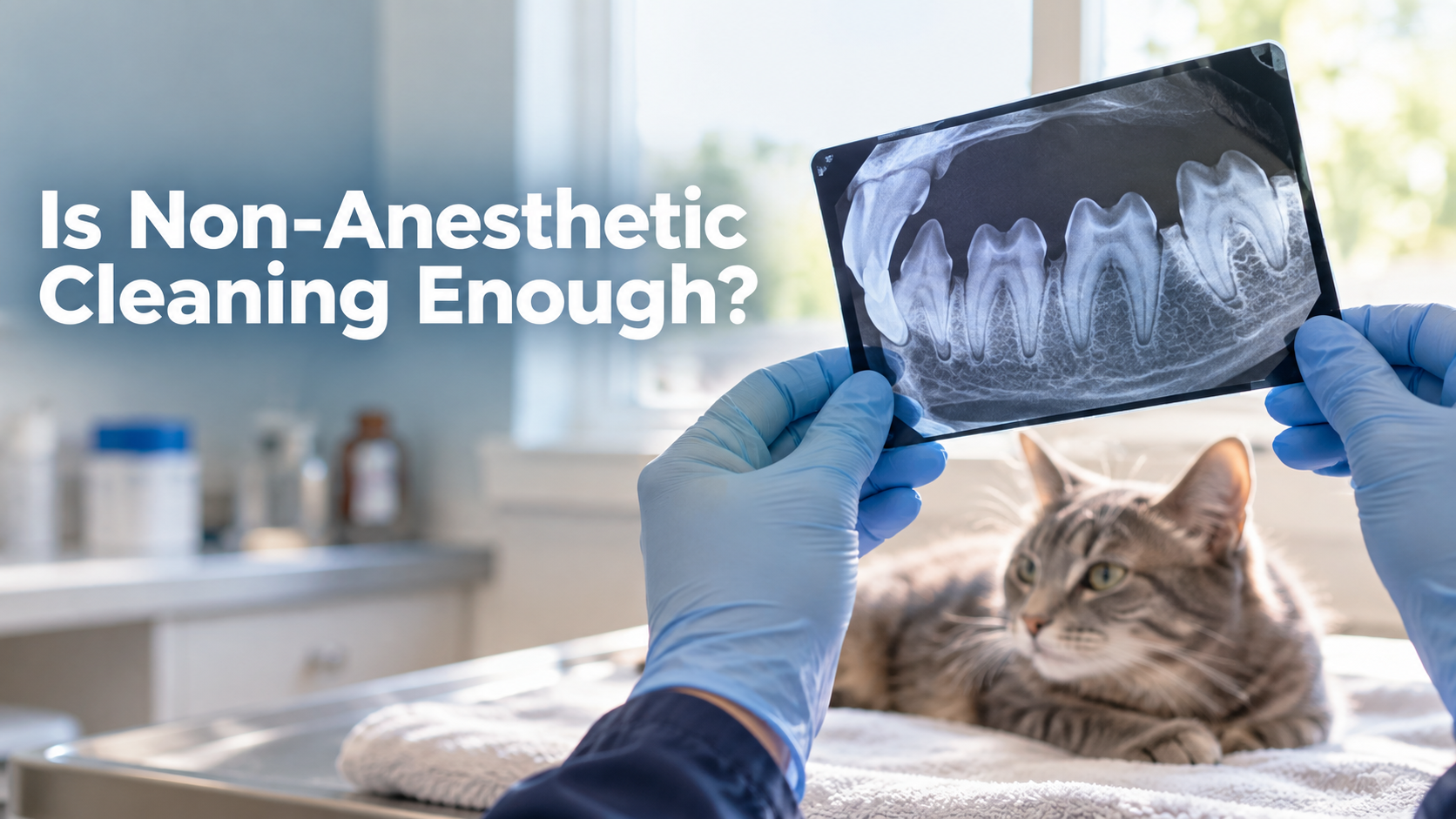
What Dental X-Rays Reveal That a Visual Exam Can
Dental radiographs are part of every cleaning at Lakeside Animal Hospital. They allow Dr. Frione to evaluate tooth roots, surrounding bone density, and the presence of resorptive lesions. That last condition is especially common in cats and is completely invisible to the naked eye.
Full-mouth X-rays frequently change the treatment plan for the visit. A tooth that looks intact at the crown can have an abscessed root. Bone loss under what appears to be a healthy gum margin shows up only on imaging. Treating only what is visible is an incomplete exam, full stop.
Why Does My Pet Need Anesthesia for a Teeth Cleaning?
Anesthesia is required because a thorough cleaning must reach below the gumline, an area that is painful when inflamed and impossible to access safely in a conscious, moving animal. It also protects your pet's airway from inhaling bacteria-laden water during the procedure.
Some facilities offer what they call "anesthesia-free" teeth cleanings. These services scale the visible crown surface of each tooth. They cannot clean below the gumline without causing pain, and they cannot safely take dental X-rays. The American Veterinary Dental College has formally stated that anesthesia-free dental procedures are not a substitute for professional veterinary dental care. A clean-looking tooth can still have advanced disease at the root, and without anesthesia and imaging, that disease goes undetected.
How Lakeside Monitors Anesthesia Safety
Every anesthetized patient at Lakeside Animal Hospital is monitored by a trained technician throughout the procedure. Monitoring includes pulse oximetry, heart rate, respiratory rate, blood pressure, and temperature. An IV catheter is placed before induction to allow immediate medication administration if needed and to support fluid balance during the procedure.
Pre-Anesthetic Bloodwork — What We're Looking For
Before your pet goes under anesthesia, bloodwork screens for conditions that affect anesthetic risk: kidney disease, liver dysfunction, anemia, and clotting abnormalities. For younger patients, a basic panel is typically sufficient. For senior patients or those with known health concerns, a more comprehensive screen is appropriate.
This bloodwork is drawn at Lakeside's on-site laboratory. Results are available before your pet enters the procedure room, not the following day.
How Much Does a Dog or Cat Teeth Cleaning Cost in Plantation, FL?
A routine veterinary dental cleaning in the Plantation and Broward County area typically ranges from $300 to $700 for a straightforward prophylaxis. Costs increase when extractions, advanced periodontal treatment, or additional diagnostics are required.
That range reflects a basic clinical reality: dental procedures are priced on what is found, not just what is scheduled. A healthy three-year-old dog with mild tartar and no radiographic findings will have a very different total than a ten-year-old dog with three mobile teeth and bone loss on X-ray.
What Drives Cost Up: Extractions, X-Rays, and Pre-Op Lab Work
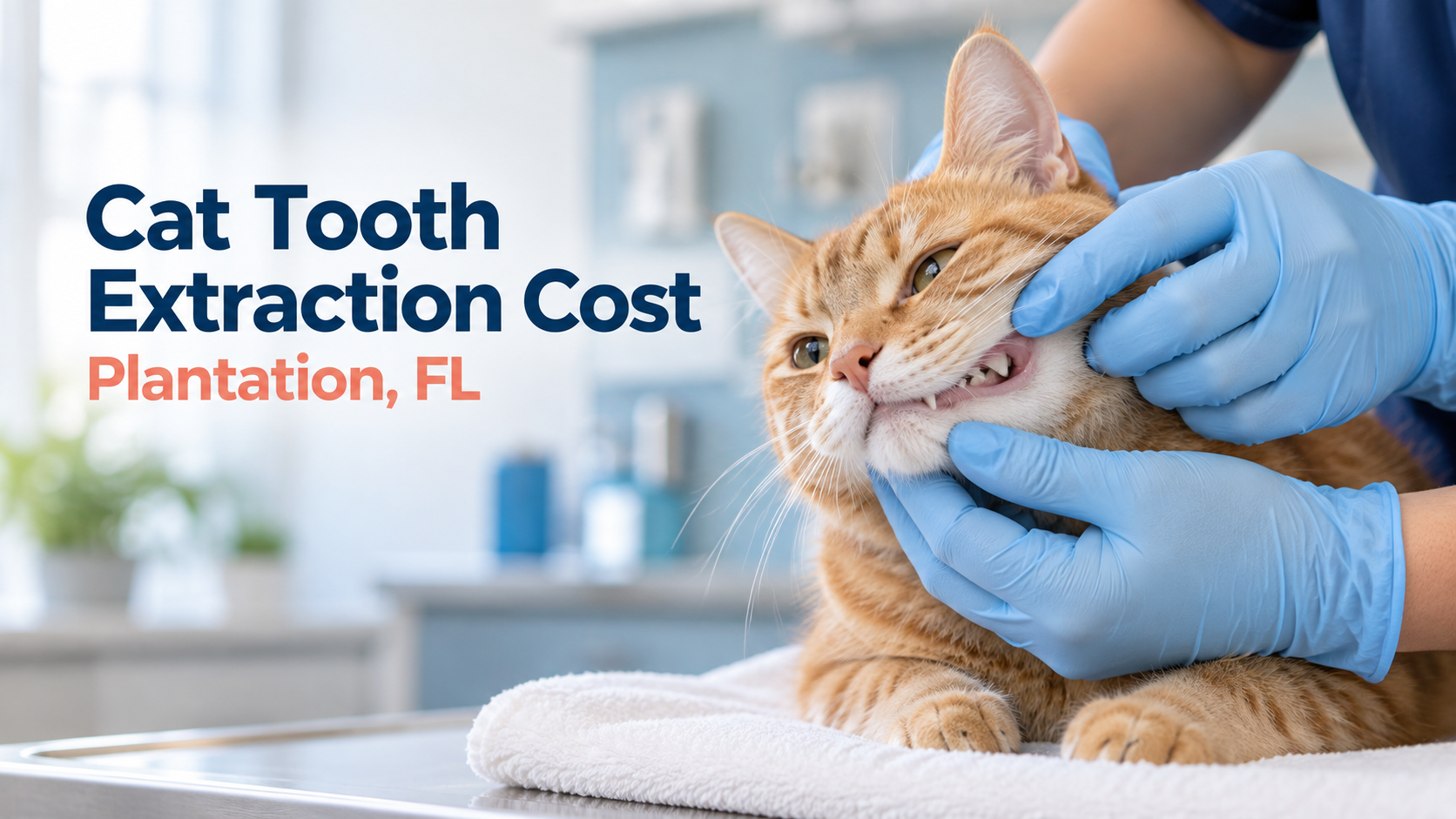
Expect your estimate to include the anesthetic procedure itself, pre-anesthetic bloodwork, full-mouth dental radiographs, the scaling and polishing, and any extractions or periodontal treatment found necessary during the exam. Extractions are the most variable line item. A single-rooted tooth is a different procedure than a multi-rooted molar, and families are contacted during the appointment if significant findings require a treatment decision.
Why Two Estimates for the Same Procedure Can Look Very Different
A quote that does not include dental X-rays, pre-anesthetic bloodwork, or IV fluids may look lower on paper. Those are not optional add-ons. They are the components that make the procedure safe and diagnostically complete. When comparing estimates between Plantation veterinary practices, ask specifically what each line item covers.
How Often Should Dogs and Cats Get a Professional Dental Cleaning?
Most dogs and cats benefit from a professional cleaning once every 12 months, though some breeds and individuals need more frequent care depending on their oral health baseline.
Annual cleanings are a starting point, not a universal prescription. Dr. Frione reviews each patient's oral health at their wellness exam and adjusts the recommendation from there. A small-breed dog with crowded teeth and fast tartar accumulation may need attention every six to eight months, while a dog with excellent home care and a clean mouth at four years old may not need a cleaning for another 18 months.
Breed and Size Factors That Affect Cleaning Frequency
Toy and small breeds, including Chihuahuas, Yorkshire Terriers, and Shih Tzus, consistently show the fastest tartar accumulation. Their teeth are crowded into smaller jaws, creating more surface area for plaque to attach. Brachycephalic breeds, including Bulldogs, Pugs, and French Bulldogs, present additional complexity due to jaw structure.
In cats, Persians and other flat-faced breeds are prone to crowded teeth and dental resorption. Outdoor cats, cats on exclusively wet diets, and any cat over age seven are candidates for more frequent dental monitoring regardless of breed.
What You Can Do at Home Between Cleanings
Home dental care does not replace professional cleaning, but it slows accumulation enough to matter. Daily toothbrushing with a pet-formulated toothpaste is the most effective home option. Veterinary Oral Health Council (VOHC)-approved dental chews, water additives, and oral rinses are useful supplements. If your pet will not tolerate a toothbrush, ask about alternatives at your next visit.
What Are the Signs Your Pet Is Overdue for a Dental Cleaning?
Persistent bad breath, yellow or brown tartar buildup, red or swollen gums, dropping food while eating, or pawing at the mouth are all signs that your dog or cat likely needs professional dental care soon.
Halitosis in dogs and cats is not normal. It is a clinical sign. The bacteria responsible for periodontal disease produce volatile sulfur compounds, and consistent, noticeable odor at conversational distance indicates active disease.
Other signs Plantation families bring to our attention: a pet who was previously an enthusiastic eater and has become slow or reluctant at the bowl; chewing on only one side of the mouth; visible blood on chew toys or in the water bowl; increased salivation, especially in cats. Any of these findings calls for a full oral health assessment before anything else is scheduled.
What Makes Lakeside Animal Hospital the Right Choice for Pet Dental Care in Plantation?
Lakeside combines full in-house laboratory services, on-site anesthesia monitoring, and Dr. Frione's soft tissue surgery expertise. Your pet's dental appointment is supported by the same diagnostic and surgical capability as any other medical procedure performed here.
Pre-anesthetic bloodwork is processed in our own laboratory before your pet goes under, not sent to an outside facility with a 24-hour turnaround. If a dental radiograph reveals a complicated extraction, Dr. Frione has the surgical training to handle it in the same appointment.
Frequently Asked Questions About Cat and Dog Teeth Cleaning
How much does a dog teeth cleaning cost in Florida?
In the Plantation and Broward County area, a routine dog teeth cleaning typically costs between $300 and $700 for a standard prophylaxis. If dental X-rays reveal extractions or advanced periodontal treatment is needed, costs will be higher. Pre-anesthetic bloodwork is often an additional line item and is strongly recommended for safety.
Is anesthesia required for a dog or cat teeth cleaning?
Yes. General anesthesia is required for a safe and thorough veterinary dental cleaning. It allows the veterinarian to clean below the gumline, where periodontal disease develops, and protects your pet's airway during the procedure. Anesthesia-free cleanings address only visible surfaces and cannot treat the disease where it actually occurs.
How often should a dog get their teeth professionally cleaned?
Most dogs benefit from a professional dental cleaning once a year. Small and toy breeds often need more frequent cleanings because of crowded teeth and faster tartar accumulation. In my experience, the right interval depends on the individual patient, which is why I evaluate every dog's oral health at their annual wellness exam rather than giving the same recommendation to every family. — Dr. Jennifer Frione, DVM
What happens if I never get my dog's teeth cleaned?
Without professional cleaning, plaque hardens into tartar, which causes gingivitis, then periodontal disease, and eventually tooth loss. Bacteria from untreated dental disease can also enter the bloodstream and affect the heart, kidneys, and liver over time.
Is it safe to put a senior dog under anesthesia for a dental cleaning?
With proper pre-anesthetic screening, including bloodwork and a physical exam, most senior dogs can safely undergo anesthesia for a dental cleaning. The risk of untreated dental disease typically outweighs the carefully managed risk of anesthesia in a medically supervised setting. Age is not a contraindication. Underlying organ function is what we evaluate. — Dr. Jennifer Frione, DVM
Dr. Jennifer Frione's Perspective
"In my experience, dental disease is the single most undertreated condition I see in otherwise well-cared-for pets. I regularly examine dogs and cats whose owners brush their coats weekly and bring them in for every vaccine on schedule, but whose mouths have not had a professional cleaning in years. By the time I am seeing visible tartar and inflamed gums, the disease below the gumline has usually been progressing for a long time. I recommend a dental evaluation at every annual wellness visit, not because it generates a procedure, but because catching periodontal disease early is genuinely the least expensive and least invasive path for your pet."
— Dr. Jennifer Frione, DVM, Lakeside Animal Hospital

Schedule a Dental Evaluation at Lakeside Animal Hospital
Most dogs over age three already have some degree of periodontal disease. The question is not whether your pet needs a dental evaluation. It is how far the disease has progressed and what the right next step looks like for them specifically.
If you have noticed bad breath, visible tartar, changes in eating habits, or your pet simply has not had a dental exam in the past year, this is the right time to book one. Dr. Frione will perform a complete oral health assessment, review your pet's individual risk factors, and give you a clear picture of what treatment, if anything, is needed.
Lakeside Animal Hospital serves families in Plantation, Sunrise, Lauderhill, Plantation Gardens, and throughout Broward County. With Dr. Frione's soft tissue surgery training and 10 years serving Plantation families, you are not managing a referral chain if a more complex extraction turns out to be necessary.