How Much Does a Pet Dental Cleaning Cost in Plantation, FL? A Transparent Breakdown
If you've asked your vet about scheduling a dental cleaning and walked away unsure what you'd actually be paying for, you're not alone. Dog dental cleaning cost in Plantation, FL varies more than most pet owners expect — and the gap between a $200 quote and a $700 estimate isn't always what it seems. Some of that difference reflects the scope of care included. Some of it reflects corners being cut.
This article gives you a clear, honest picture of what a professional pet dental cleaning involves, what drives the cost up or down, and what the long-term consequences of skipping it actually look like. By the end, you'll have what you need to evaluate any estimate and make a confident decision for your pet's health.
Why Pet Dental Cleaning Costs Vary So Much: What You're Actually Paying For
Pet dental cleanings are not a commodity. Two practices can quote wildly different prices for a procedure that carries the same name, because what's included under the surface differs significantly. Understanding those components is the first step to evaluating any estimate.
The Base Cleaning vs. The Full Picture
A base cleaning handles what's visible above the gumline: tartar removal, scaling, and polishing. That's the starting point. But dental disease doesn't live above the gumline. Most of the damage happens underneath it, in areas that can only be accessed under anesthesia with proper instrumentation. A quote that seems low may reflect a scope of work that stops before the real problems are addressed.
A complete veterinary dental cleaning includes an oral examination, dental charting, full-mouth radiographs, scaling above and below the gumline, polishing, and pain management. Each of those components adds to the total, and each one contributes meaningfully to your pet's outcome.
Why Anesthesia Is Non-Negotiable (And What It Adds to the Cost)
Anesthesia is a consistent line item in any legitimate pet dental cleaning, and it's also one of the most misunderstood. Some practices offer "anesthesia-free" cleanings at a lower price point, but the American Veterinary Dental College and AAHA both formally oppose this approach. Without anesthesia, a thorough subgingival cleaning, which is the part that actually treats periodontal disease, cannot be performed safely or effectively.
The anesthesia component covers the drugs themselves, IV catheter placement, fluids to maintain blood pressure, and a trained technician monitoring your pet's vitals throughout the procedure. At an AAHA-accredited practice like Lakeside Animal Hospital, continuous anesthesia monitoring is not optional. It's a standard of care for every dental procedure.
Pre-Anesthetic Bloodwork: The Safety Step You Shouldn't Skip
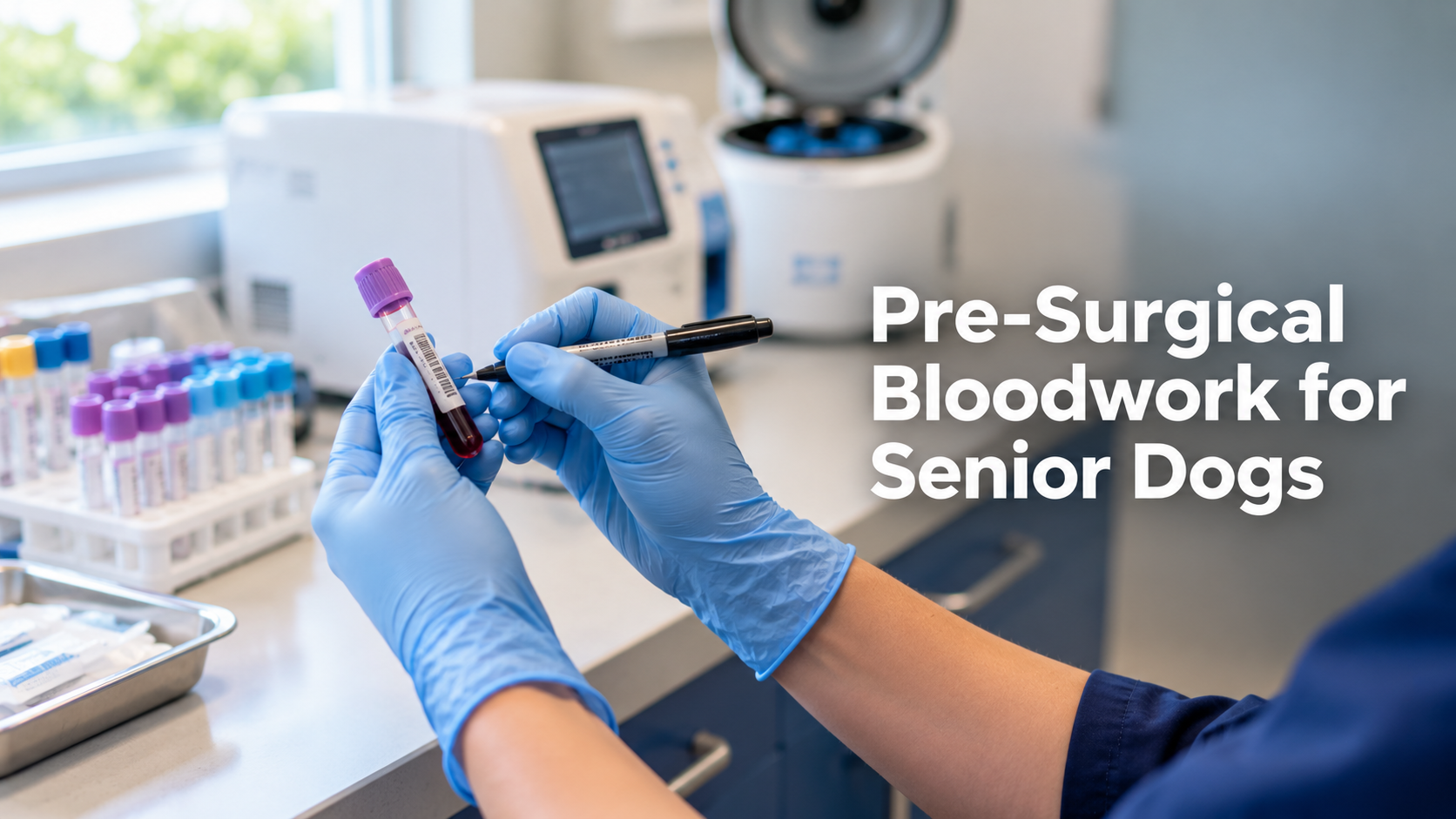
Before any anesthetic procedure, bloodwork checks how your pet's kidneys and liver are processing, the organs that affect how anesthesia is metabolized. For older pets or those with underlying health concerns, this step can identify risks before they become complications.
If your pet has had bloodwork done recently through their wellness exam, it may already be on file and current. If not, pre-anesthetic bloodwork will be included or strongly recommended as an add-on. AAHA-accredited practices include or recommend this for every anesthetic procedure.
What's Typically Included in a Pet Dental Cleaning in Plantation, FL
A well-structured dental cleaning follows a specific sequence. Knowing what each step involves helps you understand the estimate and ask better questions if something seems missing.
Oral Examination and Dental Charting
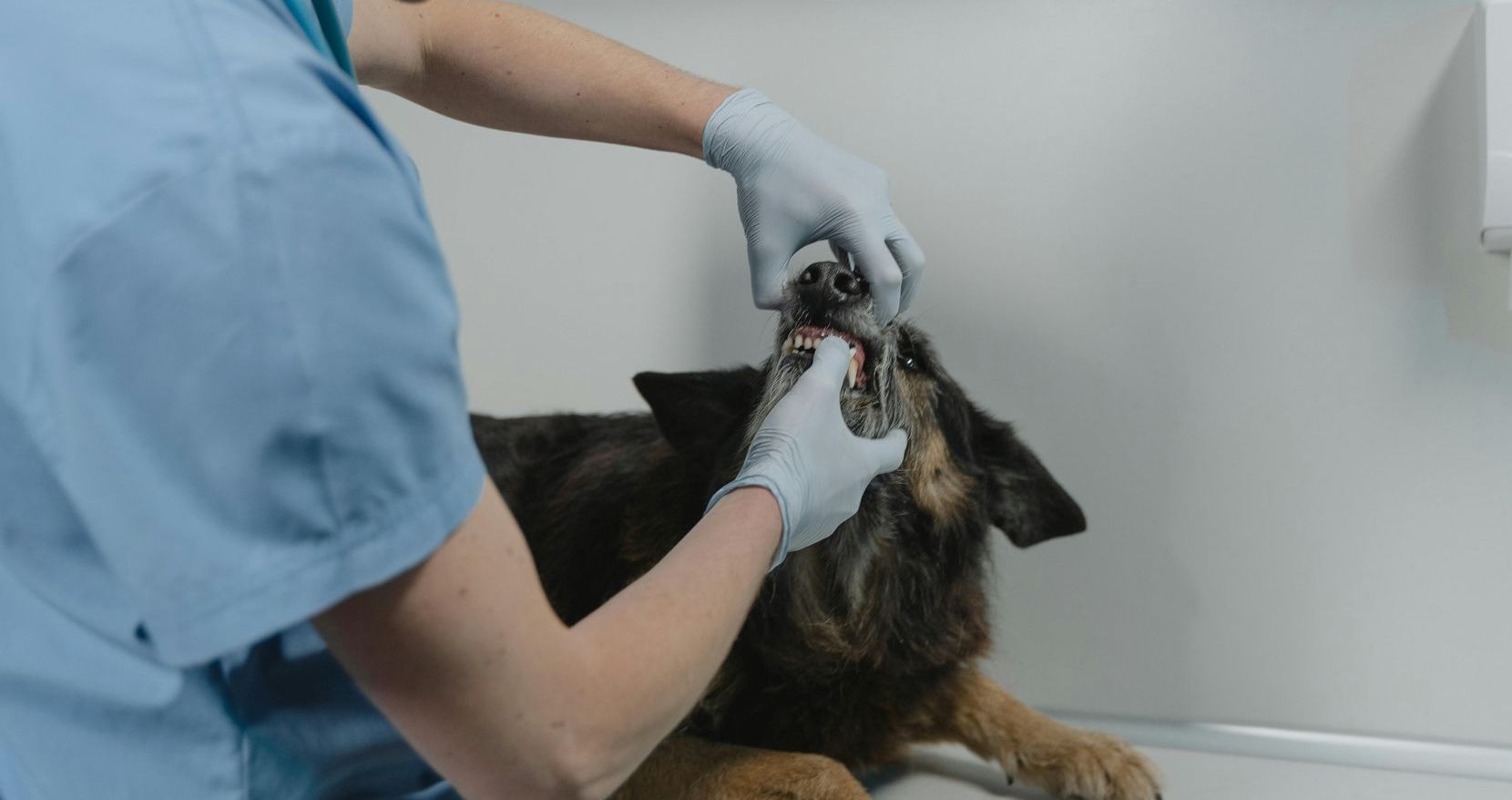
The procedure begins with a thorough oral exam under anesthesia, when the veterinarian can actually see what's happening in every part of the mouth. Each tooth is charted individually: pocket depths are measured, mobility is assessed, and any abnormalities are noted. This is the diagnostic foundation for everything that follows.
Scaling, Polishing, and Subgingival Cleaning
Scaling removes tartar buildup above and below the gumline using an ultrasonic scaler. Subgingival cleaning, specifically below the gumline, is where anesthesia is genuinely required. Polishing smooths the tooth surface after scaling, which slows the rate at which new tartar accumulates. These three steps together make up the core of the cleaning.
Dental Radiographs: Why They Change the Whole Picture
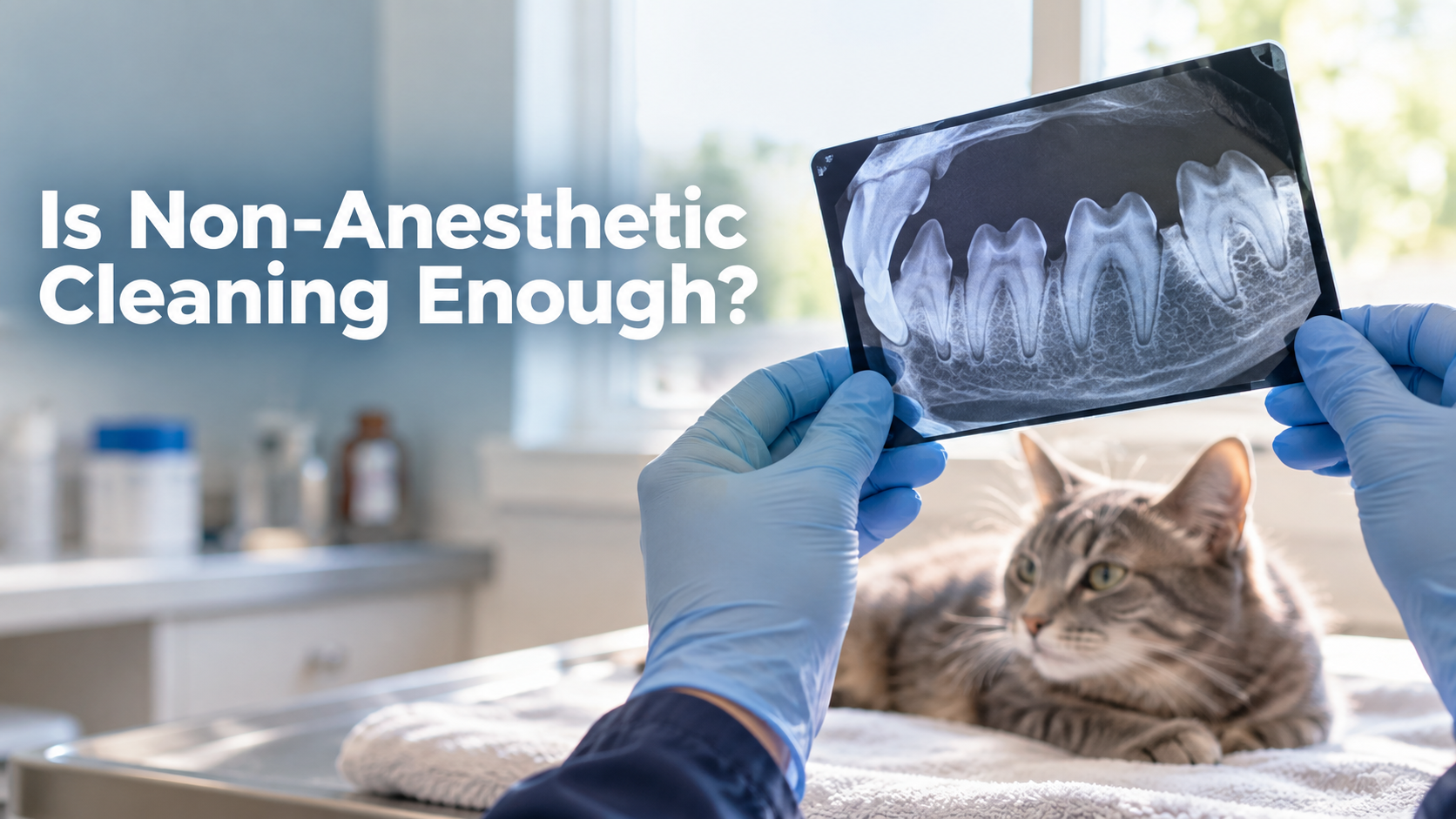
Full-mouth dental radiographs are a standard of care at AAHA-accredited practices, and they matter more than most pet owners realize. Studies estimate that without radiographs, veterinarians miss up to 50% of dental pathology, because most disease is below the gumline and completely invisible to the naked eye. A tooth that looks fine from the surface can have a fractured root, a resorptive lesion, or bone loss that only an X-ray reveals.
Radiographs add to the cost of the procedure. They also add significantly to the accuracy of the diagnosis. A dental cleaning performed without radiographs is working with incomplete information.
Extractions: When They're Needed and How Pricing Works
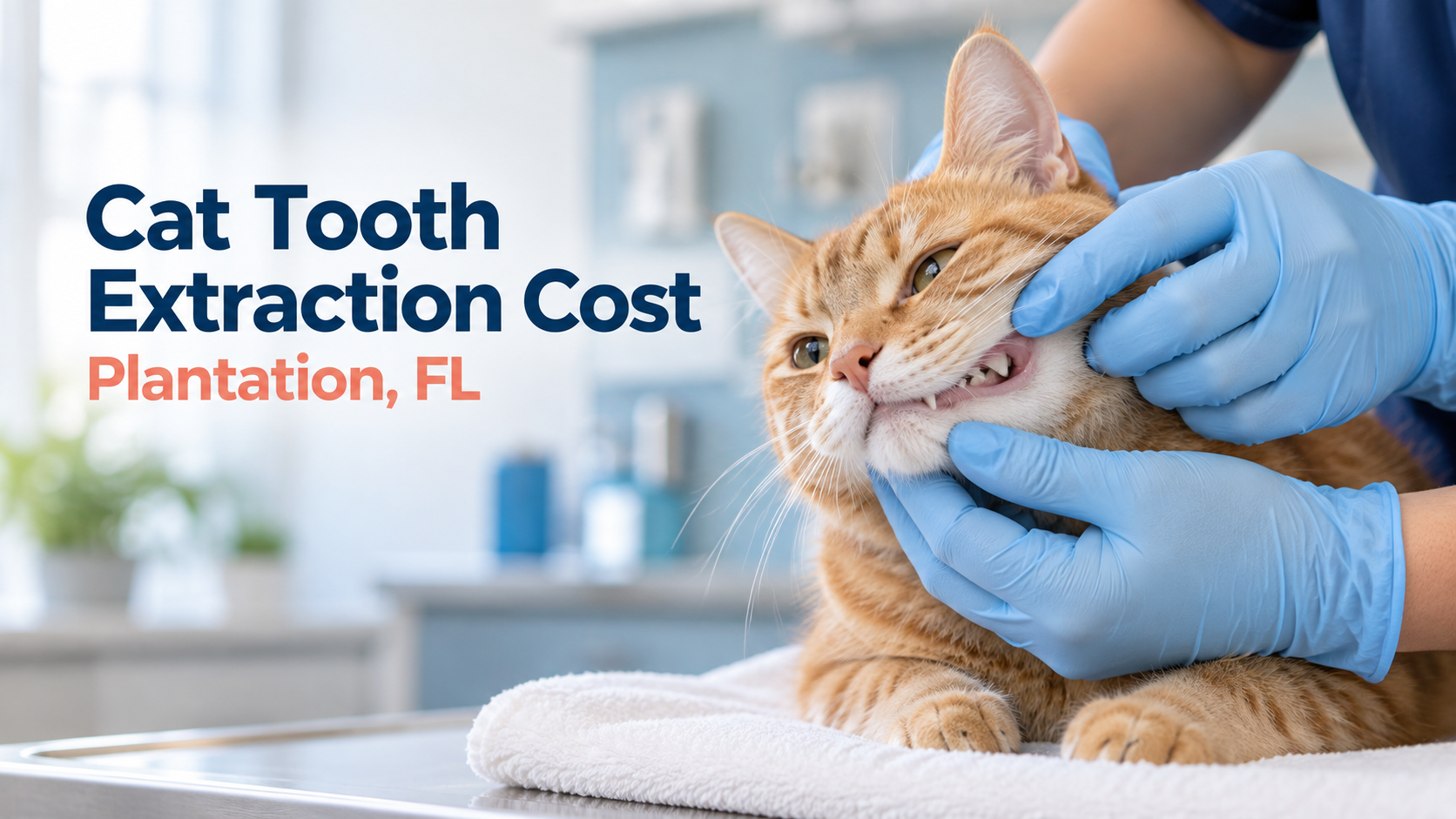
If the examination and radiographs reveal teeth that cannot be saved due to advanced periodontal disease, root fracture, or resorption, extractions may be recommended during the same appointment. Extraction pricing varies depending on the tooth's location and root complexity. A simple single-root extraction is a different procedure than a multi-rooted molar requiring sectioning.
Any recommended extractions will be discussed with you before the veterinarian proceeds. You have the right to approve or decline individual extractions, and your veterinarian should be able to explain the medical rationale for each one.
Average Cost Ranges for Pet Dental Cleanings in South Florida
These are general ranges for the Plantation and broader Broward County area. Actual costs will vary based on your pet's specific needs, the findings at the time of the procedure, and what is included in the initial estimate.
Dogs: What to Expect in Terms of Cost
Dog dental cleanings in Plantation, FL typically range from $300 to $800 for the procedure itself, not including extractions. Factors that move the number higher include larger body size (which affects anesthesia dosing and duration), significant tartar buildup requiring more extensive scaling, the number of radiographic series needed, and the pet's age. If pre-anesthetic bloodwork is not already on file, add $80–$150 for that component.
Cats: How Feline Dental Pricing Differs
Cat dental cleanings generally run from $250 to $600. Cats are more prone to certain types of dental disease, particularly tooth resorption, which is common in middle-aged and older cats and often requires extraction. Because of this, the total cost for a feline dental cleaning can increase meaningfully if resorptive lesions are identified on radiographs. This is one reason why dental radiographs are especially important for cats.
Factors That Raise or Lower the Final Bill
Several variables affect where your pet's procedure falls within these ranges. The degree of existing tartar and periodontal disease is the most significant driver. A pet with years of buildup takes longer and requires more intensive treatment than one with mild accumulation. The number of extractions, if any, can also add several hundred dollars. The inclusion of radiographs, the pet's size, and whether bloodwork is current all contribute to the final total.
At Lakeside Animal Hospital, a full written estimate is provided before any procedure begins. There are no surprises after your pet is already under anesthesia.
The Real Cost of Skipping Dental Care: What Periodontal Disease Does to Your Pet
The question of cost looks different when you factor in what happens when dental care is delayed. By age three, 80% of dogs and 70% of cats already have some form of periodontal disease. Most show no obvious signs until the disease is well advanced.
The Systemic Health Connection (Heart, Kidneys, Liver)
Periodontal disease is not just a mouth problem. Bacteria from dental infection enter the bloodstream and have been associated with changes in heart valve tissue, kidney function, and liver health. The connection between oral health and systemic disease is well-documented in veterinary medicine. What is clear is that chronic dental infection creates a burden on the immune system that extends far beyond the teeth.
Treating dental disease before it becomes severe is less expensive, less complicated, and better for your pet's overall health. Full stop.
How Untreated Dental Disease Becomes an Emergency
A pet with advanced periodontal disease is not just uncomfortable. They may be living with significant pain without showing it. Cats and dogs have evolved to mask pain, which means you may not know how bad things are until a tooth fractures, an abscess develops, or your pet stops eating. At that point, the procedure is no longer a scheduled cleaning. It becomes an urgent extraction under more complex circumstances, often at higher cost.
Routine preventive care, scheduled before disease becomes crisis, is where the real savings happen. The signs of dental disease in pets are often subtle enough that only a veterinary exam can catch them early.
How to Budget for Your Pet's Dental Health
Payment Options at Lakeside Animal Hospital
Lakeside Animal Hospital accepts CareCredit and other payment options to help spread the cost of dental care over time. Our team walks you through the full cost breakdown before your pet goes under anesthesia. Nothing proceeds without your informed approval. Contact us to discuss payment options when you schedule.
How Often Does Your Pet Actually Need a Cleaning?
Most pets benefit from a professional dental cleaning once a year. Some breeds and individuals, particularly small dogs, brachycephalic breeds, and cats prone to resorption, may need more frequent care. At-home brushing between visits is the single most effective way to slow tartar accumulation and extend the interval between professional cleanings.
Your veterinarian will assess your pet's teeth at every wellness exam and give you a specific recommendation based on what they see.
"Dental disease is the most underestimated health problem I see in my patients, and the most preventable. By age three, 80% of dogs and 70% of cats have some form of periodontal disease. What I tell every pet parent is this: the mouth is a window into the body. Bacteria from dental infection don't stay in the mouth. They travel to the heart, the kidneys, and the liver. A dental cleaning isn't cosmetic. It's preventative medicine."
Dr. Jennifer Frione, DVM, Owner & Lead Veterinarian, Lakeside Animal Hospital
Frequently Asked Questions About Pet Dental Cleaning Costs
How much does a dog dental cleaning cost in Plantation, FL?
Dog dental cleanings in Plantation, FL typically range from $300 to $800 depending on the dog's size, the degree of tartar buildup, whether dental radiographs are taken, and whether any extractions are required. Pre-anesthetic bloodwork, if not recently completed, adds to the total. At Lakeside Animal Hospital, a full estimate is provided before any procedure begins.
Is anesthesia required for a pet dental cleaning?
Yes. Any legitimate veterinary dental cleaning requires anesthesia. Anesthesia-free cleanings only address visible tartar above the gumline and cannot safely treat subgingival disease, where most damage occurs. The American Veterinary Dental College and AAHA both oppose anesthesia-free cleanings as inadequate and potentially harmful to the animal.
Why does my vet recommend bloodwork before a dental cleaning?
Pre-anesthetic bloodwork checks kidney and liver function, which affects how your pet metabolizes anesthesia. It also screens for conditions that could make anesthesia riskier. AAHA-accredited practices like Lakeside Animal Hospital include or strongly recommend this step for every anesthetic procedure. It is a safety measure, not an upsell.
What happens if my dog needs a tooth extracted during the cleaning?
Extractions are priced separately because they vary based on the tooth's location and root complexity. Your veterinarian will discuss any recommended extractions with you before proceeding. You have the right to approve or decline individual extractions, and your vet should explain the medical reasoning clearly for each recommendation.
How often does my pet need a professional dental cleaning?
Most pets benefit from a professional cleaning once a year, though some breeds or individuals with faster tartar accumulation may need it more frequently. At-home brushing between visits significantly slows buildup and extends the time between necessary cleanings. Your vet will give you a specific recommendation at your wellness exam.
Schedule Your Pet's Dental Exam at Lakeside Animal Hospital
Dental care is one of the most straightforward ways to protect your pet's long-term health, and at Lakeside, the process starts with transparency. Before your pet goes under anesthesia, you'll receive a full written estimate that covers every component of the procedure. Nothing proceeds without your informed approval.
Dr. Frione and the Lakeside team perform dental cleanings to AAHA accreditation standards, including continuous anesthetic monitoring and full-mouth radiographs. Every procedure is approached the same way: thoroughly, carefully, and with your pet's safety at the center of every decision.
Lakeside Animal Hospital proudly serves pet families in Plantation, Sunrise, and Davie. If you're searching for a dog dental cleaning cost in Plantation, FL, or you have a cat whose teeth haven't been assessed recently, we'd welcome the opportunity to help.
Book Your Pet's Dental Exam Online , or call us at (954) 474-8808 to schedule or ask any questions before you book.
Pet families in Plantation, Sunrise, and Davie have trusted Lakeside Animal Hospital for their pets' dental and preventative care since Dr. Frione took ownership in 2019. A dog dental cleaning cost question is always worth asking, because understanding what you're paying for is the first step to getting your pet the care they actually need. We're here to walk you through every line of the estimate, every step of the procedure, and every part of the recovery.