What Makes a Cat-Friendly Vet? What Plantation Cat Owners Should Know Before Booking
Your cat hates the vet. You know it. She knows it. And by the time you pry her out of the carrier in a lobby full of barking dogs, the appointment is already off to a bad start. For cat owners in Plantation, FL, finding a cat-friendly vet changes the entire experience, for your cat and for you.
Cats process veterinary visits differently than dogs. They are territorial, hyper-aware of scent, and wired to interpret unfamiliar environments as threats. A standard veterinary clinic, no matter how well-intentioned, is often designed around canine patients. That means your cat is walking into a space that triggers fear from the moment she crosses the threshold.
Lakeside Animal Hospital in Plantation has built its feline care around this reality. With a dedicated cat-only exam room, feline-specific handling protocols, and a veterinary team trained in cat body language, the goal is simple: give your cat a calmer visit so Dr. Jennifer Frione, DVM, can give her a better exam. This article breaks down what cat-friendly veterinary care actually looks like, why it matters for your cat's long-term health, and how to prepare for a low-stress visit.
Why Most Veterinary Clinics Stress Cats Out (And What a Cat-Friendly Vet in Plantation Does Differently)
The Problem With Shared Waiting Rooms
Most veterinary clinics use a single waiting area for all species. Dogs, cats, the occasional rabbit. They sit together in a small room while their owners wait. For dogs, this is often social and stimulating. For cats, it is the opposite.
Cats are ambush predators by nature. They rely on control over their environment to feel safe. A waiting room strips that control away completely. The unfamiliar scents, the movement of strangers, the sounds of other animals, all of it registers as a threat. Before your cat even reaches the exam table, her stress hormones have spiked.
That stress does not reset when the exam room door closes. A cat who enters an appointment already in a fear state is harder to examine, more likely to become aggressive or shut down, and less likely to show subtle symptoms that a veterinarian needs to see.
How Dogs in the Lobby Trigger a Cat's Fear Response
Dogs are the single biggest stress trigger for cats in a veterinary setting. Even a calm, quiet dog produces scent markers and body movements that cats read as predatory. A curious dog sniffing at a carrier can send a cat into full fight-or-flight.
In Broward County, where many households have both dogs and cats, this is a common scenario. The cat owner walks in with a carrier, a dog in the lobby lunges forward to investigate, and the cat flattens against the back of her crate. She may start panting, vocalizing, or urinating. By the time she reaches the exam room, a thorough physical exam becomes much more difficult.
This is not the fault of the dog or the dog's owner. It is a design problem. Clinics that do not separate species during the check-in process put feline patients at a disadvantage before the exam even begins.
What 'Cat-Friendly' Actually Requires in Practice
The phrase "cat-friendly" gets used loosely. Some clinics use it because they treat cats. That is not what it means.
A genuinely cat-friendly veterinary practice has made structural and procedural changes designed around feline neurology and behavior. This includes separate waiting areas or staggered scheduling to keep cats away from dogs. It includes cat-only exam rooms free of canine scent. It includes staff trained in feline-specific handling, meaning they know how to approach, restrain, and examine a cat without escalating her stress. And it includes environmental details like cat pheromone diffusers, lowered lighting, and towel-draping techniques that give cats a sense of cover.
At Lakeside Animal Hospital, these are not extras. They are standard for every feline appointment.
Lakeside's Dedicated Feline Room: More Than Just a Separate Space
How Our Feline Room Is Designed to Reduce Anxiety
Lakeside Animal Hospital's cat-only exam room was designed with input from feline behavior research. The room is physically separated from canine exam areas, which means your cat is not picking up dog scent on the walls, the table, or the staff's scrubs.
The room uses Feliway pheromone diffusers, which release a synthetic version of the feline facial pheromone that cats deposit when they rub their cheeks on surfaces. This pheromone signals safety. The lighting is softer than in a standard exam room. The surfaces are non-slip, which matters because cats panic when their footing is unstable.
These are not cosmetic touches. Each one addresses a specific, documented trigger for feline stress in clinical environments. The result is a room where cats are noticeably calmer, and where routine wellness exams produce more accurate findings.
The Handling Protocols Our Team Uses for Every Cat Patient
A quiet room only goes so far if the handling is still rough. Lakeside's veterinary team follows reduced stress protocols for every feline patient, starting from the moment the carrier enters the building.
Cats are given time to acclimate. The carrier is opened gently, or the top is removed entirely, allowing the cat to stay in the bottom half where she feels enclosed and protected. Exams are performed with minimal restraint. If a cat shows early stress signals, like ear flattening, tail tucking, or skin rippling along the back, the team pauses and adjusts.
Dr. Frione's approach is to let the cat set the pace when possible. Forcing an exam on a panicked cat does not produce good results. A cat who is given thirty extra seconds to settle will often allow a much more thorough physical assessment.
Why This Matters for Your Cat's Long-Term Health
Cats who associate the vet with fear will resist future visits. Owners start skipping annual exams. They delay bringing their cat in when something seems off. Over time, this avoidance leads to late-stage diagnoses for conditions that could have been caught early, things like dental disease, kidney decline, hyperthyroidism, and diabetes.
A low-stress veterinary visit is not about making the experience "nice." It is about keeping your cat in the healthcare system. Cats who tolerate their vet visits are cats who get seen regularly. And cats who get seen regularly live longer, healthier lives. That is the clinical logic behind every design choice in Lakeside's feline room.
Signs Your Cat Is Stressed at the Vet (And What We Do About It)
Reading Feline Body Language During an Exam
Cats do not show stress the way dogs do. A dog might whine, pace, or cower. A cat may simply freeze. That freeze response is easy to misread as cooperation, but it is actually a sign of extreme fear.
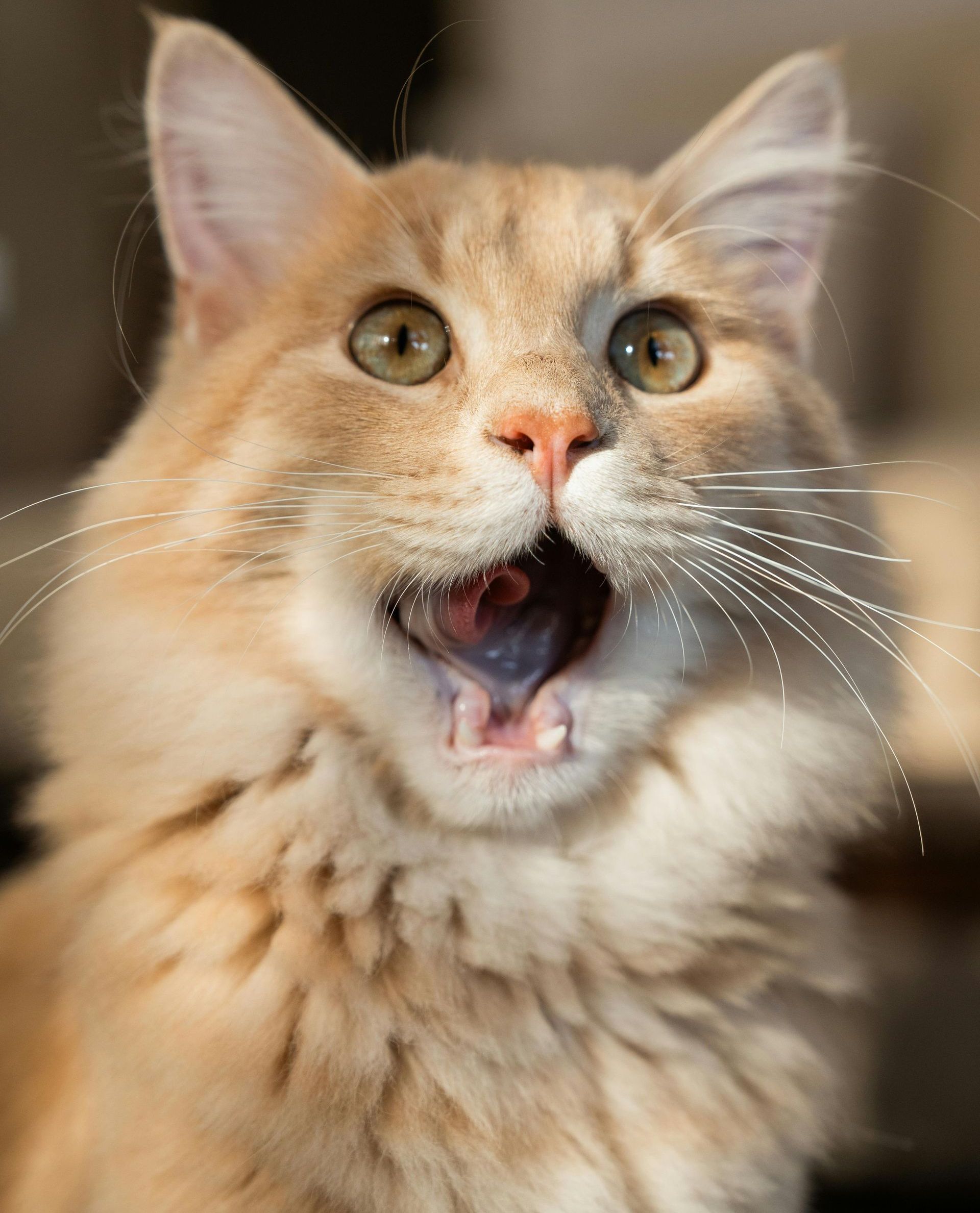
Other stress signals Dr. Frione and the Lakeside team watch for during exams include dilated pupils in a well-lit room, ears rotated sideways or fully flattened, rapid shallow breathing or open-mouth panting, a tail pressed tightly against the body, and piloerection (the fur standing up along the spine). A cat who is swatting or hissing is obviously distressed, but many cats skip that stage entirely and go straight to shutdown.
Staff who are not trained in cat body language can miss these signals. They proceed with the exam, get limited results, and the cat leaves more traumatized than when she arrived.
What Happens When We Identify Stress Signals
When Lakeside's team recognizes escalating stress, the protocol shifts. The exam slows down. The cat may be allowed to retreat into her carrier or under a towel for a few minutes. If a specific part of the exam, like abdominal palpation, is triggering a strong response, the team may reorder the exam to address less sensitive areas first and return when the cat has settled.
In some cases, Dr. Frione may recommend a pre-visit anti-anxiety medication for future appointments. This is not sedation. It is a mild calming agent given at home before the visit that takes the edge off the cat's fear response without affecting the exam's diagnostic value. For cats with severe veterinary anxiety, this one change can make the difference between an annual exam that produces real clinical data and one that produces nothing useful.
Feline Medicine at Lakeside: What Dr. Frione's Cat-Specific Expertise Means for Your Pet
Conditions We See Most Often in Plantation's Indoor Cat Population
South Florida's cat population is heavily indoor, and for good reason. Between the heat, coyote sightings in neighborhoods near the Everglades, and the risk of FIV transmission from stray cats, most Plantation owners keep their cats inside. Indoor life is safer overall, but it comes with its own set of health patterns.
At Lakeside Animal Hospital, Dr. Frione frequently treats indoor cats for obesity and weight-related joint stress, dental disease that progresses silently for years, chronic kidney disease (especially in cats over ten), urinary blockages in male cats triggered by stress or diet, and hyperthyroidism in senior cats. Many of these conditions develop slowly. A cat can lose 15% of her body weight before an owner notices, because cats are masters at hiding discomfort. Regular wellness exams with a veterinarian who knows what to look for in feline patients catch these patterns early.
When a Cat Needs a Feline-Focused Veterinarian, Not Just Any Vet
Every veterinarian is trained to treat cats. But feline medicine has its own diagnostic challenges. Cats metabolize drugs differently than dogs. Their bloodwork reference ranges are different. They mask pain so effectively that a cat with a fractured tooth may eat normally for months.
A feline-focused veterinarian like Dr. Frione knows where to look and what to push on during a physical exam. She knows that a cat who seems "fine" at twelve years old still needs thyroid screening, kidney values, and a careful dental evaluation. She knows that a cat who has stopped grooming one side of her body may be compensating for joint pain, not just getting lazy. That kind of pattern recognition comes from years of concentrated feline medicine experience, and it is the difference between catching a problem at stage one and finding it at stage three.
How to Make Your Cat's Vet Visit Easier Before You Even Arrive
Carrier Training Tips That Actually Work
Most of the stress your cat feels at the vet starts at home, the moment the carrier comes out of the closet. If the carrier only appears when something unpleasant is about to happen, your cat will associate it with fear immediately.
The fix is simple but takes consistency. Leave the carrier out in a room your cat uses daily. Place a familiar blanket or worn t-shirt inside. Drop treats in it periodically without closing the door. Over a few weeks, the carrier becomes furniture rather than a trap.
For cats who are already terrified of their carrier, try a top-loading model. Lowering a cat into a carrier is far less confrontational than pushing her through a front-loading door. Spray the interior with a feline pheromone spray about fifteen minutes before loading. And avoid chasing your cat through the house to get her inside. If the loading process is a battle, the visit is already compromised before you leave your driveway.
What to Bring and What to Expect at Check-In
When you arrive at Lakeside Animal Hospital for a cat appointment, the check-in process is designed to minimize wait time in shared spaces. Cat patients are moved to the feline exam room as quickly as possible.
Bring any records from a previous veterinarian if this is your first visit. If your cat is on medication or a prescription diet, bring the labels so Dr. Frione can review them. A brief list of any behavioral changes you have noticed, like changes in appetite, litter box habits, water intake, or activity level, is more helpful than you might think. Cats do not present symptoms the way dogs do, so your observations at home are a critical piece of the diagnostic picture.
You can also call ahead to ask about timing. Lakeside's team can often suggest appointment windows that tend to be quieter, reducing the chance of a busy lobby when you arrive.
A Word From Dr. Frione
"Cats are not small dogs, and they should never be treated like one. I have seen cats come in completely shut down, frozen, pupils dilated, refusing to be examined, simply because they spent fifteen minutes in a waiting room full of barking dogs. Our feline room is not a marketing feature. It is a medical decision. A calm cat gives me a real exam. A stressed cat gives me guarded results, and that is not good medicine." Dr. Jennifer Frione, DVM, Lakeside Animal Hospital
Book a Calm, Cat-Centered Visit at Lakeside
Lakeside Animal Hospital's dedicated feline room, trained veterinary team, and reduced stress protocols exist for one reason: to give your cat the quality of exam she deserves without the fear that comes with a standard vet visit. Dr. Jennifer Frione and the Lakeside team welcome new cat patients from Plantation, Sunrise, Davie, and across Broward County.
If your cat has been overdue for a wellness exam, or if past vet visits have been stressful enough that you have been putting off the next one, this is the right time to try a different approach. Call Lakeside Animal Hospital at 954-474-8808 to schedule your cat's appointment.
Schedule Your Cat's Wellness Exam
Cat-Friendly Veterinary Care in Plantation, FL
Choosing a cat-friendly vet in Plantation, FL is one of the most practical decisions you can make for your cat's long-term health. Lakeside Animal Hospital has built its feline care around the science of how cats experience stress, and the results show in calmer visits, more accurate exams, and cats who are willing to come back. Your cat deserves a veterinarian who understands her on her own terms. Dr. Frione and the Lakeside team are ready when you are.
Frequently Asked Questions About Cat-Friendly Veterinary Care
What is a cat-friendly veterinary practice?
A cat-friendly veterinary practice adapts its environment, handling techniques, and clinical protocols specifically to reduce feline stress. This includes separate exam areas for cats, pheromone diffusers, feline-trained staff, and scheduling that minimizes contact with dogs. Lakeside Animal Hospital in Plantation, FL follows these standards for every cat appointment.
Does Lakeside Animal Hospital have a separate room for cats?
Yes. Lakeside Animal Hospital has a dedicated feline exam room that is fully separated from canine patients. The space is scent-controlled, uses Feliway pheromone diffusers, and is reserved exclusively for cat appointments. Dr. Frione and the veterinary team use this room for all feline exams at the Plantation clinic.
How do I know if my cat is stressed at the vet?
Common signs include dilated pupils, flattened ears, a tucked or pressed tail, open-mouth panting, freezing in place, or attempts to hide. Some cats vocalize loudly while others go completely silent. Lakeside Animal Hospital’s team is trained to recognize these signals early and adjust the exam approach to reduce fear.
Is it worth finding a cat-specific vet instead of a general vet?
For many cats, the difference in care quality is significant. Cats mask illness and pain more effectively than dogs, so a veterinarian with focused feline experience is more likely to catch subtle health changes during an exam. Dr. Jennifer Frione, DVM at Lakeside Animal Hospital brings cat-specific clinical expertise to every feline appointment.
What areas near Plantation does Lakeside Animal Hospital serve for cat care?
Lakeside Animal Hospital serves cat owners throughout Plantation, Sunrise, Davie, and the broader Broward County area. The clinic welcomes new feline patients for wellness exams, dental care, medical consultations, and surgical services designed around cat comfort.