Bringing an Aggressive or Reactive Dog to the Vet in Plantation. Here's How We Handle It
You already know the drill. The moment you pull into a parking lot, your dog starts panting. By the time you reach the waiting room (other dogs, unfamiliar smells, slick floors, strangers in scrubs), you're managing a dog who looks nothing like the one sleeping on your couch in Plantation two hours ago.
Finding a vet for aggressive dogs in Plantation, FL isn't just about finding someone willing to see your dog. It's about finding a team that actually understands what's happening in your dog's body and knows how to work with it rather than against it. At Lakeside Animal Hospital, that's exactly what we do. This article walks you through the science behind fear-based reactivity, how our team approaches these cases, and what you can do before your next appointment to make it easier on everyone, especially your dog.
TL;DR: What You'll Learn in This Article
- Why dogs become aggressive or reactive at the vet (and why it's not a behavior problem)
- What trigger stacking is and why the waiting room is often the real issue
- How Lakeside Animal Hospital uses low-stress handling protocols for reactive patients
- Dr. Jennifer Frione's floor-level approach to anxious dogs
- When and how pre-visit anxiety medication can help
- What to do, and what to tell us, before you book your next appointment
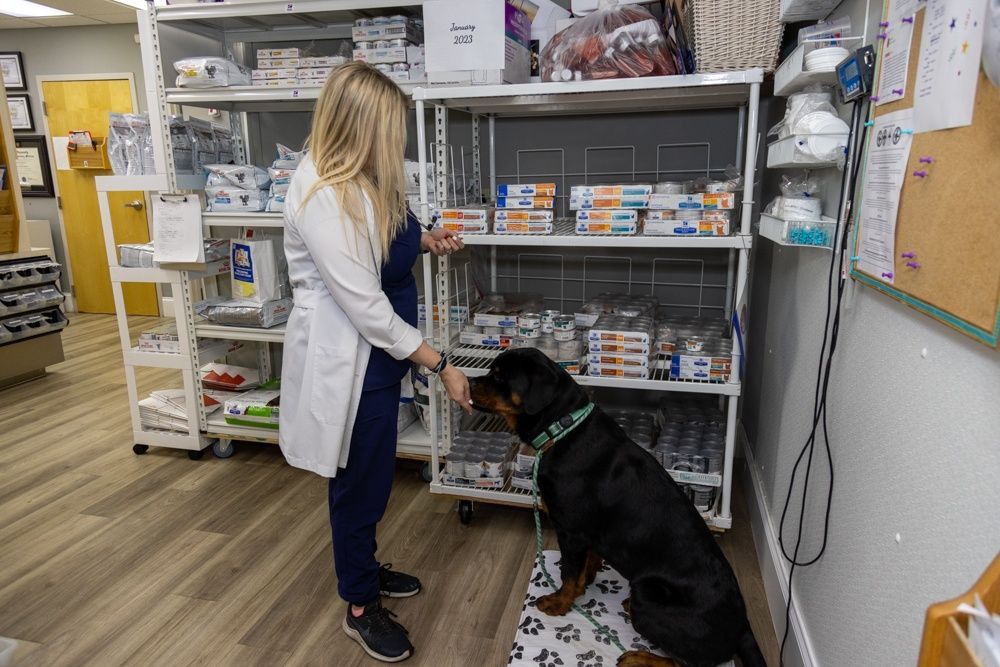
Why Some Dogs Become Aggressive at the Vet, and What It Really Means
A dog who growls, snaps, or lunges at a vet clinic is not a bad dog. In almost every case, that dog is a frightened one.
The Science of Fear-Based Reactivity
When a dog perceives a threat, real or anticipated, their body releases cortisol and adrenaline, activating the same fight-or-flight response found in every mammal. Heart rate climbs. Pupils dilate. The thinking part of the brain goes largely offline, and survival instincts take over.
For many dogs, a veterinary clinic is one of the most reliable triggers for this response. The combination of antiseptic smells, confined spaces, unfamiliar people handling their body, and previous negative experiences can wire the brain to associate "vet visit" with danger. Over time, that association becomes automatic. The dog doesn't choose to react. They're reacting from a deeply conditioned fear response.
Recognizing this is the first step toward handling it correctly.
Trigger Stacking: Why the Waiting Room Is Often the Problem
Trigger stacking is one of the most important concepts in understanding reactive dogs, and one of the most commonly overlooked in busy clinical environments.
Here's how it works: every stressor your dog encounters raises their stress threshold a little higher. A strange dog across the waiting room. A loud noise from the back. Being asked to sit still on a cold scale. A technician they've never met reaching for their collar. Each individual trigger might seem minor. But stacked together, they can push a dog past the point of no return before the exam even begins.
A dog who seems "fine" in the car can arrive at their absolute limit by the time they reach the exam table. This is why the waiting room, not the exam itself, is often where reactive dogs break down. A stress-conscious clinic designs around this reality.
How Lakeside Animal Hospital Handles Reactive and Aggressive Dogs
Our approach to reactive and anxious dogs doesn't start when your dog walks through the door. It starts when you call to make the appointment.
Our Low-Stress Handling Philosophy
Low-stress handling is a set of veterinary techniques built around one core idea: an animal's emotional state during an exam matters clinically. A dog that's panicking cannot be examined accurately. Elevated cortisol affects heart rate, respiration, and pain response, all of which can skew findings and make diagnosis harder.
At Lakeside, we use low-stress handling protocols throughout every interaction with reactive patients. That means moving slowly and deliberately, reading body language cues before proceeding, avoiding physical restraint when alternatives exist, using non-slip surfaces so dogs feel stable, and offering positive reinforcement at every stage of the visit. We also schedule buffer time for reactive patients: no rushing, no piling the next appointment into the room before yours is finished.
The environment matters too. Whenever possible, reactive dogs are brought directly into an exam room rather than waiting in the lobby with other animals. Removing that first layer of trigger stacking alone can make the rest of the visit significantly more manageable.
Dr. Frione's Floor-Level Approach to Anxious Patients
Dr. Jennifer Frione, DVM, who founded Lakeside Animal Hospital in 1994 and has spent three decades working with Broward County's pet community, has a very clear philosophy when it comes to fearful dogs: get on their level and let them set the pace.
Rather than approaching a reactive dog from above (a posture most dogs read as threatening), Dr. Frione positions herself at the dog's level, allows the dog to investigate, and works on the dog's timeline. An exam done with patience gives far better clinical information than one done with force or speed.
This isn't just a technique. It's a philosophy that runs throughout the entire Lakeside team, from the way technicians approach a nervous patient to how our front desk staff prepares an owner before they walk in.
"When a dog snaps or growls in my exam room, I don't see a bad dog. I see an animal that's been pushed past what they can handle. My first job is to slow everything down. I get on their level, I let them investigate, and I work on their timeline. An exam done with patience and trust gives me far better clinical information than one done with force."
Dr. Jennifer Frione, DVM, Lakeside Animal Hospital
When and How We Use Pre-Visit Anxiety Medication
For some reactive dogs, environmental modifications and calm handling are enough. For others, the fear response is so deeply conditioned that medication is the most humane and effective tool available.
Pre-visit anxiety medication, prescribed by our veterinarians in advance of your appointment, can significantly reduce a dog's stress response before they ever leave the house. When a dog arrives at a lower baseline of anxiety, they're far more likely to stay under their stress threshold throughout the visit.
This is a conversation that should happen before your appointment, not during it. Learn more about anxiety and stress-conscious care at Lakeside. If your dog has a history of reactivity at the vet, call us ahead of time and tell us. We'll discuss whether a pre-visit protocol makes sense for your dog and, if so, prescribe appropriately. We have an on-site, fully stocked pharmacy, so there's no separate trip to fill a prescription.
What to Do Before You Bring a Reactive Dog to the Vet
Preparation on your end makes a measurable difference. Here's what actually helps.
Practical Preparation Steps for Plantation Pet Owners
Start with the basics: don't feed your dog a large meal before the appointment. A slightly empty stomach makes treats more motivating and reduces the chance of stress-related nausea. Bring high-value rewards your dog doesn't get at home (real meat, cheese, whatever works for your dog). These can be used throughout the exam to create positive associations.
If your dog is muzzle-trained, bring the muzzle and use it. A properly fitted, well-introduced muzzle is not cruel. It's a tool that keeps everyone safe and actually allows the exam to proceed more calmly because neither the dog nor the handler is operating in fear of a bite. Learn about preparing your reactive dog for procedures at Lakeside.
Practice car rides to locations that don't end at the vet, so your dog doesn't begin stress-stacking from the moment the leash comes out. Work on basic desensitization at home: touching paws, ears, and mouth regularly so those sensations aren't new and alarming in the exam room.
If your dog does better skipping the lobby entirely, call us from the parking lot when you arrive. We can often bring you directly into a room.
What to Tell Us When You Book Your Appointment
This part is simple: tell us everything.
When you call to book, let us know your dog has a history of reactivity or aggression at the vet. Tell us what their specific triggers are. Tell us whether they've ever snapped or bitten. Tell us what has and hasn't worked in past visits.
This information allows our team to prepare an appropriate exam room, plan the handling approach in advance, and schedule adequate time so nothing feels rushed. There is no judgment here. Our team has seen it all, and we'd rather know your dog before they walk through the door than try to figure it out in the moment.
Is It Safe to Bring an Aggressive Dog to a General Practice?
Yes, with the right practice. The key variable is not how aggressive your dog is, but how prepared the clinic is.
What Separates a Stress-Conscious Vet from a High-Volume Clinic
A high-volume clinic running back-to-back appointments every 15 minutes is not equipped to handle a reactive dog well. Not because the staff doesn't care, but because the structure doesn't allow for the time, the flexibility, or the individualized planning that these patients require.
A stress-conscious veterinary practice operates differently. It has protocols for scheduling reactive patients with buffer time. It has staff trained to read body language cues before reaching for an animal. It makes decisions based on the individual dog in front of them, not a one-size-fits-all restraint policy.
Lakeside Animal Hospital is AAHA-accredited, a distinction held by only 12 to 15 percent of veterinary hospitals across the United States and Canada. That accreditation reflects our commitment to clinical standards that go beyond the baseline, including how we handle patients who need more than a routine exam. Learn more about Dr. Frione's approach and philosophy.
If your dog has been turned away by other clinics, or if previous vet visits have left you dreading the next one, that's worth talking about directly. Across West Broward, from Sunrise to Davie to the neighborhoods around Peters Road, dog owners are often surprised to find that a different approach produces a completely different result.
Frequently Asked Questions
Can a vet treat an aggressive or reactive dog safely?
Yes. Veterinarians trained in low-stress and Fear Free handling techniques are equipped to examine reactive dogs safely and compassionately. The key is advance communication, proper preparation, and a clinic environment designed to minimize triggers. At Lakeside Animal Hospital, we build a handling plan before your dog arrives, not after.
What is low-stress handling for dogs?
Low-stress handling is a set of veterinary techniques that prioritize the animal's emotional state during an exam. That means moving slowly, reading body language, avoiding physical restraint when possible, using non-slip surfaces, and offering positive reinforcement throughout. The goal is an exam the dog can tolerate, ideally one they begin to associate with something positive over time.
Should I tell my vet my dog is aggressive before the appointment?
Absolutely, and as early as possible. Informing the clinic ahead of time allows the team to prepare an appropriate exam room, schedule buffer time, and have a handling plan ready before your dog arrives. Withholding this information doesn't protect your dog; it puts everyone in a harder position.
Can my dog take anxiety medication before a vet visit?
In many cases, yes. As Dr. Frione explains, pre-visit anxiety medication prescribed by your veterinarian can significantly reduce the stress response in reactive dogs, bringing them into the appointment at a lower baseline of fear. This conversation should happen before the appointment, not during it. Learn more about pre-visit anxiety medication for dogs at Lakeside.
What is trigger stacking and why does it matter at the vet?
Trigger stacking is what happens when multiple stressors accumulate faster than a dog can recover, pushing them over their stress threshold. Each trigger alone might seem minor: a strange dog in the lobby, a cold exam table, a stranger reaching for their collar. Together, they can push a reactive dog into a full fear response before the exam even begins. A stress-conscious clinic works to reduce as many of those triggers as possible from the moment you call to book.
Lakeside Animal Hospital: Where Reactive Dogs Get the Care They Deserve
If you've ever left a vet appointment feeling embarrassed, exhausted, or like your dog is simply "too much," that experience says more about the clinic than it does about your dog. At Lakeside, we don't rush, we don't judge, and we don't apply a one-size-fits-all approach when your dog clearly needs something different. Every reactive patient gets an individualized handling plan, a team that communicates clearly, and a doctor who has the patience to do this right.
We are AAHA-accredited, family-owned, and deeply rooted in the Plantation community. Our in-house pharmacy means pre-visit medications are ready when you need them. Our team is trained to prepare before you arrive, not scramble after you walk in.
Call us before you book. We want to know your dog before they arrive.
Reach us at (954) 474-8808 or book an appointment online. We're open Monday, Tuesday, Thursday, and Friday from 8:00 AM to 6:00 PM, and Wednesday and Saturday from 8:00 AM to 4:00 PM. Located at 6500 W Sunrise Blvd, Plantation, FL 33313.
Lakeside Animal Hospital has been serving pet families along West Sunrise Boulevard and across central Broward County since 1994. When your dog needs a vet for aggressive or reactive behavior in Plantation, FL, the right fit makes all the difference. We're ready when you are.