Why Do So Many Plantation Dogs Have Allergies, and How Do You Find Out What's Actually Causing Them?
TL;DR: Dogs in South Florida deal with allergens year round. Grass, mold, dust mites, and fleas do not take a winter break in Broward County. The three most common allergy types in dogs are environmental, food related, and flea allergy dermatitis, and figuring out which one (or which combination) is driving your dog's symptoms requires a systematic diagnostic approach, not guesswork.
If you own a dog in Plantation, you have probably noticed the scratching does not really stop. Maybe it eases up for a few weeks, then comes right back. That pattern is not your imagination, and it is not bad luck. South Florida's climate keeps allergens active in every month of the year, which means dog allergy treatment in Plantation, FL looks different from what a vet in Ohio or Minnesota might recommend. A dog with seasonal allergies up north might get four good months. A dog here often does not.
This article walks through why allergies are so persistent in Broward County, the three main types your dog could be dealing with, how a proper diagnosis actually happens, and what treatment looks like once you know what you are managing. By the end, you should have a clear picture of where to start.
Why Are Dog Allergies So Common in South Florida?
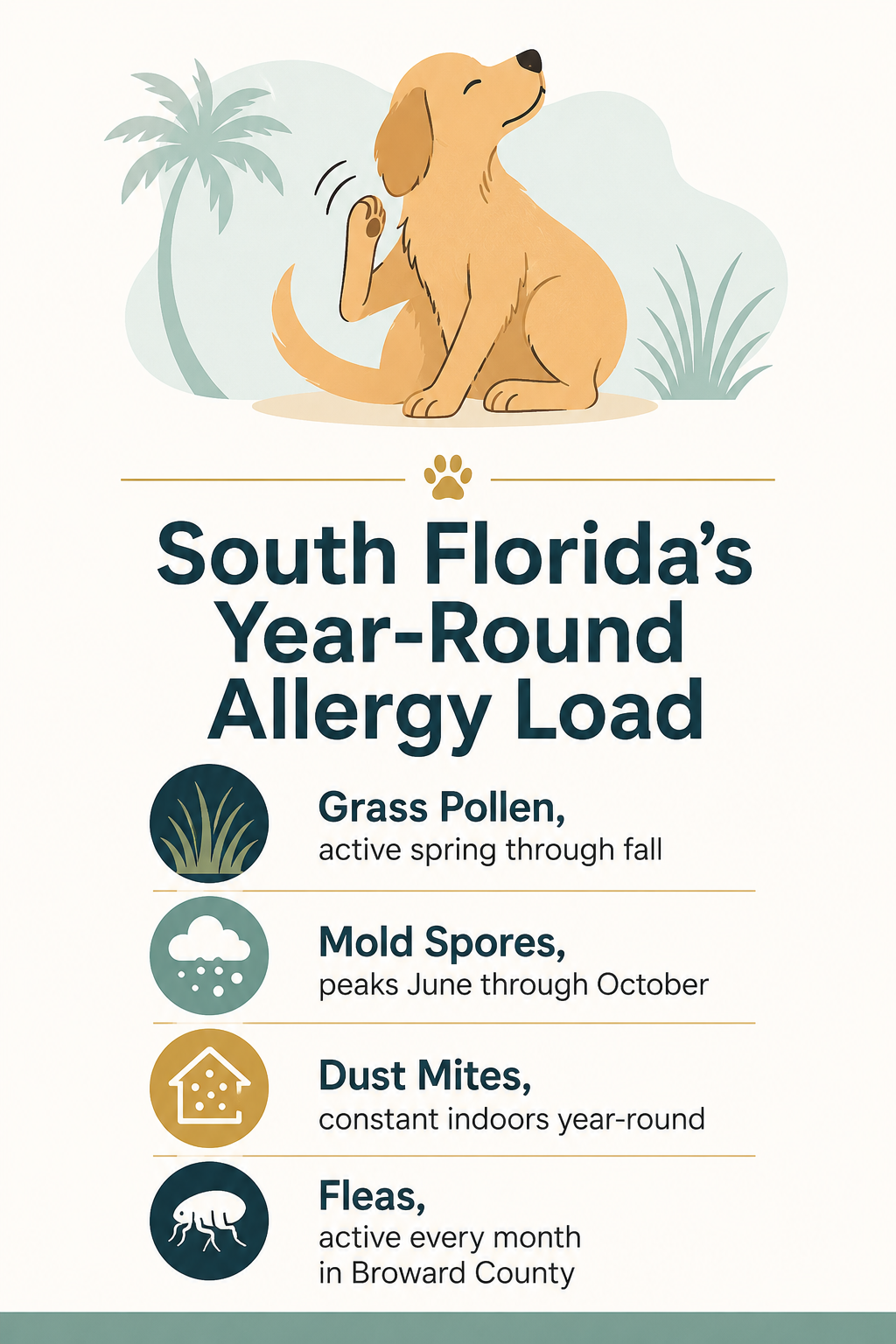
South Florida's subtropical climate means allergen seasons overlap and rarely fully end. Grass pollen, mold spores, dust mites, and fleas are present year round in Broward County, creating a chronic allergen load that dogs in northern climates only experience seasonally. That is the core reason so many Plantation dogs show symptoms in every month of the calendar.
In cooler regions, a dog's immune system gets a break in winter while allergen counts drop. Here, mold spores thrive in our humidity, grass pollinates nearly continuously, and fleas survive comfortably outdoors all year. Layer those on top of each other and a dog's skin barrier rarely gets time to fully reset.
The Broward County Allergen Calendar, What's Active When
Grass pollen tends to peak in spring and again in early fall, but it never fully disappears. Mold spore counts climb with our rainy season from roughly June through October, which lines up with when a lot of owners notice their dogs scratching more. Dust mites are indoor allergens, so they stay fairly constant regardless of season, particularly in homes with carpet and upholstered furniture.
Why Humidity Worsens Skin Conditions in Allergic Dogs
Humidity keeps a dog's skin and coat damp longer after walks or yard time, which creates a more hospitable environment for the yeast and bacteria that cause secondary infections. A dog with an underlying allergy in a dry climate might stay relatively clear. The same dog in Plantation's humidity is more likely to develop the hot spots and odor that bring owners into the clinic.
What Are the Three Types of Allergies in Dogs, and How Are They Different?
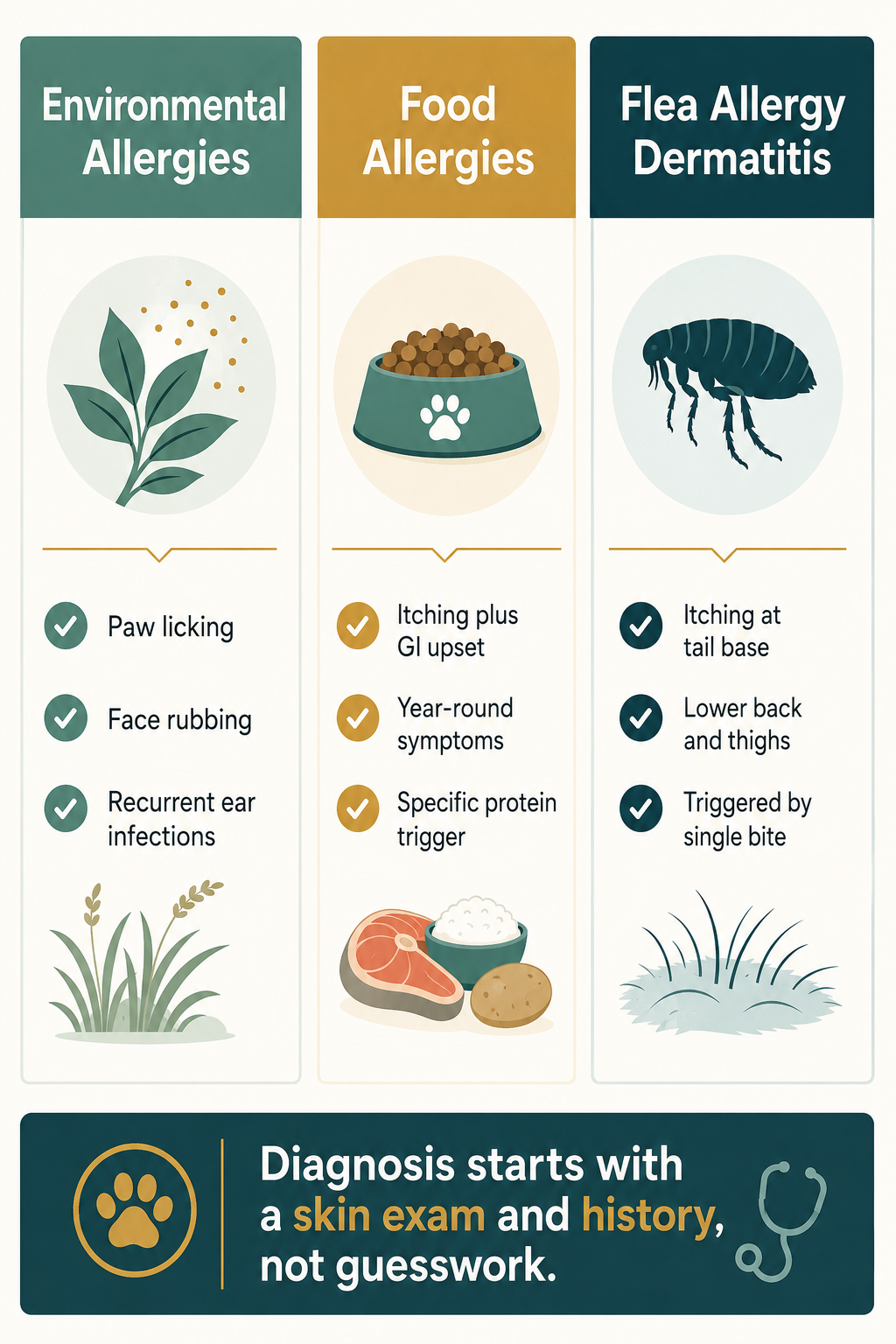
Environmental allergies, also called atopy, cause itching, paw licking, and ear infections triggered by outdoor and indoor allergens. Food allergies cause gastrointestinal and skin symptoms tied to a specific protein or ingredient. Flea allergy dermatitis is triggered by flea saliva and causes intense itching at the base of the tail and lower back, sometimes from a single bite.
Environmental Allergies, Symptoms, Triggers, and What Testing Looks Like
Dogs with atopy tend to lick or chew their paws, rub their faces on furniture, and develop recurring ear infections. Symptoms often correlate loosely with the allergen calendar above, though our overlapping seasons make that correlation harder to spot than it would be elsewhere. Intradermal allergy testing, where small amounts of suspected allergens are introduced under the skin, can help identify specific triggers when a dog's case is severe or recurring.
Food Allergies vs. Food Sensitivities, Why the Distinction Matters for Treatment
A true food allergy involves the immune system reacting to a specific protein, while a food sensitivity is a digestive intolerance without that immune response. Both can cause itching and gastrointestinal upset, but they are managed differently. Identifying a true food allergy generally requires a strict elimination diet trial lasting eight to twelve weeks, not a quick switch to a different bag of kibble.
Flea Allergy Dermatitis, Why Year Round Prevention Is Non Negotiable in Broward County
Because fleas survive year round in our climate, a dog with flea allergy dermatitis needs consistent prevention every single month, not just in warmer seasons. One missed dose can be enough to trigger a flare in a sensitive dog. If you're trying to figure out whether what you're seeing is fleas or something else entirely, our guide on
how to tell if your dog's scratching is fleas or allergies breaks down the visible differences. This is one of the more common issues our team flags during
skin conditions we identify during grooming appointments, since matted or irritated coats often surface during a bath before an owner notices at home.
How Does a Veterinarian Diagnose What Your Dog Is Allergic To?
Diagnosing allergies in dogs begins with a thorough history and physical exam, followed by skin cytology to identify secondary infections, and potentially intradermal testing or a dietary elimination trial depending on the suspected allergy type. There is no single test that diagnoses every allergy type at once, which is why guessing rarely works.
What Happens at a Dermatology Consultation at Lakeside
A consultation starts with a detailed history. When did the scratching start, where on the body, does it follow a seasonal pattern, has anything in the diet changed. From there, a physical exam and skin cytology help determine whether a secondary infection is present. Depending on what we find, we may recommend dog and cat allergy treatment at Lakeside in Plantation that includes further testing or an immediate treatment plan if the infection needs addressing right away.
Why Treating the Secondary Infection First Is Often the Right Starting Point
A dog with a raw, infected hot spot needs that infection treated before allergy testing will produce reliable results. Inflamed, infected skin can mask or distort the underlying allergic picture. Clearing the infection first, then reassessing, gives a clearer view of what is actually driving the reaction.
What Treatment Options Exist for Dogs With Chronic Allergies?
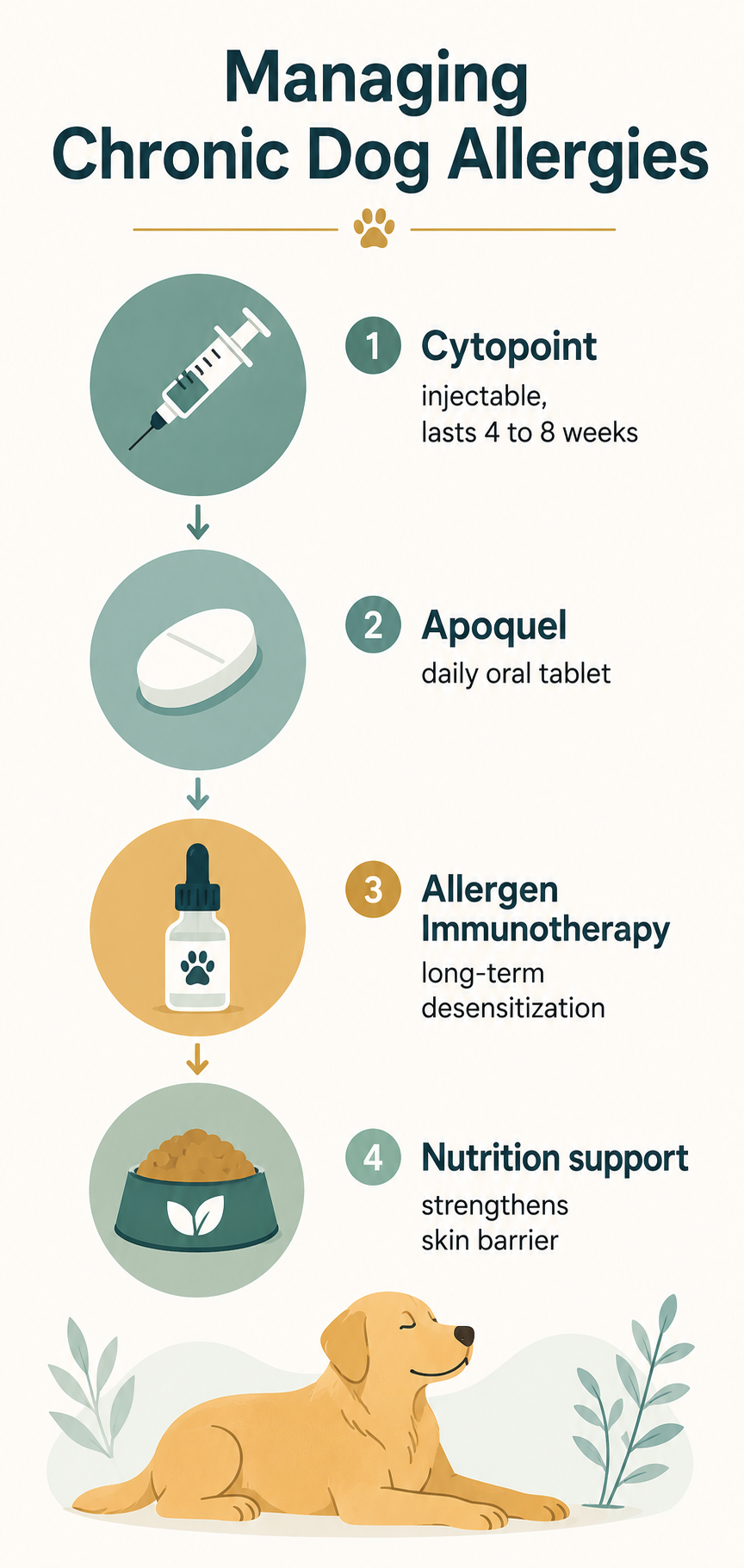
Treatment for chronic allergies in dogs may include targeted medications such as Cytopoint or Apoquel for environmental allergies, strict dietary protocols for food allergies, and allergen specific immunotherapy for long term desensitization. Secondary infections are treated alongside whichever underlying allergy is identified.
Cytopoint and Apoquel, How They Work and When Each Is Appropriate
Cytopoint is an injectable antibody therapy that targets the itch signal directly and typically lasts four to eight weeks per dose. Apoquel is a daily oral tablet that works faster but requires consistent dosing. Which one fits better depends on a dog's specific history, other medications, and how an owner prefers to manage administration.
Allergen Immunotherapy, What It Is and Who It's Best For
Allergen specific immunotherapy introduces small, gradually increasing amounts of an identified allergen to reduce the immune system's sensitivity over time. It is best suited to dogs with confirmed environmental allergies who need a long term management plan rather than ongoing medication alone.
The Role of Nutrition in Managing Allergy Related Skin Disease
Diet plays a direct role in skin barrier health, even for dogs whose primary allergy is environmental rather than food related. Omega fatty acids and a properly balanced diet support the skin's ability to resist secondary infection. For dogs with chronic inflammation that has not fully resolved with medication, laser therapy for chronic skin inflammation in allergic dogs can be a useful addition to a broader treatment plan.
When Should You See a Vet for Your Dog's Scratching, and What Can't Wait?
Occasional scratching is normal. Persistent scratching, constant paw licking, recurring ear infections, hair loss, hot spots, or thickened skin are signs your dog's allergy management has gone past what home care can handle. In our climate, secondary bacterial and yeast infections tied to allergies can progress quickly, so it is worth coming in sooner rather than waiting it out. If you are not sure whether what you are seeing is a flea issue or something environmental, the location and pattern of the itching are usually the clearest clue, and a quick exam with our team can confirm it either way.
Frequently Asked Questions About Dog Allergies in Plantation
How do I know if my dog's scratching is allergies or fleas?
The location of the itching is a useful starting point. Flea allergy dermatitis typically causes intense itching at the base of the tail, lower back, and inner thighs. Environmental allergies more commonly cause paw licking, face rubbing, and recurrent ear infections. A veterinary skin exam is the most reliable way to tell the two apart.
Can dogs develop allergies later in life even if they were fine before?
Yes. Environmental allergies in dogs typically develop between ages one and three, but they can emerge or worsen at any point. Repeated exposure gradually sensitizes the immune system, so a dog can live in the same environment for years before symptoms show up.
Is there a cure for dog allergies?
There is no cure for environmental allergies in dogs, but symptoms can be effectively managed with the right combination of medications, environmental controls, and sometimes immunotherapy. Food allergies, on the other hand, can be fully resolved once the offending ingredient is identified and removed.
How does South Florida's climate affect dogs with allergies?
"Allergies are one of the most frustrating conditions I treat, for owners and for me, because there's rarely a single answer," says Dr. Jennifer Frione, DVM. Broward County's warmth and humidity mean dogs here face a continuous allergen load with no real seasonal break, which makes allergy management a year round commitment rather than a seasonal one.
Dr. Frione's Perspective
"In my experience, most dogs I see with chronic skin issues in Plantation have more than one allergy trigger working at the same time. They might have a low grade food sensitivity that's manageable on its own, but combine that with peak grass pollen season and a single flea bite, and the immune system tips into a full flare. I recommend approaching allergy workups systematically rather than trying one thing at a time. Guessing is expensive and slow, and the dog suffers while we figure it out."
— Dr. Jennifer Frione, DVM, Lakeside Animal Hospital
Schedule a Dermatology Consultation for Your Dog
In South Florida, untreated allergies do not resolve on their own. They compound. Secondary skin infections from chronic scratching are one of the most common reasons dogs end up needing antibiotics, and the longer a flare goes unaddressed, the more uncomfortable your dog stays.
A dermatology consultation at Lakeside includes a full skin exam, on-site cytology, and a personalized treatment plan built around what we actually find, not a one-size-fits-all protocol. Dr. Frione brings ten years of experience treating Plantation pets, with particular focus on nutrition and preventative care, and our on-site laboratory means we can often get cytology results the same visit. We see families from Plantation, Sunrise, Lauderhill, and Plantation Gardens, and we treat every patient like they are our own.
If your dog has been scratching, licking, or dealing with recurring ear infections, a proper diagnosis is the fastest path to relief. Plantation's climate is not going to give your dog's skin a break, but with the right plan, you can.