Is Dog Laser Therapy Worth It? A Plantation Veterinarian's Honest Clinical Assessment
TL;DR:
- Dog laser therapy is worth it for the right patient and the right condition, specifically chronic pain conditions like arthritis and hip dysplasia, post-surgical recovery, and soft tissue injuries.
- It is not a cure, and it works best as part of a multimodal treatment plan.
- Dogs who receive consistent sessions on the recommended schedule show the strongest outcomes.
- For owners weighing the cost, the real comparison is not laser therapy versus nothing. It is laser therapy versus long-term pharmaceutical management and the monitoring costs and side effect risks that come with it.
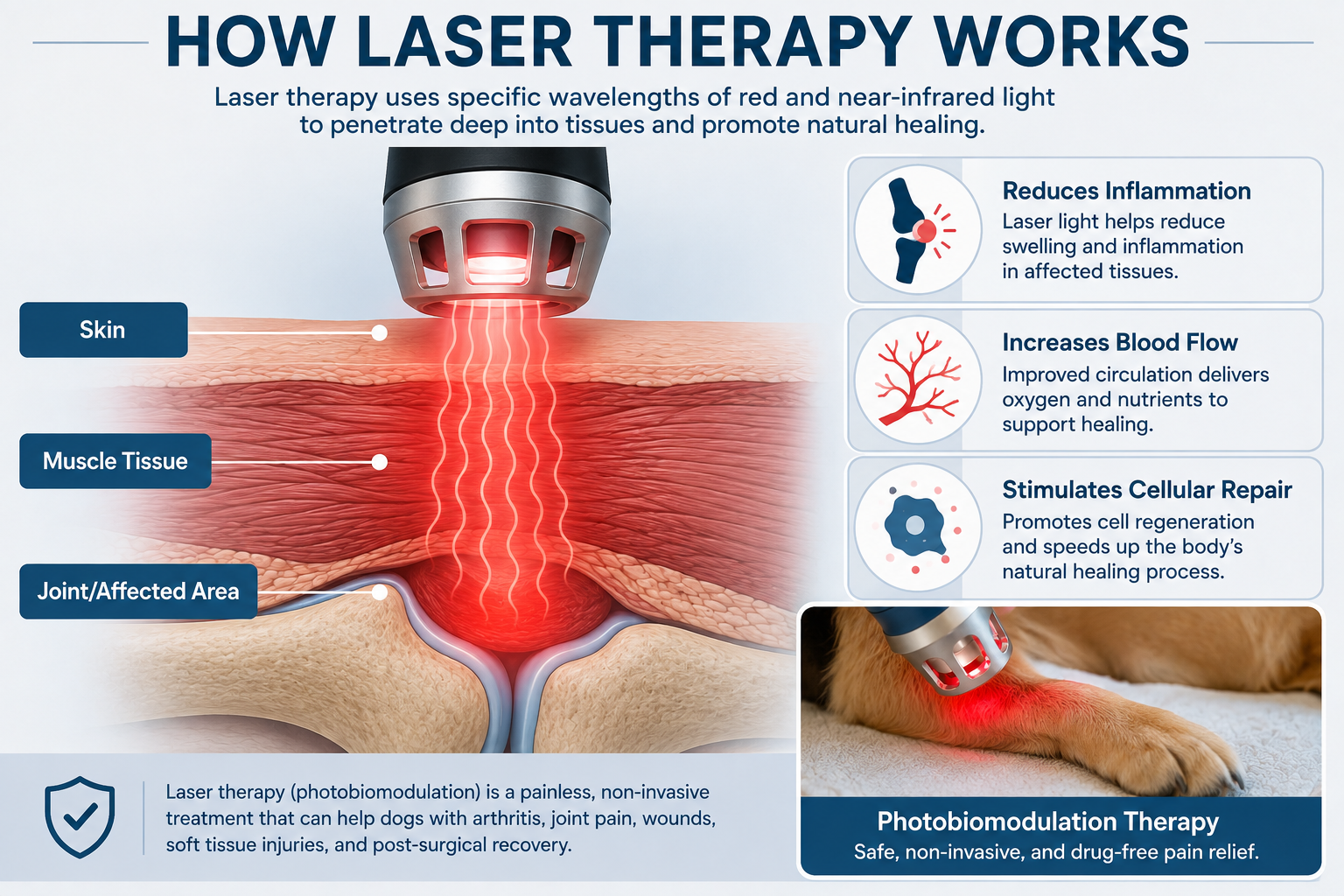
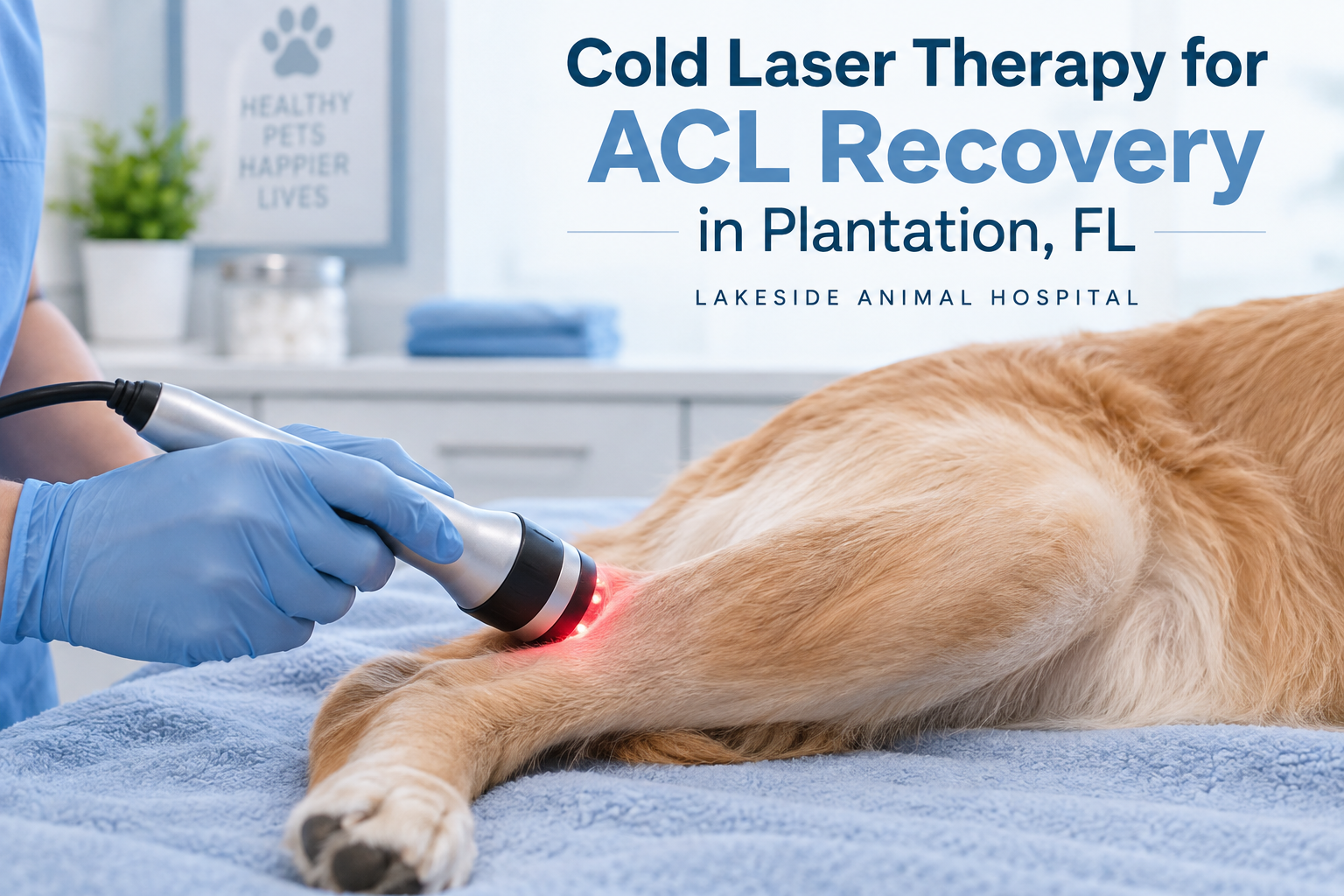
If you're a Plantation pet owner watching your dog slow down on stairs or hesitate before jumping into the car, you've probably already searched "dog laser therapy" and found a mix of glowing testimonials and skeptical forum posts. That gap between marketing claims and clinical reality is exactly why this article exists. Dr. Jennifer Frione has spent ten years treating dogs and cats across Plantation, Sunrise, Lauderhill, and Plantation Gardens, and her approach to laser therapy is the same as her approach to any treatment: match the tool to the condition, set expectations honestly, and measure results instead of assuming them. This guide walks through what the evidence actually shows about dog laser therapy, which conditions respond best, what it costs compared to the alternatives, and when Dr. Frione does and doesn't recommend it. For a deeper technical breakdown of the technology itself, our complete guide to laser therapy for dogs in Plantation covers the science in more detail.
What Does the Evidence Actually Say About Dog Laser Therapy?
The clinical evidence for therapeutic laser therapy in dogs is strongest for osteoarthritis pain management, post-surgical wound healing, and soft tissue injury recovery. Multiple peer-reviewed studies show measurable reductions in inflammatory markers, pain behavior scores, and recovery time in treated animals compared to untreated controls.
What Peer-Reviewed Research Shows, and Its Limitations
The research base for photobiomodulation, the scientific term for what most people call laser therapy, has grown substantially over the past decade. Studies on osteoarthritic dogs show improved weight-bearing and reduced lameness scores after a course of treatment. Post-surgical studies show faster incision healing and lower rates of complications. What the research does not show is a universal effect. Response varies by dose, wavelength, treatment frequency, and the specific condition being treated. A study showing benefit for chronic tendon injury doesn't automatically apply to a dog with a torn cruciate ligament that needs surgical repair.
Why Anecdotal Results Vary, and What Consistency Has to Do With It
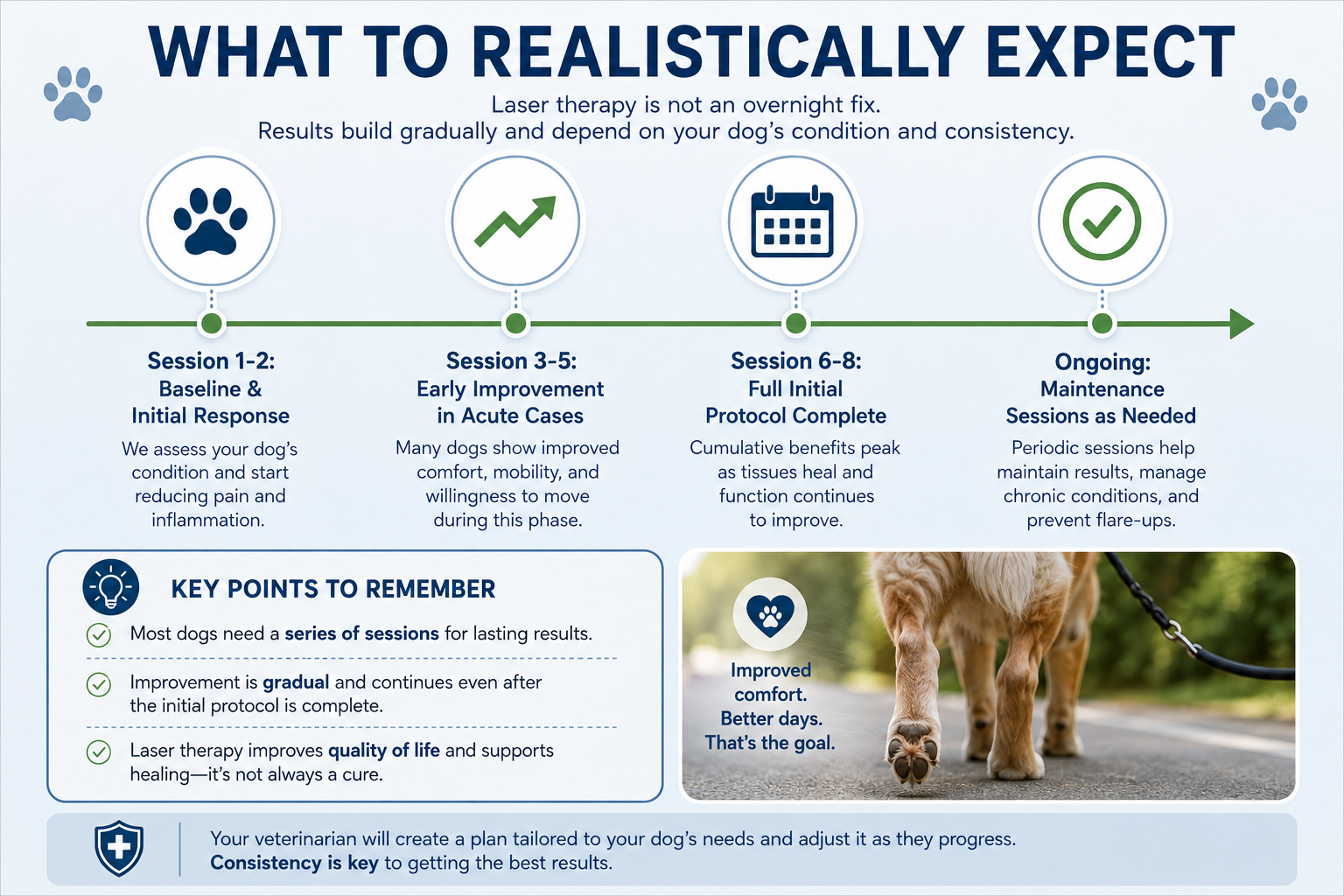
Owners who report disappointing results have often given the treatment two or three sessions before deciding it "didn't work." Laser therapy has a cumulative effect. A single session rarely produces a dramatic change. The dogs with the best outcomes are the ones who complete the full initial protocol, which is why session consistency matters as much as the technology itself.
Which Conditions Respond Best to Laser Therapy in Dogs?
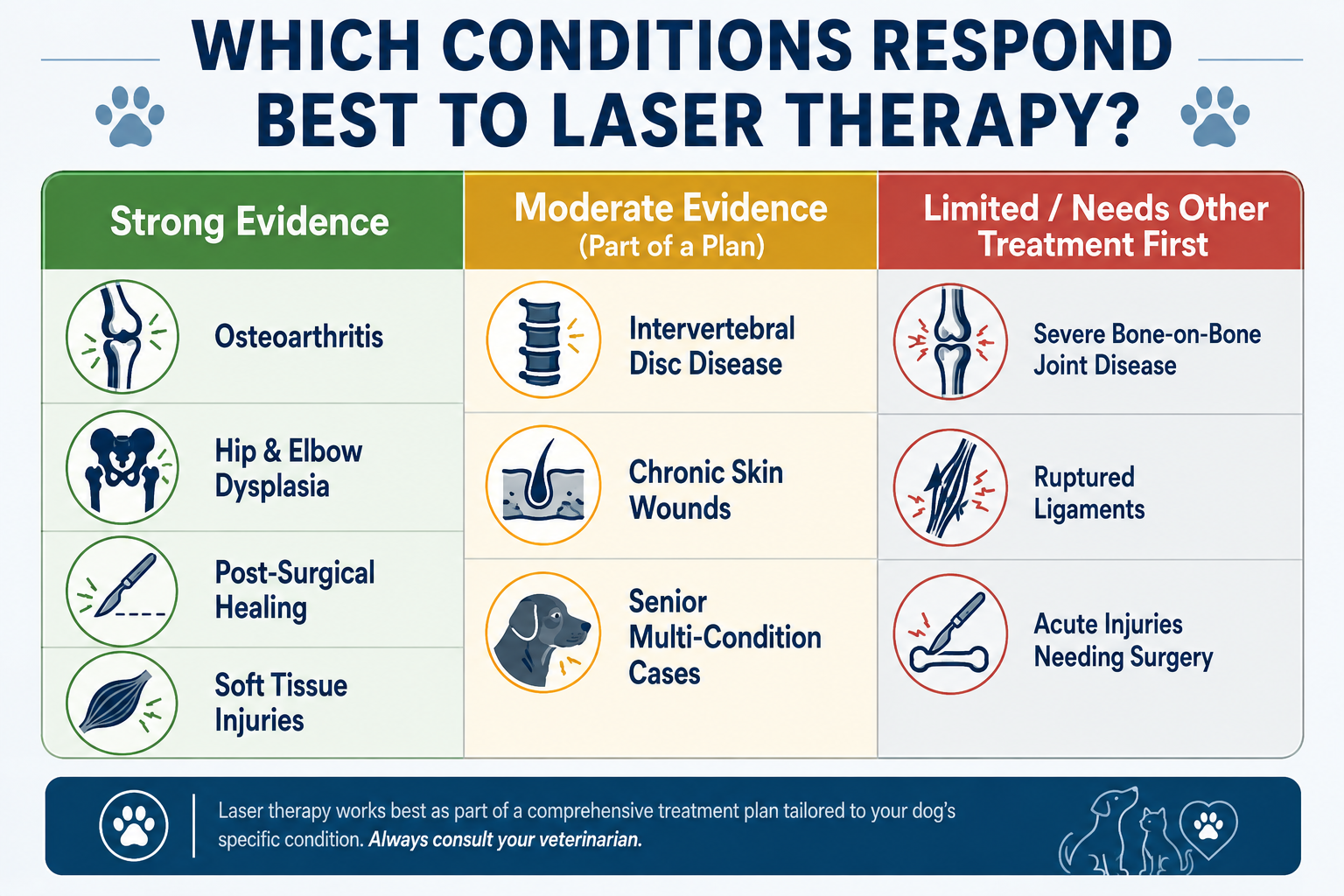
In Dr. Frione's clinical experience, the conditions showing the most reliable improvement with laser therapy are osteoarthritis, hip and elbow dysplasia, post-surgical incision healing, intervertebral disc disease, and chronic skin wounds. Acute soft tissue sprains and strains also respond well when treated promptly.
Conditions With Strong Response Rates
Arthritis in senior dogs is where Dr. Frione sees the most consistent improvement, particularly when laser therapy is combined with weight management and joint support. Hip dysplasia responds well too. If you're specifically weighing whether it's worth pursuing for a dysplasia diagnosis, our satellite article on is laser therapy effective for dogs with hip dysplasia breaks down that decision in more depth. Post-surgical patients recovering from orthopedic or soft tissue procedures also tend to heal faster with laser support added to their recovery plan.
Conditions Where Laser Therapy Is Part of the Answer, Not the Whole Answer
Intervertebral disc disease and chronic skin conditions often improve with laser therapy, but rarely as a standalone treatment. These cases typically need it layered alongside medication, physical rehabilitation, or dietary changes. Senior dogs managing multiple conditions at once are a good example of where laser therapy fits into a broader picture rather than acting as the single solution. Our pillar on laser therapy as part of a senior dog pain management plan goes into more detail on how these treatments work together for aging patients.
Conditions Where Dr. Frione Would Recommend Something Different First
Severe joint disease that has progressed to bone-on-bone contact, ruptured ligaments, and acute injuries requiring surgical stabilization are not conditions laser therapy can resolve on its own. In these cases, Dr. Frione's recommendation is to address the underlying structural problem first. Laser therapy has a role afterward, in recovery, but it isn't a substitute for surgery when surgery is what the diagnosis calls for.
What Does Dog Laser Therapy Cost, and How Does It Compare to the Alternatives?
Individual laser therapy sessions typically run $30 to $75 depending on the treatment area and session length. A standard initial protocol of six to eight sessions represents a defined, predictable cost. The relevant comparison for chronic conditions is the cumulative expense of long-term NSAID prescriptions plus the bloodwork monitoring required to use them safely in senior dogs.
Session Cost vs. Long-Term Pharmaceutical Management
NSAIDs are effective for many dogs, but they come with an ongoing cost that's easy to underestimate. Long-term use requires periodic bloodwork to check liver and kidney function, and that monitoring adds up over a dog's lifetime. Laser therapy, by comparison, has a defined endpoint for the initial protocol, and maintenance sessions afterward are typically far less frequent than a daily medication regimen.
What a Realistic Laser Therapy Budget Looks Like for a Dog With Arthritis
A typical arthritis protocol runs six to eight sessions over three to four weeks, followed by maintenance sessions spaced out based on how the dog responds. For most Plantation families, this means a defined upfront investment rather than an open-ended monthly expense. Dr. Frione discusses the expected protocol and cost during the initial consultation so there are no surprises partway through treatment, something families booking laser therapy consultations at Lakeside Animal Hospital in Plantation can expect from the first visit.
What Are the Realistic Expectations for Dog Laser Therapy?
Realistic expectations for dog laser therapy are meaningful improvement in mobility, pain behavior, and quality of life in dogs with appropriate conditions, not elimination of disease or a permanent cure. Owners who see the strongest outcomes are typically those who complete the initial protocol and maintain a consistent follow-up schedule rather than stopping after two sessions and concluding it didn't work.
How Long Before You Should See Results
Dogs with acute conditions, such as fresh injuries or post-surgical recovery, typically show measurable improvement within three to five sessions. Chronic conditions like arthritis usually take longer, with most owners noticing meaningful change by the end of the initial six to eight session protocol.
What "Not Working" Usually Means, and What to Do About It
When owners say laser therapy "didn't work," the most common reason is an incomplete protocol or a condition that needed a different primary treatment from the start. Before concluding it isn't effective, it's worth completing the recommended sessions and reassessing with your veterinarian rather than stopping early.
Dr. Frione's Honest Assessment: When She Recommends It and When She Doesn't
Dr. Frione recommends laser therapy when a dog's condition falls within the evidence-supported range, when the owner can commit to the session schedule, and when the treatment fits into a coherent multimodal plan. She does not recommend it as a standalone solution for severe disease requiring surgical intervention, or as a substitute for pharmaceutical management when that is the clinical standard. This same honest framework applies to feline patients too. Owners of aging cats with joint pain can read more in our pillar on
laser therapy for senior cats with arthritis.
Frequently Asked Questions About Dog Laser Therapy
Is dog laser therapy worth the money?
For dogs with arthritis, hip dysplasia, post-surgical recovery needs, or chronic soft tissue conditions, laser therapy is generally worth the investment when the owner can commit to the recommended session schedule. The strongest outcomes occur in dogs who complete the initial protocol. For chronic conditions, the cost compares favorably to long-term pharmaceutical management once prescriptions and required monitoring bloodwork are factored in.
How long does it take to see results from dog laser therapy?
Dogs with acute conditions, fresh injuries or post-surgical recovery, typically show measurable improvement within three to five sessions. Dogs with chronic conditions like arthritis may take longer, with most owners noticing meaningful changes by the end of the initial protocol of six to eight sessions.
Does dog laser therapy actually work, or is it overhyped?
Laser therapy has a legitimate evidence base for specific conditions, arthritis, post-surgical healing, soft tissue injury, and wound care, and is recognized by veterinary rehabilitation specialists as a valid clinical tool. It is not effective for every condition and is not a substitute for surgery or pharmaceutical management when those are clinically indicated. Outcomes vary based on patient selection, condition severity, and treatment consistency.
Can I use laser therapy instead of NSAIDs for my dog's arthritis?
In some dogs, particularly those with mild to moderate arthritis or those who cannot tolerate NSAIDs due to kidney or liver concerns, laser therapy combined with joint supplements and weight management can replace pharmaceutical management effectively. In more advanced cases, it works best as part of a multimodal approach that may include medications. Dr. Frione evaluates each patient individually.
Dr. Frione's Perspective
"I want to be honest about this because I think the most useful thing I can tell an owner about laser therapy is what it is and what it isn't. It is a legitimate clinical tool with real evidence behind it for specific conditions. It doesn't work the same way for every dog. The cases I'm most confident recommending it for are dogs with arthritis or dysplasia who are poor candidates for long-term NSAID use, and post-surgical patients where I want to support healing without layering in more medications. The cases where I'm more cautious are dogs in significant pain whose condition really needs a surgical conversation first. Laser therapy is not a way to avoid that conversation. It's a way to manage what's left after we've addressed the underlying problem."
— Dr. Jennifer Frione, DVM, Lakeside Animal Hospital
Ready to Find Out If Laser Therapy Is Right for Your Dog?
If your dog's arthritis or joint condition has reached the point where you're researching treatment alternatives, a laser therapy consultation is a one-appointment commitment, not a long-term one, that gives you a clinical opinion on whether it's the right fit. Dr. Frione will evaluate your dog's specific condition, discuss realistic expectations, and outline what a protocol would look like before you commit to anything. Lakeside Animal Hospital serves families throughout Plantation, Sunrise, Lauderhill, and Plantation Gardens, and every recommendation comes from Dr. Frione's rehabilitation specialty and ten years treating pets in this community as her own.
Whether laser therapy is worth it for your dog comes down to the condition, the commitment, and the plan around it. For Plantation families weighing this decision, an honest clinical assessment beats guessing every time, and that's exactly what a consultation at Lakeside Animal Hospital is built to give you.