Why Does My Dog Smell Bad After Grooming?
TL;DR: A dog that smells bad after grooming usually has a damp undercoat, especially in South Florida humidity. If the odor is musty, sour or lingers past a day or two, a yeast flare, an ear infection or full anal glands may be the cause, and it's worth an exam.
You pick up a freshly groomed dog, and by dinnertime the house smells like wet socks. It happens to plenty of Plantation families. When a dog smells bad after grooming, the groom itself is rarely the problem. The smell is a clue about moisture, skin or ears, and where it sits on your dog tells you a lot.
What Causes a Dog to Smell Bad After Grooming?
The most common cause is moisture trapped in a thick undercoat. Skin yeast, ear infections and anal glands come next, and a fresh groom usually makes those odors easier to notice rather than causing them.
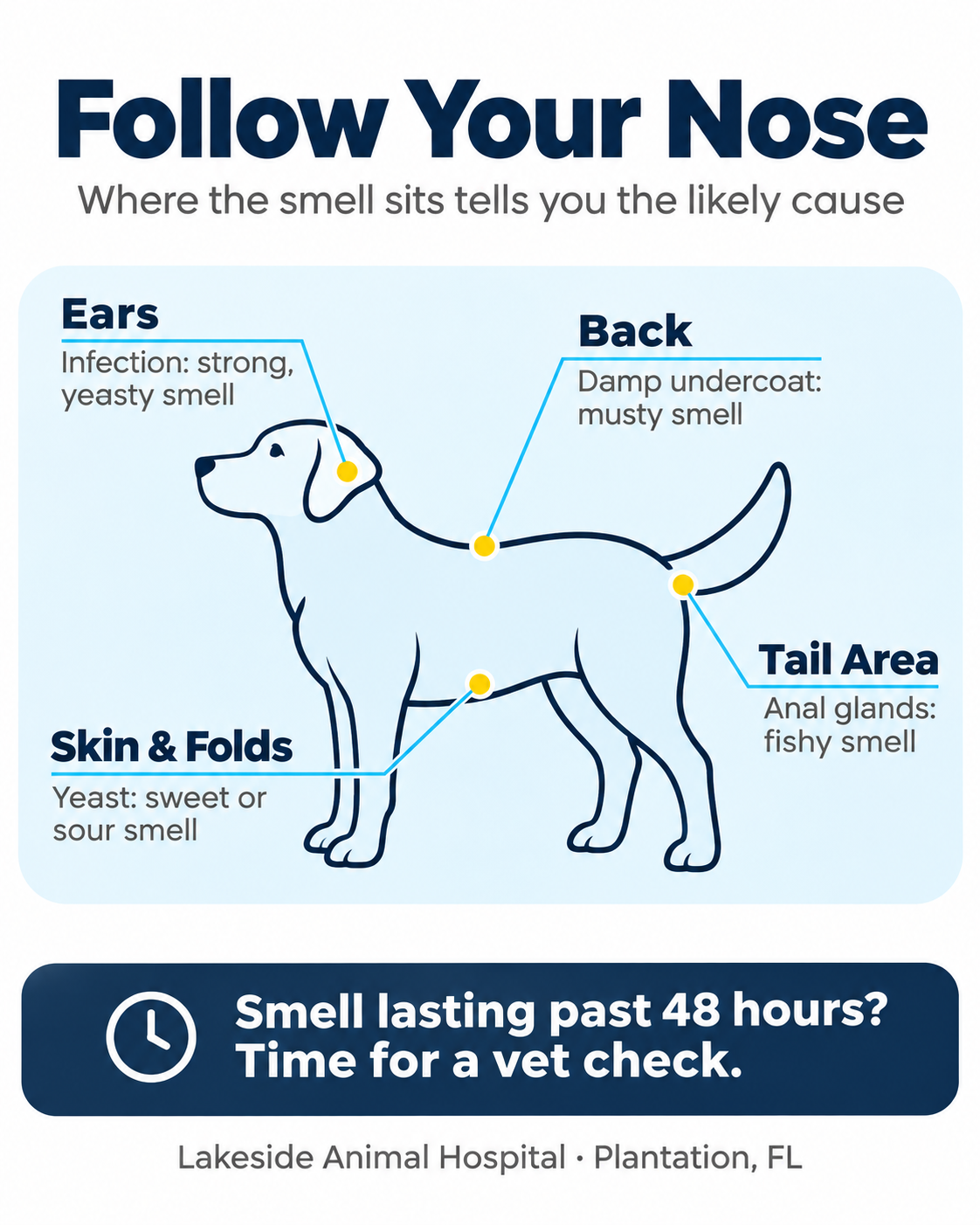
Shampoo washes away the dirt and coat oils that mask other smells, so whatever is happening on the skin has nowhere to hide. Musty, sweet and fishy smells each point to a different cause. Before reaching for dog cologne, sniff where the odor is strongest.
A Damp Undercoat Is the Most Common Culprit
Double-coated breeds can stay wet near the skin for hours after a bath, and that trapped moisture creates a musty smell. Plantation's humidity makes it worse.
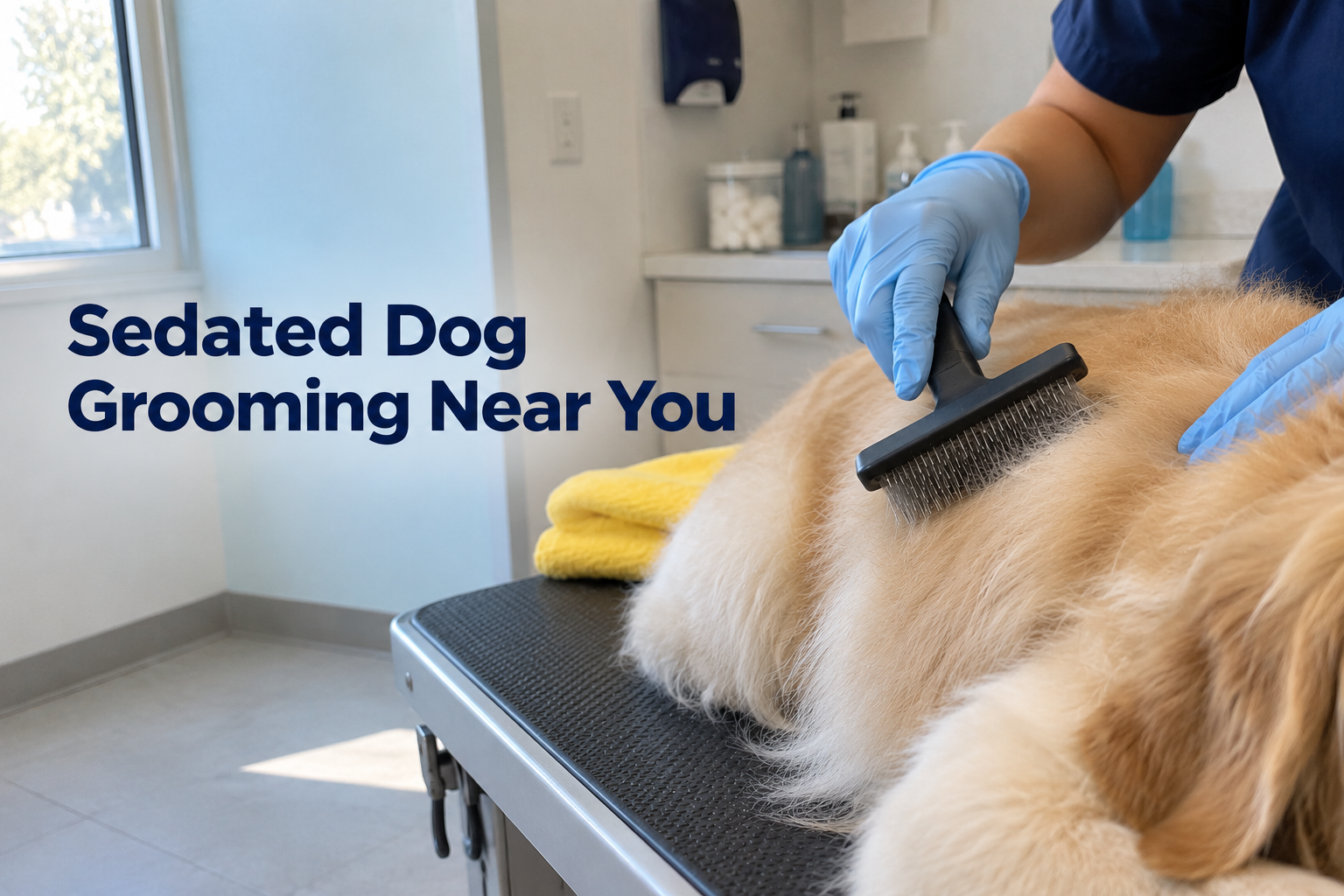
Golden retrievers, huskies and many doodles have a dense undercoat that holds water like a sponge. The outer coat can feel dry while the hair against the skin stays damp, and in our muggy air it starts to smell like a forgotten gym towel. Thorough drying down to the skin is part of our vet-supervised grooming process, especially for double coats. A high-velocity dryer pushes water out from the root, not just the surface. You can read about everything a groom includes, from medicated baths to ear cleaning, on our pet grooming services page.
Yeast Can Flare Beneath a Fresh Coat
A sweet or sour, corn-chip-like odor with greasy or reddened skin often points to Malassezia, a yeast that overgrows on allergic skin. A bath alone rarely solves it.
Malassezia lives on every dog's skin in small numbers. Allergies, humidity and leftover moisture let it multiply, and the skin turns oily, flaky or pink. Some dogs also develop bacterial pyoderma, a skin infection, or seborrhea, where the skin overproduces oil. Yeast flares often trace back to South Florida's year-round allergy triggers. A quick skin sample under the microscope shows whether yeast or bacteria is involved and guides a personalized treatment plan.
Ears and Anal Glands Carry Their Own Odor
A strong smell near the head often means an ear infection. A fishy smell near the tail usually means full or irritated anal glands.
Bath water can settle in the ear canal, especially under heavy, floppy ears. If your dog shakes their head or scratches an ear after a groom, look inside. Brown discharge or a yeasty smell means the ear needs a veterinarian, not more cleaning at home. Anal glands are two small sacs beside the tail that can fill and leak, leaving a distinct fishy odor. Scooting is a strong hint. When odor keeps coming back after every appointment, it may be a sign a dog needs medical grooming instead of a regular groom.
When Should You See a Vet If Your Dog Smells Bad After Grooming?
A clean, dry dog should smell neutral within a day. Odor that lasts past 48 hours, or comes with redness, head shaking or scooting, means it's time for a veterinarian to take a look.
"A groom shouldn't leave a smell behind. When it does, I'm usually looking at the skin or the ears, not the shampoo," says Dr. Jennifer Frione, DVM, who has 10 years in practice. Because our groomers work in the same building as our veterinarians, a concern spotted on the grooming table can often be checked during the same visit. Your pet is family, and we treat every dog as if they were our own.
Quick Questions
Can a dog react to grooming shampoo?
Yes. Fragrances and harsh surfactants can irritate sensitive skin and cause redness, itching or flaking within a day or two. If your dog has known allergies, ask for a hypoallergenic or medicated shampoo. Bring any home products to your next visit so we can check the ingredients.
Should I bathe my dog again if the smell is still there?
Not right away. A second bath can strip natural oils and make skin problems worse. First make sure the coat is fully dry at the skin. If the odor remains, a quick skin or ear sample tells you more than another wash.
Do some breeds smell more after grooming?
Yes. Double-coated breeds like retrievers and huskies hold moisture. Dogs with skin folds, like bulldogs, trap yeast and bacteria. Breeds with heavy or hairy ears, like cocker spaniels and doodles, are prone to ear infections. These dogs benefit from careful drying and regular fold and ear checks.
Book Your Dog's Next Groom With a Veterinary Team Down the Hall
If your dog smells bad after grooming and the odor won't fade, it's often an early skin or ear problem that's easier to treat now. Lakeside Animal Hospital welcomes dogs from Plantation, Sunrise and Lauderhill, with a veterinary team in the building during every groom for a same-day check when needed.