March: Poison Prevention Month

ADMIN

Each year, the  ASPCA Animal Poison Control Center (APCC)  works to provide important and sometimes lifesaving information along with handy safety guides to pet parents nationwide. Last year alone, APCC helped over 232,000 animals! March is Pet Poison Prevention Month, and to help raise awareness of common hazards and toxins to pets, APCC has put together a list of the  top 10 most commonly reported pet toxins !

Pet Toxins
  1. Over-the-counter (OTC) medications  were once again the most common group of toxicants pets ingested this year, making up 19.7% of APCC calls. Ibuprofen, acetaminophen, joint rubs and herbal supplements all fall within this category. These items are commonly found in homes and are often stored in purses and backpacks.
  2. Human prescription medications  remained number two this year with accounting for 17.2% of cases.  CardiacADHD, thyroid, and antidepressant medications make up a significant amount of these cases. Always make sure your prescription medications are safely locked away, out of paws’ reach.
  3. Food  is number three, making up 12.1% of cases.  Xylitol, grapes, raisins, onions, garlic and protein bars make up most of these cases.
  4. Chocolate   remains at number four with 10.7% of APCC cases concerning this sweet treat. That works out to over 67 cases a day! Dogs especially love chocolate and can eat enough to get themselves into trouble.
  5. Veterinary products  remained at 9.3% of cases. Chewable medications are tasty, and dogs will eat the entire container. Make sure to treat these products like prescription medications and keep them away from your pets.
  6. Household items   also remain at number six, making up 7.7% of APCC cases. Home improvement projects can expose pets to many potential toxins such as  paint, adhesives or spackle.
  7. Rodenticide exposure  cases increased in number in 2019, to 6.8% of APCC caseload. Depending on the type, mouse and rat baits can cause bleeding, kidney failure, seizures or even death. 
  8. Plants  moved up to eighth place, making up 6.1% cases. Most of our severe cases involved cats and  lily exposures.
  9. Insecticide exposure  cases dropped this year, only accounting for 5.1% of cases. Safer product alternatives and better handling of these types of products will help keep pets safe around these types of toxins.
  10. Garden products  remained in the same spot in 2019, making up 2.4% of cases. Many pets find fertilizers (especially organic products) irresistible. Make sure your pets aren’t ‘helping’ when you are out working on the lawn or in the garden with herbicides and soil enhancements.

With any potential dangers and toxins, it is important to keep these things out of paws’ reach. While accidents can always happen, the less accessible any of the items are, the less likely your pet is to get into them.

If you have any reason to suspect your pet has ingested something toxic,

please call us (954) 474-8808

or the Animal Poison Control Center’s 24-hour hotline

at (888) 426-4435.

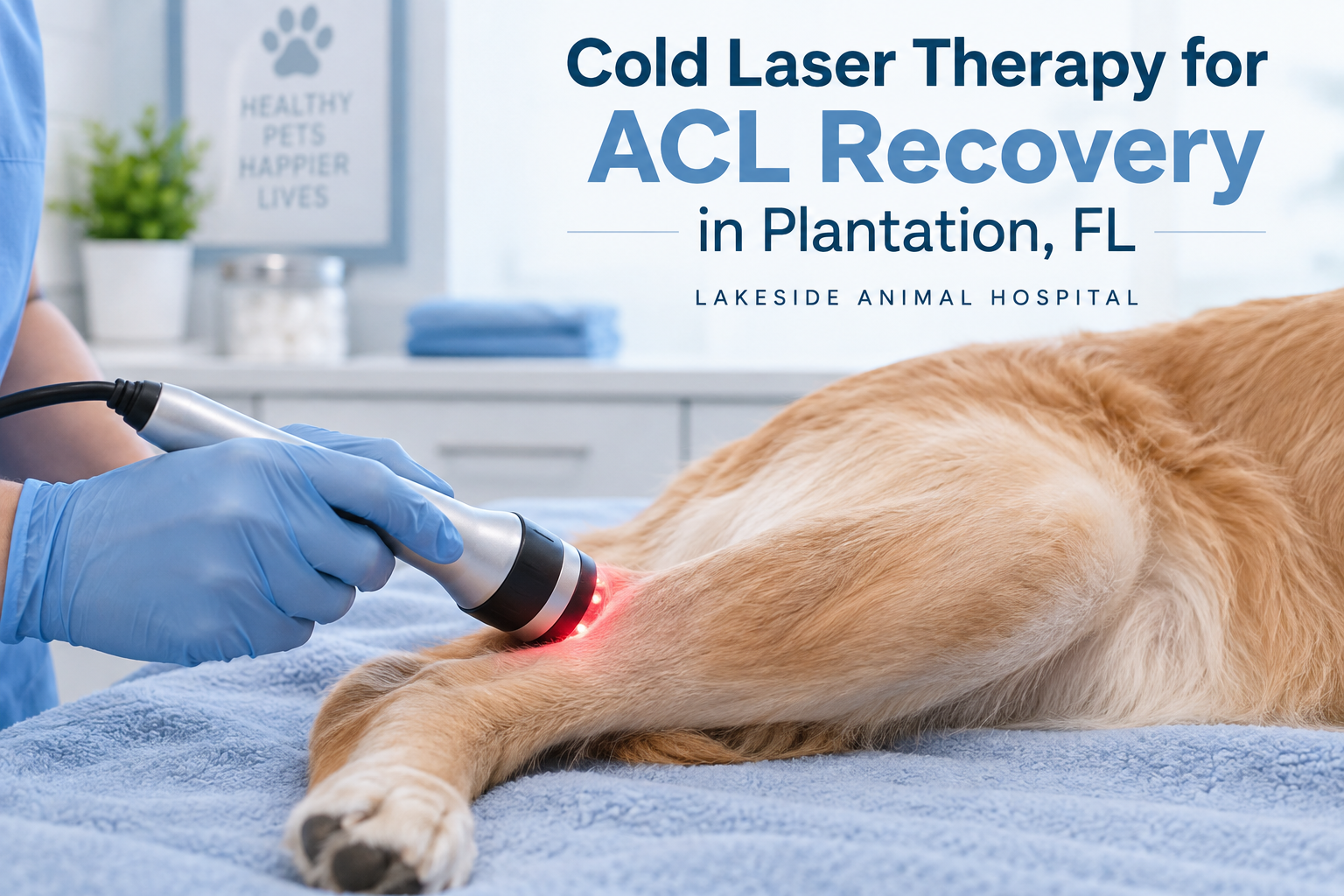
Dog receiving laser therapy treatment at Lakeside Animal Hospital in Plantation, FL
by Jennifer Frione, DVM 7 July 2026
What does laser therapy actually do for dogs? Dr. Frione explains when it helps, for Plantation and Broward County pet owners.
Dog scratching paw illustrating fleas or environmental allergies in Plantation
by Jennifer Frione, DVM 2 July 2026
Is your dog's scratching from fleas or environmental allergies? A Plantation veterinarian explains the key differences and what to do next.
Close-up of dog face representing allergy symptoms in Plantation FL dogs
by Jennifer Frione, DVM 30 June 2026
Year-round allergies are a South Florida reality for dogs. Dr. Frione explains how Lakeside diagnoses and treats pet allergies in Plantation, FL.
Close-up of veterinarian hands examining a small dog after grooming incident
by Jennifer Frione, DVM 25 June 2026
If your dog had a seizure at a grooming chain, here's what to do next and how to find vet-supervised grooming near Plantation, FL.
Medical dog grooming in Plantation and Lauderhill with veterinary oversight
by Jennifer Frione, DVM 23 June 2026
What is medical dog grooming, and why do Lauderhill and Plantation owners choose a vet-supervised facility? Dr. Frione explains.
Veterinary dental instruments representing dog dental cleaning cost
by Jennifer Frione, DVM 18 June 2026
A vet quoted $900 for a dog dental with extractions, is that fair? A Plantation veterinarian breaks down exactly what drives the cost.
Veterinarian gently examining a dog's mouth at Lakeside Animal Hospital
by Jennifer Frione, DVM 16 June 2026
What does a dog or cat teeth cleaning cost in Plantation, FL? Dr. Frione breaks down every line item on a real dental estimate.
Labrador about to get a vaccine
by Jennifer Frione, DVM 11 June 2026
Do dogs really need a full physical exam every year just to get vaccinated? A Plantation veterinarian explains why the exam matters more than the shot.
Blog cover image for pet wellness exam article
by Dr. Jennifer Frione, DVM 9 June 2026
What does a routine wellness exam actually include — and do pets really need one every year? Dr. Frione answers the questions Plantation pet owners ask most.
Flat-lay editorial image with dog collar, calendar, and stethoscope representing senior dog wellness
by Dr. Jennifer Frione, DVM 4 June 2026
How often do senior dogs really need vet visits? A Plantation veterinarian explains why twice-yearly exams matter for dogs over 7 and what they catch.